Operations | Monitoring | ITSM | DevOps | Cloud

How low-level API calls can stabilize your end-to-end tests

We’re heavy end-to-end monitoring users here at Checkly and always experiment with how to architect our tests the best way. Over the past months, we’ve settled on a few workflows that make it much easier to spin up new tests, avoid code duplication, and make the entire test setup easier to manage. One of those strategies is to strictly separate concerns in our tests.
Announcing Logz.io Alert Manager for Metrics

Logz.io alerts are a critical capability for our customers monitoring their production environment. By keeping a watchful eye for data that indicates an issue – like spiking memory metrics or 3xx-4xx response codes – alerting quickly notifies engineers that something is going wrong. Setting an actionable alert to immediately notify engineers of oncoming problems can be the difference between a minor issue and a major event with widespread customer impact.

Why and how to monitor Amazon API Gateway HTTP APIs

API gateways are part of every modern microservice architecture. As their name already suggests, they are the gateway into your system; everyone who wants to access your service has to go through a gateway. In 2019, AWS announced HTTP APIs for its API Gateway (APIG) service. This was a big step to add more flexibility and lower latency to APIG. Before this release, you could only build REST APIs with APIG, which only helped when you wanted to create an API based on the REST architecture.

10 Web Monitoring Tips for Redundant Systems

As your team grows, so do the rules and regulations you use to keep things organized. The same is true for systems, which grow in complexity as they grow in size. That complexity is difficult to manage on its own without the natural turnover that occurs in tech. Those who built and managed legacy systems, eventually go on to bigger and brighter things, either within the company or toward other opportunities.

Going On Call for the First Time

I've never been on call before, and I'm not sure what to expect, or how I can best prepare for it. Will I need to upend my life just in case the pager goes off? And how should I best cope with getting paged? I've read Charity's piece on the opposite problem of wanting to stop being on call, but it didn't quite answer my question.

The value of blameless culture - from IC to C-Suite

At CircleCI, CI has a second meaning: Continuous Improvement. We continuously seek out feedback not only to improve our code but to improve our processes and get better at our jobs along the way. This Continuous Improvement starts with one important company value: a blameless culture. Our blameless culture extends into every part of how we operate.

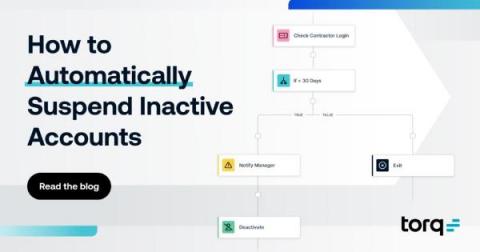
How to Automatically Suspend Inactive Accounts Using Torq

Contractors, freelancers, and other temporary workers have become essential parts of the modern enterprise. For IT and security teams, these individuals present unique challenges compared to full-time workers—and potential risks. The ‘offboarding’ process for these contractors is often less formal than bringing them on. Meaning, many just stop using their entitlements and accounts without actually closing them. These dormant accounts can pose serious risks to the organization.

Learn Effective Policy Compliance Management with Restorepoint

In the two previous blogs from this series, we showed you how Restorepoint enables you to minimize MTTR to mitigate the impact of change management and remediate after a network breach. The third and final blog of the series walks you through policy compliance management—demonstrating the value of creating a single pane of glass where you can see all relevant information from a single location.

Proactively Deliver a Better Microsoft Teams Experience

Legendary wine and spirit merchants Berry Brothers & Rudd arm their IT team with deep Microsoft Teams visibility to speed issue resolution and deliver an exceptional user experience. Berry Bros. & Rudd (BBR) is a family-run British wine and spirits merchant founded in London in 1698. Over the years, the company has grown to include six offices worldwide, including Japan, Singapore and Hong Kong.