Cove Data Protection for Microsoft 365 Surpasses One Million Unique Users
Since solution launch, over 4,600 N-able partners are protecting more than 36k Microsoft 365 customer domains.


The Great Resignation comes at an inconvenient time for IT leaders. Needing to accelerate plans for IT transformation because of the pandemic, organizations required more digital technology and services to support the shift to a hybrid workforce. Unfortunately, now organizations are struggling to find enough IT employees-with the right skill set-obstructing these digital transformation initiatives.
Distributed systems are highly scalable and efficient — but only when integrated into a powerful network. A distributed system can only function if all its applications can communicate effectively with one another. However, this is often easier said than done due to the multi-layered nature of modern architectures. Modern architectures consist of applications written in various languages with different protocols, and they are spread across multi-cloud and multi-cluster environments.
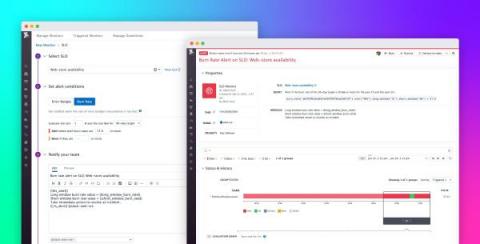
Service level objectives (SLOs) state your team’s goals for maintaining the reliability of your services. Adopting SLOs is an SRE best practice because it can help you ensure that your services perform well and consistently deliver value to users. But to gain the greatest benefit from your SLOs, you need ongoing visibility into how well your services are performing relative to your objectives.
If you are an engineer searching for a new role that involves a high level of knowledge on the monitoring stack Prometheus then you will likely wish to brush up on your knowledge of Prometheus ahead of your interview. In this guide, you will find a list of the most popular questions that are most likely to be asked to candidates looking to use Prometheus as part of their daily monitoring stack within their next role.
With the surge of remote workers and a need for increased flexibility, the traditional workplace is a thing of the past. According to Slack’s Future-Forum Pulse Report, the percentage of people working in hybrid and remote arrangements has increased to 58% in the United States. This means that organizations will need to adapt to a hybrid model to maximize employee productivity while supporting collaboration in and out of the office.
“Just one more tool…what’s the harm?” Because MSPs tend to be technophiles in some measure, we can sometimes be lured in by shiny objects known as “the newest and flashiest solution”. While this isn’t catastrophic in its own right, the “just one more tool” effect is compounding in nature, and so are its dangers.
We are proud of our many customers and users around the globe that trust Icinga for critical IT infrastructure monitoring. That´s why we´re now showcasing some of these enterprises with their Success stories. It´s stories from companies or organizations just like yours, of any size and different kinds of industries. Some of them are our long-standing customers, others have just recently profited from migrating from another solution to Icinga.