Operations | Monitoring | ITSM | DevOps | Cloud

The Who, What and Where of Microsoft Teams Call Quality

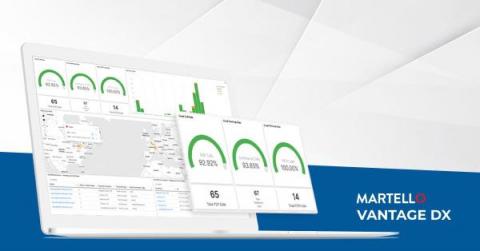
Microsoft Teams is the world-leading collaboration and productivity tool for today’s hybrid workforce, but your users’ experience with it is only as good as the network and IT environment it operates in. There is a critical visibility gap when it comes to delivering a stellar Microsoft Teams user experience to your users. Organizations lack an end-to-end picture of what problems are happening, what is causing the problems and who is affected.

Cloud purchasing strategy KPIs: RIs, SPs, Spot, CUDs

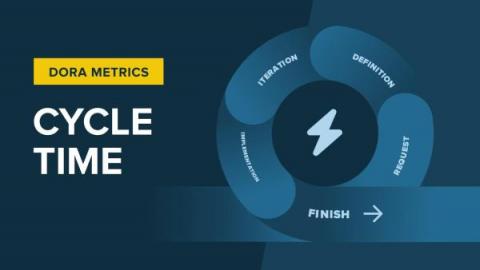
One of the key advantages of cloud services versus on premise deployments is the wide range of purchasing options and pricing models. While it’s an attractive advantage, it can be complicated for organizations to determine the best blend of service pricing models. The ability to define the organization’s blend of purchasing strategies and display the target versus actual performance is critical for optimizing cloud cost management efforts.

Web Endpoint Monitoring

In today’s world, a significant fraction of a software business’s reputation depends on its web application and its speed. It all comes down to how fast your server responds to client requests (assuming your application is reliable and reasonably user-friendly). Therefore, you could argue that the server endpoint is the centerpoint of all the server-side action — the operations here primarily determine the performance of your application.

Zoom Phone Delivers Local Survivability with Ribbon SBCs

Migrating to a cloud-based phone system is compelling because it eliminates the costs and time associated with deploying and managing legacy phone system/PBX hardware and proprietary business phones. However, moving 100% of an organization’s communications infrastructure off-site can present new challenges. If the connection to the cloud is lost, a site could lose both external communications and intra-site communications.

Asynchronous Correlation with Serverless360 BAM

One of the critical differences between distributed tracing and business activity monitoring is that distributed tracing usually assumes that your transaction executes from start to end in a reasonably short time. An example would be that your call to an API might then drop a message on a queue which a function processes and loads into a database.

Accurately Forecasting Cloud Costs for FinOps

Companies are investing heavily in the cloud for the operational and financial benefits. But without a robust cloud cost management strategy in place, the complexity of cloud services and billing can to overspending and unnecessary cloud waste. Being able to accurately predict future cloud spend is one way to more optimize cloud spend and inform budgets.

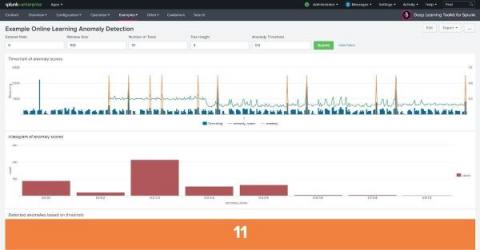
Online Learning: a Novel Approach to Applying Machine Learning in Splunk

Most classical, batch-oriented machine learning systems follow the paradigm of “fit and apply”. In an earlier blog post, I discussed a few patterns on how to better organize data pipelines and machine learning workflows in Splunk. In this blog, we’ll review how you can organize your machine learning model in a new way: online learning.

Comparing Ways to Connect to Microsoft Azure

Curious about Microsoft Azure and the best ways to connect? Azure is a hybrid Cloud Service Provider (CSP) with customized, scalable, cloud-based packages. These encompass Software as a Service (SaaS), based on subscription-based software licensing and delivery, Platform as a Service (PaaS), allowing companies to develop, deploy, manage, and update applications, and Infrastructure as a Service (IaaS), providing high-level application programming interfaces (APIs).