Operations | Monitoring | ITSM | DevOps | Cloud

Elastic Announces Innovations to Transform the Way Organizations Search, Observe and Protect their Data

The new changes to Elastic Search will simplify Elastic Cloud on AWS experience with automatic provisioning of Elastic Agent to easily ingest data from any AWS service and improve search relevance with machine learning-based hybrid scoring.


Why IT Skills Are Vital When You're Running an eCommerce Business

In many ways, running an eCommerce business can be like running any other business. However, in many other ways, it can be completely different. Unfortunately, it is the differences between running an eCommerce business and a traditional business that is often where issues arise for new eCommerce business owners. One of the best ways to manage the differences between traditional and e-commerce businesses is to ensure that you have sufficient technical knowledge to understand how IT works. To that end, this article aims to highlight some of the best IT skills that an eCommerce business owner should develop and why.

How to Monitor Google Cloud Interconnect and Network Performance

Google Cloud Interconnect promises data transfers with low latency, and high availability - but how can you make sure that it’s actually performing as promised? Continuously monitoring Google Cloud Interconnect performance is the key to identifying slowdowns, high levels of packet loss, and other problems affecting Google Cloud. Keep reading to learn how to do it all in minutes using Obkio Network Monitoring!

Building great developer experience at a startup

At incident.io, our number one priority in engineering is pace. The faster we can build great product, the more feedback we can get and the more value we can deliver for our customers. But pace is a funny thing. If you optimise for pace over a single month, you’ll quickly find yourself slowed down by the weight of your past mistakes.

Kubeflow 1.6 on Kubernetes 1.23 and beyond

Kubeflow is an open-source MLOps platform that runs on top of Kubernetes. Kubeflow 1.6 was released September 7 2022 with Canonical’s official distribution, Charmed Kubeflow, following shortly after. It came with support for Kubernetes 1.22. However, the MLOps landscape evolves quickly and so does Charmed Kubeflow. As of today, Canonical supports the deployment of Charmed Kubeflow 1.6 on Charmed Kubernetes 1.23 and 1.24.

Kubernetes alternatives to Spring Java framework

Spring Cloud and Kubernetes both complement each other to build a cloud native platform and run microservices on the Kubernetes containers. Kubernetes provides many features which are similar to Spring Cloud and Spring Config Server features. Spring framework has been around for many years. Even today, many organizations prefer to go with Spring libraries because it provides many features. It's a great deal when developers have total control over cloud configuration along with business logic source code.

Tips and Tricks for the Small SOC: Part I

Every security operations center (SOC) team is different, and for smaller teams, even small challenges can seem big. I started my career in cybersecurity as part of a smaller team, and eventually grew into a SOC role. During that time, I gained a good deal of knowledge about the dos and don’ts of what a small SOC team needs to do in order to be successful.

Reimagining nmon Using InfluxDB

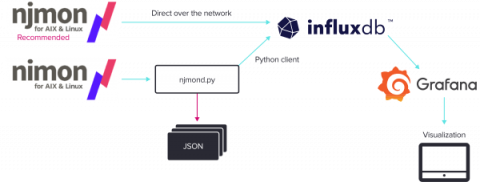
IBM engineer Nigel Griffiths built nmon in the 1990s to monitor operating system performance data for AIX. Since its original launch, Griffiths revisited and revamped nmon. For example, he built an open-source version for Linux. Despite drastic change in the very nature of computing and exponential growth in storage, memory, and compute power, it wasn’t until 2018 that Griffiths sought to completely re-write the tool and bring it into alignment with modern computer systems.

TL;DR Deep Linking Dashboards

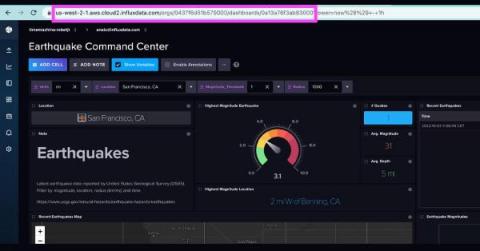
If you’re an InfluxDB and InfluxDB UI user, you’ve almost certainly created dashboards. However, if you’re building dozens of dashboards in the InfluxDB UI, you might have come across the need to deep link related dashboards. In this tutorial we’ll learn how we can use the table view with Flux, string interpolation, and variables to deep link users to other dashboards.