According to Virtana’s recent State of Hybrid Cloud Storage survey, most organizations have a little over half of their storage in the cloud, keeping the rest on premises. But how are they deciding what storage goes where? Is there such a thing as a wrong—or even just sub-optimal—storage placement decision? We dug into the data to answer these questions.
Recently, a customer brought me a challenging use case: They were looking to enforce quotas on their internal customers, i.e. other teams in the organization. The analytics team provides services such as searching and reporting capabilities to those other teams, which subscribe to the services through a chargeback model. Each team that subscribes is supposed to limit its ingestion of data to a quota: a maximum permitted ingest per 24-hour period.
In today’s digital world, data security is a top priority for businesses and individuals alike. With the increasing popularity of cloud computing, many organizations are relying on cloud storage services to store their sensitive information. Microsoft Azure Storage is one of the most popular cloud storage services, offering a range of storage solutions to meet the needs of different users.
Neglecting security is a rookie mistake. However, DevOps teams struggle to make it a priority in the quest to be continuously faster. Protecting your app from the ground up is challenging, so you need the right tools to improve your debugging process in development and production. To enhance security testing, developers can use SAST tools, which analyze program source code to identify security vulnerabilities, and DAST tools, which come up in later development phases in a running application.
Email marketing is effective when done right. Since emails go through a complex journey after we hit ‘Send,’ we need to know what happens as they travel. Behind the scenes, an email goes through a complex journey that consists of several steps. And each step is defined by the email protocol being used. Depending on the email protocol, our emails will go through more or fewer stages before they reach the recipient's inbox. Keep reading to see email protocols explained.
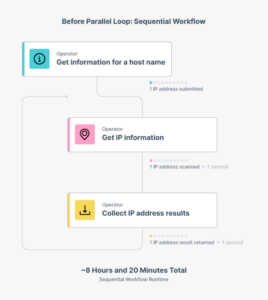
Torq is proud to introduce Parallel Loop, a new capability that enables users to process bulk data from myriad security tools with unprecedented ease. It also provides the power of orchestration like no other automation tool in the security automation industry with true parallelism. That means multiple tasks can be run simultaneously, and optionally, on multiple elastically-scaled compute resources, shortening the time workflow automations take to complete by 10x or more.