Operations | Monitoring | ITSM | DevOps | Cloud

What Is a Business Continuity Plan, and Why Does Your Startup Need It?

A business continuity plan is a document that outlines the procedures and processes your organization should take to remain operational in the event of an unforeseen disruption or disaster. It includes strategies for recovering critical operations, systems, data, and resources, as well as plans for restoring normal operations. In other words, it is a plan of action designed to help keep your business up and running despite any type of disaster. Here's why your startup needs to have a certain level of readiness.

From 200 to 503: Understanding the Most Common HTTP Status Codes

When browsing the web, you may have come across error messages such as "404 Page Not Found" or "500 Internal Server Error." These error messages are HTTP statuses, which are an essential part of the internet's communication protocol. In this article, we'll cover the most common HTTP statuses and what they mean.

Sponsored Post

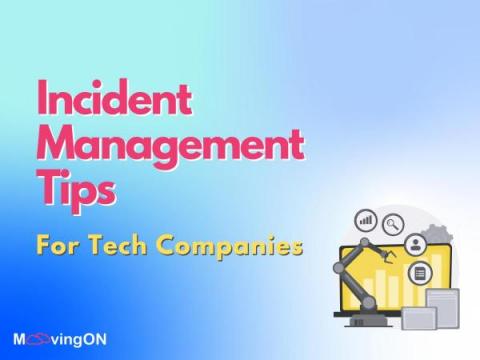
Incident Management: Tips for Tech Companies

A seemingly straightforward technical problem can often have explosive consequences. Say a tech team restarts a cloud server overnight; those few minutes of downtime might trigger a problem elsewhere and cause your app to crash. The following morning, customers can't access your services, you're trending on social media for all the wrong reasons and your customer service reps are left to pick up the pieces. Scenarios like this prove the value of incident management. But you need best practices that ensure incident management does what it's supposed to do. Otherwise, it's just another buzzword. Here are some best practices for incident management that you need to incorporate into your tech organization.

How to Create a Dashboard in Kibana

Wondering how to create a dashboard in Kibana to visualize and analyze your log data? In this blog post, we’ll provide a step-by-step explanation of how to create a dashboard in Kibana. You’ll learn how to use Kibana to query indexed application and event log data, filter query results to highlight the most critical and actionable information, build Kibana visualizations using your log data, and incorporate those visualizations into a Kibana dashboard.

Comparison of GCP, Azure and AWS Cloud Storage: Which One to Choose?

Cloud storage has become an essential component for businesses of all sizes. It allows you to store and access your data on a remote server, providing flexibility, scalability, and cost-effectiveness. However, with multiple cloud storage providers available, it can be challenging to choose the right one for your business needs. In this article, we will compare the three most popular cloud storage providers, GCP, Azure, and AWS, to help you make an informed decision.

The Social Risks and Dangers of Runaway Cloud Computing

Many of the most disruptive tech developments, such as artificial intelligence (AI), virtual reality (VR), and remote and hybrid working platforms, have been fueled by the continuous broad use of cloud computing. According to a 2022 report by Statista, a large majority of businesses now use multiple public cloud providers, with 90% of large enterprises and 60% of small businesses currently implementing a multi-cloud strategy.

7 Measurable Goals for Customer Support Team

The COVID-19 pandemic has upended varied operations, sectors, and industries, with customer support being no exception. According to a survey consisting of AI analysis of more than 1 million customer service calls by the Harvard Business Review, customer service is among the hardest-hit company functions by the COVID-19 pandemic. Hardly surprising.