Operations | Monitoring | ITSM | DevOps | Cloud

Service Desk Automation: What It Is and How to Get Started

How much of service desk work is problem solving and how much is repeat work that continues every day? Most service desks follow the same pattern daily. Password resets, access requests, software installs, approvals, and routine fixes keep coming in. These tasks are simple on their own, yet together they take most of the team’s time and push important incidents further down the queue. The main challenge is the constant flow of repeat work that reduces time for focused tasks.

How Support Uses Honeycomb to Debug Honeycomb

You'd think that working at an observability company means everyone knows exactly where to find everything in the data. It doesn't. Especially not on the support team. We're the ones who get the tickets. We're in the telemetry every day trying to figure out what went wrong for a customer, and we do that by pointing Honeycomb at itself. Here's how that actually works, and how it's changed.

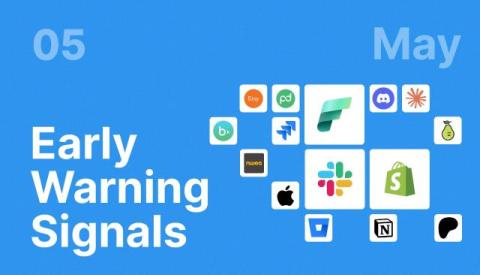
May 2026 Early Warning Signals

In May 2026, StatusGator detected 854 Early Warning Signals across SaaS, cloud, developer, and infrastructure services. Of those incidents, 695 were never acknowledged by providers, while 159 were eventually confirmed on official status pages. Throughout the month, StatusGator’s Early Warning Signals continued to surface emerging outages before many providers published updates, giving teams valuable time to investigate and respond.

Microsoft DNS management in OpUtils: One console for complete control

For network administrators, managing DNS has traditionally meant juggling zones and records across separate server interfaces, manually tracking changes, and responding to resolution failures after they’ve already caused disruption. We’re excited to introduce Microsoft DNS management in ManageEngine OpUtils, bringing DNS zone and record administration directly into the same console you already use for IP address management (IPAM).

Shifting Streams and AI Surges: What Our Data Reveals About the OTT Landscape

OTT data from early 2026 shows streaming hierarchies holding steady while AI platforms reshuffled rapidly. Claude has substantially increased traffic since January, overtaking Gemini, and is on pace to challenge ChatGPT by fall. Doug Madory digs into the data in this new analysis.

Tempo 3.0 release: a new architecture for scale and lower TCO, TraceQL metrics GA, and more

Tempo started with a simple goal: make distributed tracing easier to run at scale. As tracing adoption has grown, however, so have the challenges, including higher data volumes, more complex architectures, and increasing demand for real-time insights directly from traces. Over the last year, we’ve been evolving Tempo’s architecture to meet that moment. And today, we’re sharing the results of those efforts with the release of Tempo 3.0.

A deep dive into AWS data perimeter misconfigurations

In AWS environments, a data perimeter is a set of preventative controls that help ensure that your trusted cloud identities (principals or AWS services acting on your behalf) are accessing trusted resources from authorized networks. You can apply these controls at various levels of your infrastructure, such as per resource or across all resources in your AWS account.

How we cut Spark compute costs by 44% with agentic AI and Datadog Jobs Monitoring

Spark jobs only get more expensive and harder to debug as they scale. It’s a problem we’ve run into ourselves. Our Referential Data Platform team builds and maintains the knowledge graph that maps relationships between customers’ observability entities. ServiceQueryEdge is at the center of that graph, mapping service entities to their associated metric and log queries.

Migrate to Azure Managed Redis with Datadog and Eden

Azure Managed Redis is a Microsoft first-party, fully managed in-memory data store, replacing Azure Cache for Redis tiers. It includes Redis Enterprise features such as RediSearch for vector search and full-text search, in addition to RedisJSON, RedisTimeSeries, and Active Geo-Replication. As Azure Cache for Redis reaches end of life, more teams are planning migrations to Azure Managed Redis in search of better performance, lower cost, and modern capabilities for AI and real-time workloads.