Operations | Monitoring | ITSM | DevOps | Cloud

Mastering Heroku Monitoring in 2025: Best Practices for Optimal Application Performance

In today's fast-paced digital landscape, ensuring the reliability and performance of your applications is paramount. Heroku, a cloud-based Platform-as-a-Service (PaaS), simplifies application deployment and scaling. However, to fully leverage Heroku's capabilities, effective monitoring is essential. This guide delves into best practices for monitoring Heroku applications, providing context, practical steps, and unique insights to enhance your observability strategy.
Sponsored Post

Hidden Risks in Linux Power Monitoring - And How to Fix Them

In today's enterprise IT landscape, Linux on IBM Power Systems plays a crucial role in powering mission-critical workloads. Industries such as finance, healthcare, telecommunications, and manufacturing rely on IBM Power's scalability, performance, and security to handle large-scale data processing, AI-driven analytics, and high-performance computing. As these environments continue to evolve, ensuring peak system performance and reliability is more important than ever.

From Cost Centre to Compounding Advantage

Most teams still treat bugs like little fires to put out. A ticket gets logged. Someone investigates. A fix gets pushed. Then it’s onto the next one. But here’s the thing nobody tells you: Every bug is a chance to get smarter. And in 2025, the best teams aren’t the ones logging the fewest bugs. They’re the ones learning the most from every bug they fix.

Want AI to be better at debugging? It's all about context

More code is being shipped today than ever before, accelerated by AI powered code gen tools. We’re in a golden age for builders. But here’s the thing: software still breaks in production. From a recent study by Microsoft, AI models struggle to debug software. It’s because most of these code gen tools lack the one thing every good developer relies on: context. To debug anything, you need context. Having AI tools doesn't change that.

Hybrid Cloud Monitoring: A Comprehensive Guide to Strategies, Best Practices, and Tools

Modern infrastructures are no longer confined to on-premises servers alone. Instead, they span cloud environments, containers, microservices, and globally distributed systems. This landscape, known as a hybrid cloud environment, has become the new norm for organizations, primarily because it offers the scalability of the cloud and ownership over specific elements afforded by an on-premises setup.

Logs in Sentry: Now in Open Beta

You’re looking at an error in Sentry—a failed payment in your Flask backend or an unexpected null in your Node API. You’ve got the stack trace. The request details. Even the full trace. What you don’t have: the logs your app emitted right before everything went sideways. With Sentry Logs (now in open beta), you can send application logs straight to Sentry and see them automatically connected to the errors and traces you already use.

Is SCOM dead? Not even close - It has just evolved

Is SCOM dead? Not even close - It has just evolved System Center Operations Manager (SCOM) is far from dead. While a growing number of monitoring alternatives have emerged in recent years, SCOM in 2025 remains a critical tool, especially for organizations running hybrid environments. Thanks to its stateful, object-oriented monitoring model and a rapidly evolving ecosystem of modern Management Packs (MPs).

Forecasting with InfluxDB 3 and HuggingFace

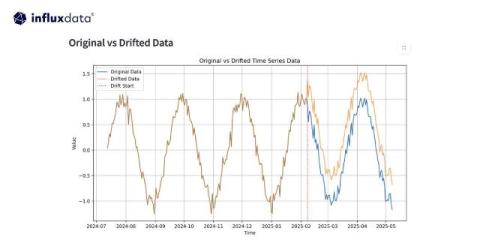
Machine learning models must do more than make accurate predictions; they also need to adapt as the world around them changes. In real-world systems, data distributions shift due to seasonality, equipment wear, user behavior changes, or other external forces. If your models can’t keep up, the result is poor predictions. This can lead to outages, inefficiencies, or missed opportunities. That’s why forecasting systems need to be monitored and resilient, not just accurate.

Bringing Custom Crash Responses to Unreal Engine

Show a customized, crash-specific message when your game crashes. Locked in an intense battle, hanging on for dear life, on the verge of nigh-impossible victory and then… boom! Positively, absolutely, unquestionably, no one wants a crash to interrupt their favorite game. Crashes are a frustrating yet inevitable part of gaming, and the only thing worse than being on the receiving end of a crash is being on the receiving end of the same crash repeatedly.