Top 3 Tools to Monitor Python in AWS Lambda
Comparison of top observability and debugging tools to help you monitor Python in AWS Lambda.


Comparison of top observability and debugging tools to help you monitor Python in AWS Lambda.
AWS just announced support for AWS Lambda functions powered by AWS Graviton2 processors. These are 64-bit Arm-based processors that are custom built by AWS and offer a better price to performance ratio. In this post, let me take through what we have learnt about this new option and what it means for you.
Web servers are software services that store resources for a website and then makes them available over the World Wide Web. These stored resources can be text, images, video and application data. Computers that are interfaced with the server mostly web browsers (clients), request these resources and presents to the user. This basic interaction determines every connection between your computer and the websites you visit.
Distributed systems are everywhere. Although many teams don’t think of their applications as distributed systems, if they’re developing using container-based microservices and serverless functions instead of a monolith, they’re creating a distributed system. This change also means that monitoring needs are becoming more complex.
Modern computing has come a long way in the last couple of years and the introduction of new technologies is only accelerating the rate of advancements. From the immense compute power at our disposal to lightning-fast networks and ready-made services, the opportunities are limitless. In such a fast-paced world, we can’t ignore economics.
Not so long ago, development teams working for the U.S. Department of Defense could take anywhere from three to ten years to deliver software. “It was mostly teams using waterfall, no minimum viable product, no incremental delivery, and no feedback loop from end users,” Nicolas M. Chaillan, Chief Software Officer of the U.S. Air Force, said in a CNCF case study. “Particularly when it comes to AI, machine learning, and cybersecurity, everyone realized we have to move faster.”
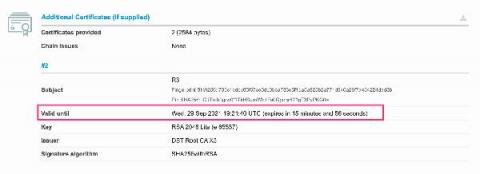
If you've been using Let's Encrypt for a while, you may have noticed that their certificates are signed by a root certificate titled DST Root CA X3. That root certificate is set to expire in a few hours. Any certificates still signed by that root will no longer be valid. But luckily, that shouldn't form a problem for most Let's Encrypt users. For a while now, new SSL issuances by Let's Encrypt have issued certificates against DST Root CA X3 (the one that is about to expire) and ISRG Root X1.
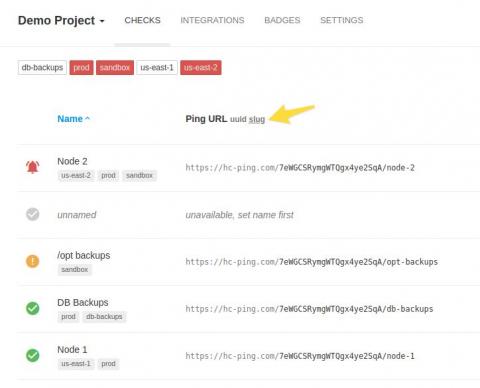
Healthchecks.io pinging API has always been based on UUIDs. Each Check in the system has its own unique and immutable UUID. To signal a start, a failure, or a particular exit status, clients can add more bits after the UUID: This is conceptually simple and has worked quite well. It requires no additional authentication. The UUID value is the authentication, and the UUID “address space” is so vast nobody is going to find valid ping URLs by random guessing any time soon.