Missed part one? Check out the full guide here. As companies grow, so do their products, teams, and the number of external tools. For engineers, that can mean code sprawl, data silos, notification fatigue, and some “what the…?” moments along the way as they try to make sense of it all.
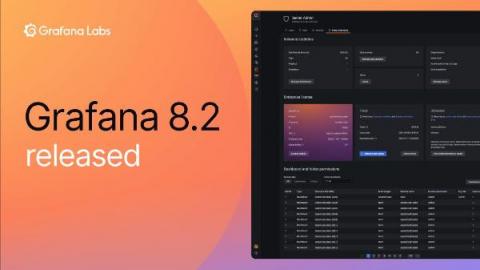
Grafana 8.2 is here! This release marks the start of our work focused on measurable improvements to Grafana’s accessibility — part of our continuing mission to democratize metrics for everyone. The initial changes to Grafana in 8.2 are focused on navigation, with more to come. We’ll be sharing more about our accessibility roadmap in an upcoming blog post.
In this article, you’ll learn how to configure Keda to deploy a Kubernetes HPA that uses Prometheus metrics. The Kubernetes Horizontal Pod Autoscaler can scale pods based on the usage of resources, such as CPU and memory. This is useful in many scenarios, but there are other use cases where more advanced metrics are needed – like the waiting connections in a web server or the latency in an API.
In this article, you’ll learn, through an example, how to configure Keda to deploy a Kubernetes Horizontal Pod Autoscaler (HPA) that uses Sysdig Monitor metrics. Keda is an open source project that allows using Prometheus queries to scale Kubernetes pods. In Trigger a Kubernetes HPA with Prometheus metrics, you learned how to install and configure Keda to create a Kubernetes HPA triggered by a standard Prometheus query.
Monitoring an application’s performance is the basics of building a successful software product. With the popularity that Rails has always been riding on in the start-up world, it makes all the more sense to look for tools that help you keep your Ruby on Rails application in shape. In this guide, we will look at some of the top APM tools for Rails applications and compare them along some standard benchmarks to help you get an insight into which tool fits your use case the best.
Take a look at the two versions of the website below. Can you can spot the one that has a website performance mistake that would result in a £2.5 million loss in sales each year? It’s impossible to tell from the screenshots above because they appear identical.
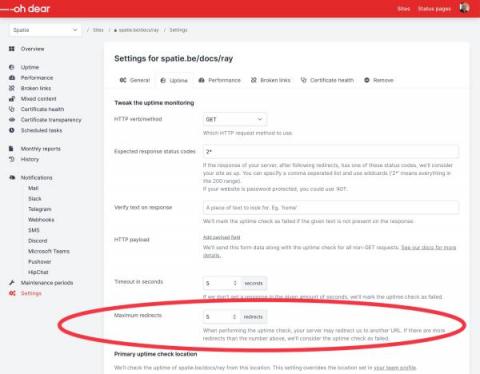
A good deal of sites redirect visitors to a specific more relevant page. Think, for instance, of a site that redirects you from / to a page in a relevant language, for instance /en or /nl. A single redirect is often not a problem, but having multiple redirects in a chain can hinder your site's user experience. Modern browsers also limit the number of redirects.
If you were one of billions of frustrated users of Facebook who weren’t able to access their accounts Monday, rest assured in knowing that downtime is a thing of the distant past and the mega-social media platform is back online. End users can now relax knowing that the brush fire has been extinguished. Remarkably, the nearly seven-hour outage could not be attributed to the deluge of recent high-profile attacks on government, enterprise, and educational servers throughout the world.
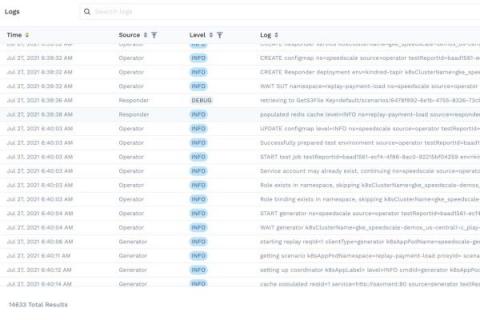
Have you ever written a Hello, World! application? In most of these tutorials the first step is to log words to the console. It's an easy way to understand what is going on with your application and readily available in every programming language. The console output is incredibly powerful, and it has become easier than ever to capture that output as logs. As your application grows and evolves you need to implement a structured application log approach.