Operations | Monitoring | ITSM | DevOps | Cloud

Elastic Observability: Driving mean time to resolution to zero

At ElasticON Global 2021, Tanya Bragin, VP Product, Observability, and the Elastic Observability team showed how ongoing innovations continue to deliver actionable insights and faster root cause detection, reducing mean time to resolution (MTTR). The adoption of cloud, microservices, and ephemeral infrastructure is driving increased complexity, requiring an observability solution to provide end-to-end visibility.
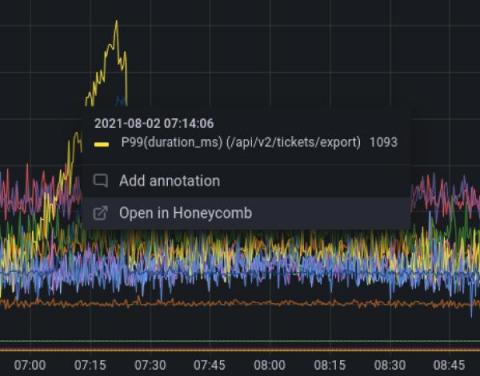

Announcing General Availability of the Honeycomb Query Data API

The Query Data API is a Honeycomb Enterprise feature. With a Honeycomb Enterprise account, you can use this API today. Head over to our API docs to learn how to get access to your data. If you aren’t yet a Honeycomb Enterprise user, try it out by requesting an Enterprise Trial. Starting today, Honeycomb Enterprise customers can use the Honeycomb Query Data API to programmatically run queries and retrieve their results, and pull query results into any data visualization tool of their choice.

Reliable Alerting with Icinga and SIGNL4

You’ve probably been in this situation before – you’re using Icinga to monitor your infrastructure and Icinga detects a critical issue but nobody notices it. It might be an urgent maintenance request, an unexpected breakdown, or a service quality issue. But your technicians or service engineers are neither in the control room nor in front of the dashboard to see the issue and its urgency.

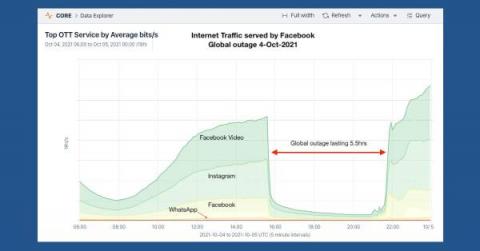
Facebook, Instagram, and WhatsApp Down for Over Five Hours

Did you unconsciously open Instagram, Facebook, or WhatsApp several times throughout the day on Monday, only to get a “Couldn’t refresh feed” message? Did you try again every 20 or so minutes? Did you maybe even restart your phone, not once thinking websites as large as Facebook could possibly go down and believing it must be your own technology? Rejoice: it’s not you, it’s them.

The Future of AIOps Includes an ITOps Strategy

One of the questions I get asked a lot by customers, prospects, and partners is, “Will AIOps make them irrelevant?” To them, AIOps is often equivalent to automated remediation; an AIOps system automatically detects an incident and kicks off a remediation process in response to this incident, knowing exactly what process will solve the problem. IT is out of the loop, data centers and NOCs just keep humming along unattended, end users are none the wiser.

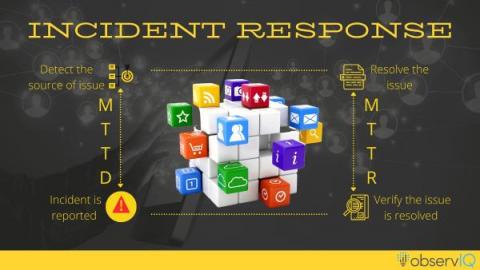
Facebook, Instagram, and Whatsapp's Outage - Understanding MTTR

Yesterday the most used social media platforms in the world were inaccessible for 6 hours straight. Later, in a press release, Facebook revealed that the outage was due to configuration changes in their routers. There is no doubt that Facebook has an intense incident response plan, yet a small blind spot resulted in a significant business interruption. So how do we avoid this? The truth is, outages and performance issues are bound to happen in any network.

AIOps and Performance Monitoring: A One-Two Punch for IT Operations

Sugar Ray Robinson and Jake LaMotta. Marvelous Marvin Hagler and Tommy Hearns. Muhammad Ali and Joe Frazier. All were among history’s greatest boxers, but when they met in the ring, each brought out the best in the other. It’s the same in IT management. There are tools and platforms that on their own are essential to IT operations; but when paired as an infrastructure management tandem, each complements the other, ensuring maximal efficacy of both systems.

Better Kubernetes application monitoring with GKE workload metrics

The newly released 2021 Accelerate State of DevOps Report found that teams who excel at modern operational practices are 1.4 times more likely to report greater software delivery and operational performance and 1.8 times more likely to report better business outcomes. A foundational element of modern operational practices is having monitoring tooling in place to track, analyze, and alert on important metrics.

Monitoring Kubernetes with Prometheus

Kubernetes is among the emerging open-source products expanding in the market at a very fast rate. It is a portable, extensible, and open-source platform used for managing containerized workloads and services. Companies are widely adopting it for the development of their major products. Docker is always used for running Kubernetes servers on local systems for testing purposes. It becomes essential for companies to monitor their Kubernetes container.