Python Error Handling in AWS Lambda
Python, used in around 53% of all Lambda functions, is the most popular language for doing Serverless. In this article, you’ll get an overview of the need-to-knows for error handling Python in AWS Lambda.


Python, used in around 53% of all Lambda functions, is the most popular language for doing Serverless. In this article, you’ll get an overview of the need-to-knows for error handling Python in AWS Lambda.
Getting started with AWS and adding your credit card to your own account feels scary, but there are ways to get free credits so you can sleep better in the beginning. In this article, we’ll cover some tricks and tips to get started and keep using AWS for free. Stepping into some new terrain is hard. This is already true if it’s only about learning something new.
On October 4, Facebook and its family of apps, including Instagram and WhatsApp, suffered a global outage of its services that lasted approximately six hours. The massive outage has been blamed on configuration errors in backbone routers that are used to connect network traffic to the company’s data center. Facebook apologized to its 3.5 billion users who were unable to access any of the company’s services during the downtime.
We are excited to announce a new community initiative – Dashboard Fridays. Dashboard Fridays is a bite-sized video series where we share and discuss a range of different dashboards created for the community, by the community. Each video is no longer than 20min, so grab a coffee and let’s talk dashboards! Each episode, we will zoom in on one stellar dashboard put together by a member of the community.
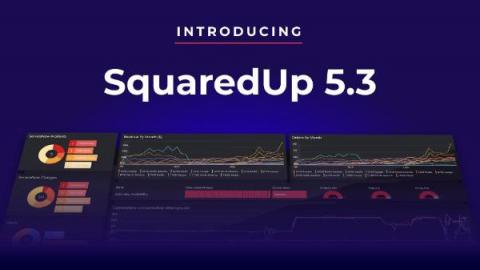
SquaredUp 5.3 is now available! You will find new features to discover as well as enhancements to the SquaredUp you already love. Here are the highlights: Check out our release webinar for a detailed walkthrough and demo.
Missed part one? Check out the full guide here. As companies grow, so do their products, teams, and the number of external tools. For engineers, that can mean code sprawl, data silos, notification fatigue, and some “what the…?” moments along the way as they try to make sense of it all.
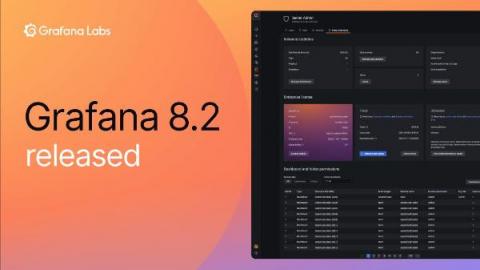
Grafana 8.2 is here! This release marks the start of our work focused on measurable improvements to Grafana’s accessibility — part of our continuing mission to democratize metrics for everyone. The initial changes to Grafana in 8.2 are focused on navigation, with more to come. We’ll be sharing more about our accessibility roadmap in an upcoming blog post.
In this article, you’ll learn how to configure Keda to deploy a Kubernetes HPA that uses Prometheus metrics. The Kubernetes Horizontal Pod Autoscaler can scale pods based on the usage of resources, such as CPU and memory. This is useful in many scenarios, but there are other use cases where more advanced metrics are needed – like the waiting connections in a web server or the latency in an API.
In this article, you’ll learn, through an example, how to configure Keda to deploy a Kubernetes Horizontal Pod Autoscaler (HPA) that uses Sysdig Monitor metrics. Keda is an open source project that allows using Prometheus queries to scale Kubernetes pods. In Trigger a Kubernetes HPA with Prometheus metrics, you learned how to install and configure Keda to create a Kubernetes HPA triggered by a standard Prometheus query.