Operations | Monitoring | ITSM | DevOps | Cloud

How to automate verification of deployments with Argo Rollouts and Elastic Observability

Shipping complex applications at high velocity lead to increased failures. Longer pipelines, scattered microservices, and more code inherently lead to bigger complexity where small mistakes may cost you big time.

Taming the Complexity of Windows Event Collection with Cribl Stream 3.4

OK, first things first. I have to admit that I am, first and foremost, an old-school UNIX systems administrator. I’m that grizzled sysadmin in your shop who soliloquizes wistfully about managing UUCP for email “back in the day.” Centralizing Logs? Yeah, we had syslog, and saved it all off to compressed files.

How to get started with OpenTelemetry auto-instrumentation for Java

If you’re new to OpenTelemetry, like I was, you might be wondering how to quickly get started. OpenTelemetry is becoming the gold standard to collect all of your machine data and is changing observability as we know it. Instead of learning multiple technologies to collect all data, you can leverage a single cloud-native framework to complete your observability.

Benefits of Localized Distributed Tracing

Distributed tracing is a household term nowadays – if your house is an IT department! Modern enterprises use cloud-native applications for agility and responsiveness to customer needs. When monitoring cloud-native applications, distributed tracing follows how transactions perform while traversing services or containers in the backend architecture. By definition, we’re describing production applications with requests, methods, database calls and logs that accompany a transaction.

Flowmon and WhatsUp Gold: Discover application experience issues through single pane of glass

Have you ever experienced user complaints and struggled to find the root cause of the performance degradation? I'm sure every IT operations professional has. Is it the application? Is it the underlying infrastructure? Is it the network? What if you have a single pane of glass that will gather all the relevant metrics and telemetry and display it in an intuitive and easy to understand fashion?

Top Infrastructure Monitoring Tools and Best Practices

As more and more organizations adopt cloud-native technologies, the need to align business objectives and end-user experience with IT infrastructure’s availability and performance is ever-growing. This trend requires infrastructure monitoring setups to ensure that all of your systems are active and working together across your cloud environments, host operating systems, storage systems, etc.

APIs for IT Monitoring Solutions

The majority of monitoring and management solutions used in enterprises provide their customers with APIs (Application Programming Interfaces) and a CLI to facilitate DevOps type workflows. With IaC (Infrastructure as Code) becoming de facto and ubiquitous, decent APIs have long been a must have on product evaluation checklists; there are of course a few exceptions – namely products aimed only at SMB (Small and Medium Business), immature startups, or freeware.

Heartbeat check and more - is your monitoring still alive?

SIGNL4 is a cloud-based mobile alerting and incident response service. Third-party systems like monitoring tools, control systems or IoT sensors detect abnormalities and transmit events to SIGNL4 over the Internet. What if your systems cannot transmit critical events anymore? That might happen when the Internet is down or when the tool itself has a problem. In this case, SIGNL4 would miss critical events and could not turn them into alert notifications to your IT admins, technicians and experts.

TL;DR InfluxDB Tech Tips: Converting InfluxQL Queries to Flux Queries

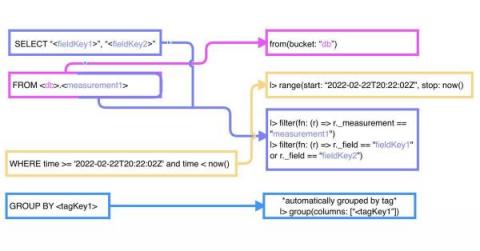
If you’re a 1.x user of InfluxDB, you’re most likely more familiar with InfluxQL than you are with Flux. To gain a deep understanding of Flux, it’s important to understand: However, you can still use Flux without studying those topics. In this TL;DR, we’ll convert common InfluxQL queries into Flux and identify patterns between the two languages to help you get started using Flux more easily if you come from a InfluxQL or SQL background.