Operations | Monitoring | ITSM | DevOps | Cloud

Application observability made easier for Compute Engine

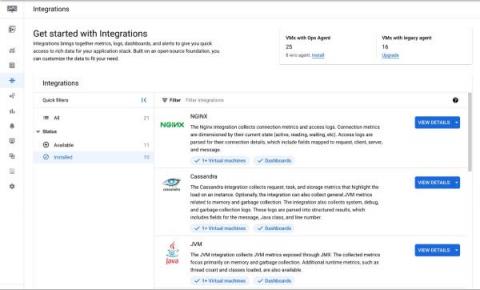
When IT operators and architects begin their journey with Google Cloud, Day 0 observability needs tend to focus on infrastructure and aim to address questions about resource needs, a plan for scaling, and similar considerations. During this phase, developers and DevOps engineers also make a plan for how to get deep observability into the performance of third-party and open-source applications running on their Compute Engine VMs.
Logging Best Practices - MDC, Ingestion and Scale

I don’t care about religious wars over “which logger is the best”. They all have their issues. Having said that, the worst logger is probably the one built “in-house”… So yes, they suck, but re-inventing the wheel is probably far worse. Let’s discuss making these loggers suck less with proper usage guidelines that range from the obvious to subtle. Hopefully, you can use this post as the basis of your company’s standard for logging best practices.

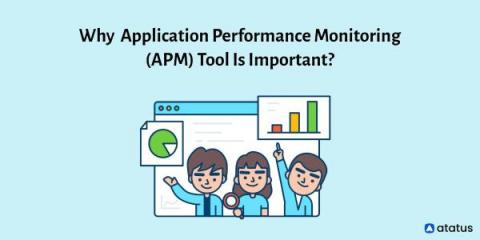
Why Application Performance Monitoring (APM) Tool Is Important?

Modern applications must deliver not only value but also round-the-clock availability, quick replies, and real-time problem-solving in today's digital economy. Since all businesses rely on software applications, their performance is one of their primary worries and frustrations, especially if their applications are the business itself. This is where Application Performance Monitoring Tool enters the scene.

Pricing comparison for Managed Prometheus

Observability has become a critical part of many companies and their business. So did requirements for the systems which collect and store business-critical metrics. Monitoring systems need to be reliable, scalable, fast, and preferably cost-effective. Such features of any monitoring system never come for free or out of the box – you need people, a team of professionals who can build and manage it.

Source-Side Queueing: You Down With UDP?

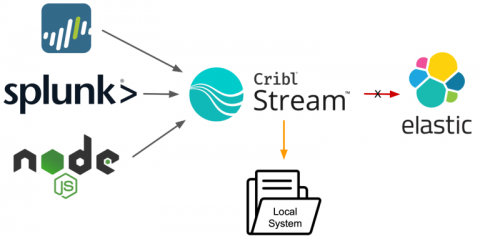
Source-side queueing is a fancy way of saying: You can configure Cribl products to make sure data isn’t lost in the event of downstream backpressure, again. Those familiar with Cribl Stream might be aware of destination queuing or persistent queuing, wherein Stream can write data to the local disk in the event of an issue reaching the destination. Maybe your SIEM is suffering from disk I/O latency. Maybe there is a DNS problem with your load balancer (Hint: It’s always DNS).

Sponsored Post

Optimize Device Refresh with Digital Experience Monitoring

Last year, during our Work Anywhere webinar, Forrester analyst Andrew Hewitt said that 51% of the technology teams focused on providing the right technology to enhance the employee experience. By 2021, the entire IT organization saw the need to support a flexible digital workplace with appropriate devices, wherever employees were located. According to computer economics, hardware such as PCs, laptops, and mobile devices age every four years. Therefore, device refresh becomes an important planning activity for support teams in keeping their knowledge workers productive and reducing the total cost of ownership (TCO).

Why does a business need middleware management?

In order to answer this question, it is necessary to define what middleware is. It is generally accepted that middleware is software that sits between existing systems and processes and helps to smooth integration and interaction between them. Because of the sheer range of middleware and the scope of what it can do and affect in terms of business infrastructure, it is vital that it can be successfully monitored and managed.

Sponsored Post

Who Can Benefit From Kafka Monitoring Services?

The benefits of Apache Kafka monitoring services are widely appreciated across the industry. Organizations that rely heavily on Apache Kafka for their data streaming needs can derive great benefit from the use of Kafka monitoring services. By keeping track of various different key performance indicators (KPIs) related to Kafka, such as message throughput and latency, organizations can ensure that their Kafka-based data pipelines are running as smoothly and efficiently as possible.

Splunk Embarks on AWS Graviton Journey with Amazon EC2 Im4gn and Is4gen Instances

We are excited to announce that Splunk Cloud Platform is moving to next generation AWS Graviton2 processor hardware to help enable enhanced performance for customers who choose AWS as a provider. This begins a phased transition of our Splunk Cloud Platform indexer tier in a move that will help Splunk operate more efficiently and provide customers with the cutting edge in processing technology.

A Primer for Monitor as Code: How to use Splunk Observability Cloud with Terraform

Managing the complexities of today’s cloud native infrastructure has resulted in the increased need for observability. As cloud adoption continues to grow, the need to deliver a better customer experience, scale efficiently and increase momentum on innovation has never been more important. For many organizations to carry out these principles, two technologies are helping organizations deliver on these goals faster: Monitoring-as-Code and Infrastructure-as-Code.