Operations | Monitoring | ITSM | DevOps | Cloud

The Ultimate OpenTelemetry Guide for Developers

OpenTelemetry is a free and open-source software initiative with the objective of supplying software developers with the means to create distributed systems. OpenTelemetry was developed by engineers at Google, and developers have the ability to utilize it to create a standard foundation for the construction of distributed systems. The goal is to enable developers to write code once and then deploy it in any location of their choosing.

Product Update - CLI Onboarding Wizard Now Available

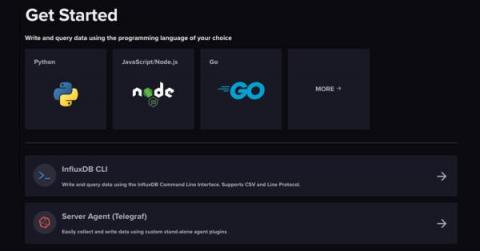
We love to write and ship code to help developers bring their ideas and projects to life. That’s why we’re constantly working on improving our product to meet developers where they are, to ensure their happiness, and accelerate Time to Awesome. This week, we are covering a featured product release that we think will save you time and effort when onboarding to time series and InfluxDB.

InfluxDB Python Client Library: A Deep Dive into the WriteAPI

InfluxDB is an open-source time series database. Built to handle enormous volumes of time-stamped data produced from IoT devices to enterprise applications. As data sources for InfluxDB can exist in many different situations and scenarios, providing different ways to get data into InfluxDB is essential. The InfluxDB client libraries are language-specific packages that integrate with the InfluxDB v2 API. These libraries give users a powerful method of sending, querying, and managing InfluxDB.

An introduction to OpenTelemetry Metrics

OpenTelemetry is a collection of APIs, SDKs, and libraries that provide an open source observability framework for instrumenting, generating, collecting, and exporting telemetry data like metrics, traces, and logs. It is incubated under Cloud Native Computing Foundation (CNCF), the same foundation which incubated Kubernetes. OpenTelemetry is quietly becoming the world standard for instrumenting cloud-native applications.

Why You Shouldn't Use OpenTracing In 2022

OpenTracing was an open-source project developed to provide vendor-neutral APIs and instrumentation for distributed tracing across a variety of environments. As it is often extremely difficult for engineers to see the behaviour of requests when they are working across services in a distributed environment, OpenTracing aimed to provide a solution to heighten observability.

What is OpenTelemetry?

OpenTelemetry is a collection of tools and APIs for collecting, processing, and exporting telemetry data from software. It is used to instrument applications for performance monitoring, logging, tracking, tracing, and other observability purposes. What is Telemetry? The word is derived from the Greek “tele” meaning “remote,” and metron meaning “measure.” So, it’s the collection of metrics and their automatic to a receiver for monitoring.

Stack Trace Line Numbers for Unity Events

In 2018 we launched the Sentry Unity SDK, but at the time, we couldn’t crack how to display stack trace line numbers for C# exceptions with IL2CPP scripting backend. And until a recent release of Unity, we thought it wasn’t possible. But here at Sentry we often do the impossible… or at least the improbable. Like adding features to our JavaScript SDK while making it smaller at the same time.

How to Troubleshoot Intermittent Internet Connection

Dealing with an intermittent Internet connection is very frustrating. Does your Internet connection keep disconnecting and reconnecting when you’re watching your favourite Netflix show or chatting with your colleagues on Zoom? In this article, we’re teaching you how to troubleshoot intermittent Internet issues with Network Monitoring.

Battle the Ransomware Scourge with Deep Network Insight

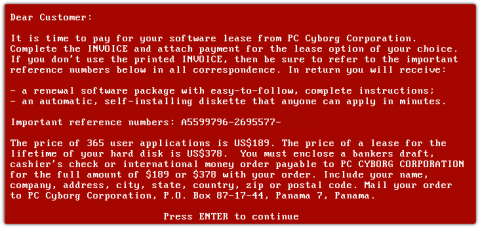
Ransomware is the gift that keeps on giving. Old as it is (33 years) ransomware is constantly morphing into new exploits. The reason is simple. Ransomware works and too often cybercriminals walk away with bags of money (or piles of Bitcoin, anyway). “Following the World Health Organization's AIDS conference in 1989, Joseph L. Popp, a Harvard-educated biologist, mailed 20,000 floppy disks to event attendees.