Operations | Monitoring | ITSM | DevOps | Cloud

What can be learned from recent BGP hijacks targeting cryptocurrency services

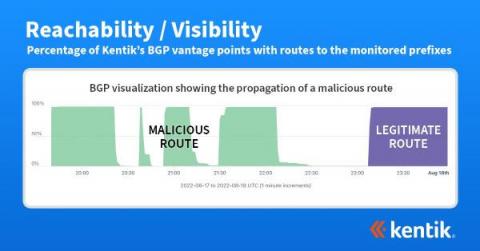
On August 17, 2022, an attacker was able to steal approximately $235,000 in cryptocurrency by employing a BGP hijack against the Celer Bridge, a service which allows users to convert between cryptocurrencies. In this blog post, I discuss this and previous infrastructure attacks against cryptocurrency services. While these episodes revolve around the theft of cryptocurrency, the underlying attacks hold lessons for securing the BGP routing of any organization that conducts business on the internet.

Key Observability Scaling Requirements for Your Next Game Launch: Part II

In Part I in our series outlining best practices for scaling observability, we reviewed the data analysis capabilities that can help engineers troubleshoot faster during high pressure situations during a game launch. Nobody wants lag time or crashes in their game launch. Similarly, no one wants terminated sessions or for your gamer customers to log off and play a competitor’s game.

Synthetic Monitoring of Microsoft AVD Service Levels

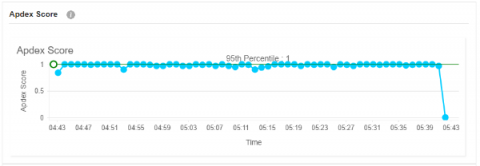
We recently announced a FREE ready-to-go standalone SaaS logon simulator tool for Microsoft AVD, available here. This joins our fully featured logon simulator available for use on-premises, as SaaS or in the cloud within our synthetic monitoring suite. A logon simulator, whilst a useful tool, should be used in conjunction with other synthetic and real user monitoring tools for a truly proactive IT strategy designed to prevent real users encountering issues and raising support tickets.

VictoriaMetrics Monitoring

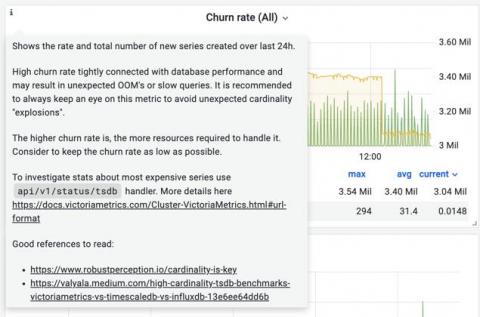
Share: VictoriaMetrics is a monitoring solution. It was designed to collect and process telemetry from many systems, provide a retrospective view, and forecast metrics for capacity planning. But what about monitoring VictoriaMetrics itself? There is one of the software development approaches called Observability Driven Development (ODD). In a nutshell, it means that developers should always keep in mind that software needs to be transparent to the person who uses it. Does your software make backups?

TL;DR InfluxDB Tech Tips: Joins

If you’re an InfluxDB user you’ve almost certainly used the join() function. The join() function performs an inner join of two table streams. It’s most commonly used to perform math across measurements. However, now it is deprecated in favor of the join.inner() function which is part of the new join package. With the addition of the join package, Flux now has the ability to perform the following types of joins: A visualization of different types of joins from this article.

8 Secret Struggles Today's MSPs Are Dealing With

In the managed services industry, there’s no shortage of support. Whether online or in person, there are countless ways to connect with other MSPs, share stories, and provide tips and tricks to help you build your business—and overcome MSP struggles and biggest challenges. And while MSPs are willing to share industry trends they’re taking advantage of, they’re not always willing to talk about the ones they’re losing sleep over.

An MSP's Guide to Quarterly Business Reviews

Quarterly business reviews (QBRs) are one of the best tools you can use when it comes to being transparent and keeping your clients updated on all the work you’re taking care of for them. Otherwise known as technical business reviews, or semi-annual business reviews, QBRs serve as an excellent opportunity to touch base with clients, highlight the value of the services you provide, and create a strategic agenda moving forward.

Java application performance metrics 101

Since it first emerged, Java has had a phenomenal rise in usage and popularity. It’s ability to be robust and platform-independent has enabled it to rule the application development world by providing internet solutions for businesses across industries. Any organization that runs its mission-critical applications on Java shouldn’t be turning a blind eye towards understanding the importance of application performance monitoring.

The IT company Pandora FMS, the first in Spain to offer a monitoring system integrated with IBM i

The technology company Pandora FMS, specialized in system monitoring, takes a step further towards growth becoming the first national technology capable of offering monitoring solutions, both for IBM i systems (formerly known as AS400) and for much more modern systems. A development that, after several decades, means the full coexistence of IBM i with more recent systems.