Operations | Monitoring | ITSM | DevOps | Cloud

Sponsored Post

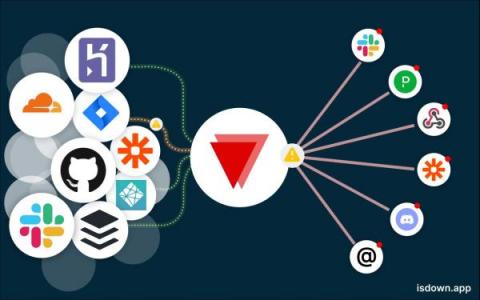
What's a Status Page Aggregator and why you need one

Welcome to the future! SaaS (Software as a Service) rules the world. When just a few years ago businesses were buying software and installing it in-house, now they're renting it. There's a SaaS for everything. Actually, multiple SaaS for the exact same problem! Even technology companies with expert engineering teams are choosing to use off-the-shelf components (now in the form of SaaS) instead of developing in-house. It makes complete sense to buy something that would cost 100x more to develop in-house.

Sponsored Post

The Importance of Observability for Site Reliability Engineers (SREs)

Site reliability engineers (SREs) play a crucial role in ensuring the reliability of systems. From creating software to improving system reliability in production, responding to incidents, and fixing issues, SREs are responsible for guaranteeing the health of applications.. And observability helps support SREs'. Because an observable system allows them to identify and fix issues promptly, resulting in SRE's being better equipped to fast-track development cycles.

Schedule Cronjob for the First Monday of Every Month, the Funky Way

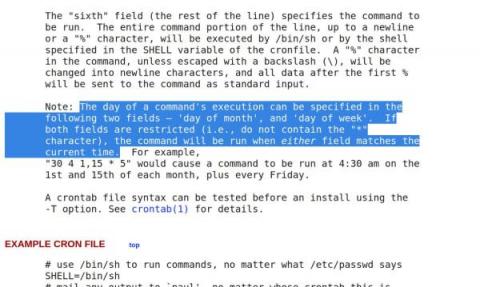
The crontab man page (“man 5 crontab” or read online) contains this bit: What does it mean precisely? If you specify both the day of month and the day of week field, then cron will run the command when either of the fields match. In other words, there’s a logical OR relationship between the two fields.

Flask Monitoring and APM Benefits

Many renowned businesses use the well-known web framework Flask. Flask is quite famous among developers for making small and full-fledged applications. It is known for being a straightforward framework to learn hence why it is popular among established organizations. Monitoring your Flask application can be a challenge. Many important operations are happening inside of them, and if anything goes wrong, it can cause some damage.

Part 5: Proactive Observability With AIOps- Level 4

Level 4, Proactive Observability With AIOps, is the most advanced level of observability. At this stage, artificial intelligence for IT operations (AIOps) is added to the mix. AIOps, in the context of monitoring and observability, is about applying AI and machine learning (ML) to sort through mountains of data looking for patterns.

Just How Bad is a Down, Slow, or Dysfunctional Website? It's Worse than You Think!

Have you ever watched a movie (*cough* Godfather III) and said to yourself: “wow, this is so incredibly bad — I don’t think this can get worse!” But then it does. Much, much worse. Well, having a down, slow, or dysfunctional website is similarly nightmarish — just when you think the reputation devastation is finally over, there’s more on the horizon. With apologies to Shakespeare: hell hath no fury like a customer scorned. Not convinced?

How to convert a mini-arcade machine into a Grafana dashboard display with Raspberry Pi

When COVID-19 hit, Yonatan Mevorach faced an unexpected challenge, which required an unexpected solution. The Infrastructure Team Lead at Wix, the popular website building platform, was accustomed to looking at multiple monitors on the walls of the software company’s offices in Tel Aviv, Israel. These monitors cycled through Grafana dashboards to help the team keep tabs on Wix’s many services.

Released: Better Uptime Integration

StatusGator has a wide a variety of use cases: from education to help desk to IT and managed services and DevOps, too. All corners of an organization depend on cloud services and StatusGator gives you visibility into the status of all of your vendors. We’ve heard over and over from our DevOps users that alerts and notifications for their teams are already centralized into a single incident management platform such as OpsGenie, PagerDuty, or FireHydrant.

How to monitor OpenShift with Sysdig Monitor

Monitoring Red Hat OpenShift brings up challenges compared to a vanilla Kubernetes distribution. Discover how Sysdig Monitor, and its exclusive features in OpenShift, will help you monitor and troubleshoot your issues fast and easily. OpenShift builds many out-of-the-box add-ons into its Kubernetes foundation. For example, the OpenShift API server, Controller Manager, Ingress, or Marketplace ecosystem. This creates a more complex environment that can cause you to struggle.