Operations | Monitoring | ITSM | DevOps | Cloud

Overcoming data challenges in payment monitoring

The total transaction value of digital payments is projected to exceed $1.7 billion by the end of 2022. Each one of these transactions generates masses of data that contains critical insights for merchants, payment service providers, acquirers, fintechs, and other stakeholders in the payments ecosystem. Having real-time access to these insights has the power to drive growth through customer and market understanding.

Maximizing Application Performance: How to Extract Practical Data from Your Network

How many applications do you use that exist only on the computer in front of you? Two? One? None at all? I occasionally use two applications that live locally on my computer, but all the rest, including every application I use for personal and professional work, are delivered over the internet. That’s pretty much where we are these days, isn’t it?

The Hidden Costs of Serverless Observability

The growing popularity of serverless architectures has led to an increased need for solutions to the modern challenges of microservice observability—one of the most critical components for running high-performing, secure, and resilient serverless applications. Observability solutions have to break through the complexity of serverless systems, and with the right stack, observability enables not only fast and easy debugging of applications, but drives optimization and cost efficiency.

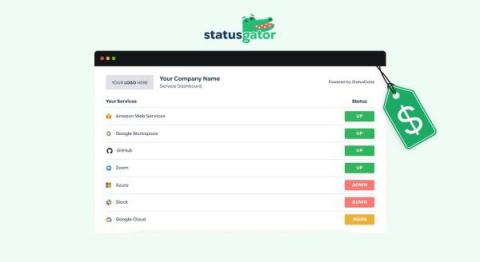
Status Page Pricing - 22 Most Popular Status Page Tools Cost Reviewed [2023]

Keeping your customers informed about the status of your website, application, or service is essential nowadays. If you don’t have a status page to communicate this, you’re missing an opportunity to improve transparency and reduce the customer support burden. It is especially true if you are running an online business and your website is your main source of income. The status page is crucial not only for your business but for your customers as well. So how much can a status page cost?

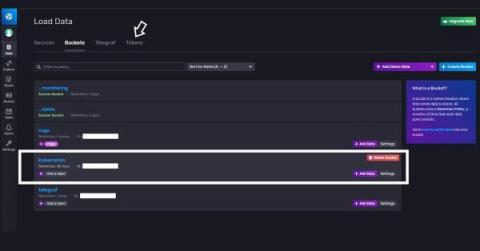
How to Monitor Kubernetes K3s Using Telegraf and InfluxDB Cloud

This article was originally published in The New Stack and is reposted here with permission. A Helm chart can simplify our lives and enable us to see what is happening with our K3s cluster using an external system. Lightweight Kubernetes, known as K3s, is an installation of Kubernetes half the size in terms of memory footprint. Do you need to monitor your nodes running K3s to know the status of your cluster?

Kubernetes Services: ClusterIP, Nodeport and LoadBalancer

Pods are ephemeral. And they are meant to be. They can be seamlessly destroyed and replaced if using a Deployment. Or they can be scaled at some point when using Horizontal Pod Autoscaling (HPA). This means we can’t rely on the Pod IP address to connect with applications running in our containers internally or externally, as the Pod might not be there in the future.

Real User Monitoring (RUM) vs Synthetic Monitoring: What Are the Differences?

Three seconds is a very important number for website owners. They know that 50% of visitors will leave their website if it doesn’t load in that time. Website developers spend a lot of time optimizing and refactoring code so that it runs more quickly and provides a better user experience. User experience is something that monitoring only uptime won’t tell you. A website might be up, but if it takes 10 seconds to load, customers will bounce.

Grafana 9.3 feature: Grafana OAuth token improvements

As part of our efforts to improve the security of Grafana, we introduced a long-awaited feature in the latest Grafana 9.3 release that enhances Grafana’s OAuth 2.0 compatibility. The new Grafana OAuth token improvements, which are available in Grafana OSS, Grafana Cloud, and Grafana Enterprise, ensure that the user is not only logged into Grafana, but they’re also authorized by the OAuth identity provider.

Mobile: The Future is Declarative

The mobile development ecosystem has always been very diverse, arguably more diverse than the web development ecosystem. While it seems like every day there are more frameworks and tools for web developers, a lot of them are built on top of JavaScript and implement similar patterns to each other. The mobile ecosystem, on the other hand, has a core set of languages that make the differences between mobile tools and frameworks much easier to identify.

Making SNMP Monitoring Scalable, Reliable and Extensible with eG Enterprise

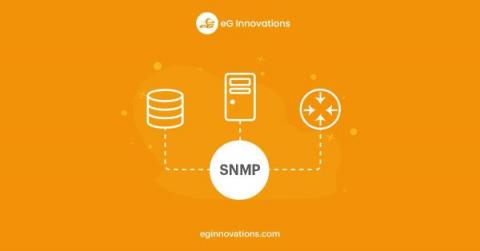
SNMP stands for Simple Network Management Protocol. It is an Internet Standard protocol for collecting and organizing information about managed devices on IP networks and for modifying that information to change device behavior. Figure 1: How SNMP works SNMP exposes management data in the form of variables on the managed systems organized in a management information base (MIB), which describe the system status and configuration.