New features in Tracealyzer 4.7
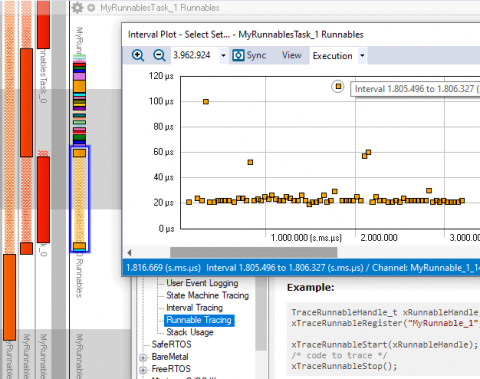
Tracealyzer® version 4.7 in now available for download and evaluation. This is a big feature update with several new capabilities and major improvements.


Tracealyzer® version 4.7 in now available for download and evaluation. This is a big feature update with several new capabilities and major improvements.
When we work at it, professionals are pretty good at analysis. We can break down a simple system, look at its parts and their relations, and master it. Given enough time and teammates, we can analyze a very complicated system and fix it when it breaks. But complex systems don’t yield to analysis. We have to add another skill: sense-making. Complex systems have parts that learn and change, with relations that vary with state and history. They respond to and influence their environment.
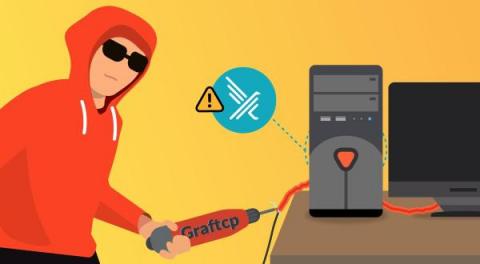
What is the difference with similar tools? Detect graftcp with Falco Conclusion A new network open source tool called graftcp (GitHub page) has been discovered in everyday attacks by the Sysdig Threat Research Team (TRT). Nowadays, threat actors try to improve their techniques by using new tools (as we mentioned in the PRoot article) to enhance the compatibility of their code to hit as many targets as possible and hide their traces properly.
If you’re in the cloud engineering and DevOps space, you’ve probably seen the name OpenSearch a lot over the last couple of years. But, what is your current understanding of OpenSearch, and the components around it? Let’s take a closer look.
Consider the scenario – You are an SRE (Site Reliability Engineer) joining a team to take charge of their Java applications. It has been reported that a Java application is very flaky in terms of memory issues.
Any software application or a system can have bugs and issues in testing or production environments. Therefore, logging is essential to help troubleshoot issues easily and introduce fixes on time. However, logging is useful only if it provides the required information from the log messages without adversely impacting the system’s performance. Traditionally, implementing logging that satisfies these criteria in Java applications was a tedious process.
Observability has become a critical part of the digital economy and software engineering, enabling teams to monitor and troubleshoot their applications in real-time. Properly managing logs, metrics, traces, and events generated from your applications and infrastructure is critical for observability. A telemetry pipeline can help you gather data from different sources, process it, and turn it into meaningful insights.