Google Cloud provides its own set of metrics for monitoring applications, services, and instances. There are a huge number of metrics – more than 1,500 different ones just for GCP monitoring! While this is great, dealing with such a number can also be overwhelming. Filtering, pulling, exploring, and storing the metrics that you really need can be an enormously time-consuming task, and a big challenge.
So far in this series, I’ve outlined how a scaling enterprise’s accumulation of data (data gravity) struggles against three consistent forces: cost, performance, and reliability. This struggle changes an enterprise; this is “digital transformation,” affecting everything from how business domains are represented in IT to software architectures, development and deployment models, and even personnel structures.
In different techniques, entities and relationships remain central. However, their nature and roles are reinterpreted according to the business goals. Data modeling is the process of defining and representing the data elements in a system in order to communicate connections between data points and structures. In his impactful book “Designing Data-Intensive Applications,” Martin Kleppmann describes data modeling as the most critical step in developing any information system.
Online identity theft has become a significant concern for everyone, especially as we rely more on the internet for various activities such as shopping, banking, and socializing. Identity theft occurs when someone steals personal information, such as name, address, social security number, or credit card details, to commit fraudulent activities. The consequences of identity theft can be severe: $15.1 billion in monetary loss in a given year alone!
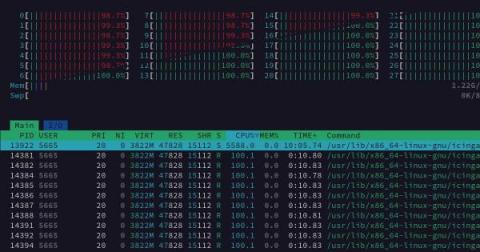
To speed up startup and reload times of Icinga 2, we have already put a lot of effort into improving the configuration load performance and still continue to do so for the next major release. In this blog post, I will share the story of one particular issue we found, how we addressed it and what impact this has.
Artificial Intelligence (AI) has become a buzzword in recent years. From chatbots to self-driving cars, AI has transformed how we live, work, and interact with the world around us. AI technology has been deployed across various sectors, including healthcare, finance, manufacturing, and more, to improve efficiency, accuracy, and decision-making capabilities. However, as AI systems become more complex, monitoring them to ensure optimal performance and prevent issues or errors becomes crucial.
Observability is coming into its own, as SREs and DevOps practitioners increasingly seek to centralize the sprawl of tools and data sources to better manage their workloads and respond to incidents faster — and to save time and money in the process. That was the overarching message from more than 250 observability practitioners who took part in the Grafana Labs’ first ever Observability Survey.