Operations | Monitoring | ITSM | DevOps | Cloud

Unleashing the Power of Hybrid Cloud - Introducing Hybrid Observability in HPE GreenLake Flex Solutions

In today's fast-paced digital economy, businesses are constantly seeking innovative solutions to streamline their operations, enhance agility, and drive growth. As enterprise IT infrastructure environments get more distributed and complicated to meet evolving demands, the need for robust IT monitoring, management and automation becomes even more important.


Deploy on Friday? How About Destroy on Friday! A Chaos Engineering Experiment - Part 1

We recently took a daring step to test and improve the reliability of the Honeycomb service: we abruptly destroyed one third of the infrastructure in our production environment using AWS’s Fault Injection Service. You might be wondering why the heck we did something so drastic. In this post, we’ll go over why we did it and how we made sure that it wouldn’t impact our service.

Embark on the Observability Journey

With the advent of byte code instrumentation (BCI) in 2008, application performance management took a giant leap in what is known as "inside-out monitoring," that is, monitoring from inside the application. Before that, application monitoring was largely limited to tracking CPU, memory, disk, and process availability. BCI offered new opportunities in terms of how applications could be monitored and what could be monitored from an application performance perspective.

Observability as Code Explained: Benefits & How to Get Started

Traditional monitoring has become insufficient for managing complex systems. Modern infrastructures consist of numerous interconnected services, and simply monitoring individual metrics and logs fails to provide a comprehensive view. This is where observability becomes crucial.

Top 10 Best Monitoring Tools for IT Infrastructure in 2024

Efficient monitoring tools are crucial for maintaining the performance, security, and reliability of your infrastructure. This comprehensive guide covers the top 10 best monitoring tools for IT infrastructure, offering insights into their features, benefits, and use cases. We'll also provide a monitoring tools list and examples to help you choose the best solutions for your needs.

Confidently Shifting from Logs-centric to a Unified Trace-first Approach: Ritchie Bros. Journey to Modern Observability

Transitioning from a monolithic system to a cloud-native microservices environment, Ritchie Bros. sought to modernize their observability infrastructure to support the transition and fuel future growth. Ritchie Bros. has been a pioneering force in the auctioneering market for nearly 70 years, charting remarkable growth through a strategic mix of organic expansion and acquisitions.

Observability Dilemma: To SaaS or Not to SaaS? That is the Question!

In the ever-evolving IT landscape, the Observability Dilemma casts a strategic shadow: To SaaS or not to SaaS, a question being dealt with by many IT professionals today. As organizations grapple with the complexities of maintaining system health and performance, navigating change while staying secure, choosing between the allure of cloud-based services and the on-premises sanctuary becomes pivotal.

Lightrun Product Updates : H1 2024

Throughout the first half of 2024, Lightrun has focused on developing a range of solutions and improvements aimed at enhancing developer observability and live debugging. These advancements help organizations significantly reduce their MTTR for complex issues while boosting developer productivity. Read more below the main new features as well as the key product enhancements that were released in H1 of 2024!

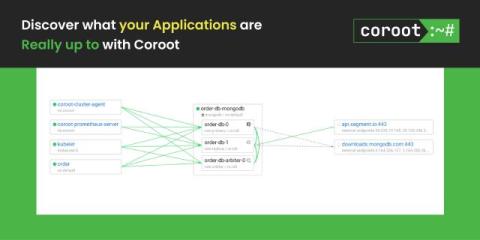
Discover what your applications are really up to with Coroot

Modern Applications can use a lot of external services, some of those interactions are expected, others not so much. There could be many reasons for those unexpected interactions, ranging from security vulnerabilities and various malware to outdated code and various reporting and statistics software may report to its creator or a third party. These unexpected interactions can be a security risk, and may also raise privacy concerns.

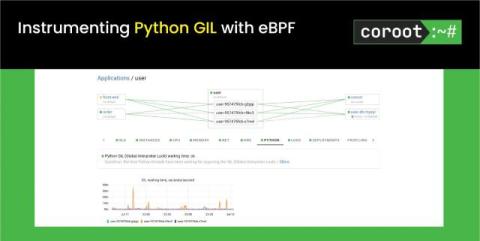
Instrumenting Python GIL with eBPF

Every Python developer has heard about the GIL (Global Interpreter Lock) This lock simplifies memory management and ensures thread safety, but it also limits the performance of multi-threaded, CPU-bound programs because threads can’t run Python code in parallel. Here is a great explanation of why Python requires the GIL by Python’s creator, Guido van Rossum: Guido van Rossum: Will Python ever remove the GIL? | Lex Fridman Podcast Clips.