Operations | Monitoring | ITSM | DevOps | Cloud

Unlocking Smiles: HappyCo's Observability Success

With a diverse range of applications, HappyCo sought to advance their system investigations with a modern observability solution while embarking on an application refactor project. Since its start in 2011, HappyCo has experienced rapid growth through both organic expansion and strategic acquisitions. As a result, the company has a diverse range of applications for customers to smile about.

Identify anomalies, outlier detection, forecasting: How Grafana Cloud uses AI/ML to make observability easier

At Grafana Labs, our No. 1 approach when building AI/ML tools is to enable humans (a.k.a. all of us!) to understand complex systems. In other words, we want to make observability still human, but less complicated. (Our second use case? Making social media more fun.) We believe that AI/ML tools in observability should work towards minimizing toil and the need for everyone in your organization to have the same deep domain knowledge about your increasingly complex stack.

Database Observability and Storage Insights

Storage monitoring involves discovering the estate, devices, and network interconnections. Key telemetry requirements include their states, performance metrics, and logs. As the complexity of the environment increases and storage reliability improves, the focus shifts. Understanding the layers above, such as file systems and databases, and their demand for storage services becomes crucial. This article delves into the detailed knowledge required to achieve effective observability.

Optimizing observability costs with a DIY framework

Observability costs are exploding as businesses strive to deliver maximum customer satisfaction with high performance and 24/7 availability. Global annual spending on observability in 2024 is well over 2.4 billion USD and is expected to reach 4.1 billion USD by 2028. On an individual company basis, this is reflected by observability costs ranging from 10-30% of overall infrastructure spend. These costs will undoubtedly rise with digital environments expanding and becoming ever more complex.

Green Data: The Role of Observability in Shaping a Sustainable Future

Systems speak in data. Widespread digitization means systems communicate more than ever, while increasingly refined means of recording and interpreting their messages are revolutionizing IT management. Meanwhile, beyond the engine rooms of enterprises, our planet is trying to tell us something, too. In changing temperatures and rising sea levels, we see signs that our relationship with the natural world must change.

Overcoming Barriers to Achieving ZeroSec Observability

Achieving ZeroSec observability has long been the ultimate goal, yet it remains elusive despite countless hours and sleepless nights dedicated to the cause. A recent discussion with a client underscored the persistent challenges that many organizations continue to struggle with in this pursuit. They had all the right tools in place yet faced significant issues that prevented them from achieving a smooth run of the applications.

Observability and incident response need resilience testing

There’s a reason why observability and incident response practices have become standard across modern software development. Anyone wanting to minimize downtime and deliver reliable, available applications needs to have fully instrumented systems and playbooks so they can respond quickly and effectively to outages or incidents. But there’s another piece to the reliability puzzle: resilience testing.

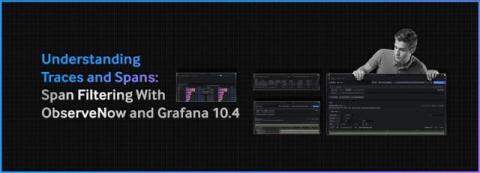
Understanding Traces and Spans: Span Filtering With ObserveNow and Grafana 10.4

ObserveNow, the leading open source-based observability stack, has recently enhanced its capabilities with the introduction of Span Filtering – a key feature in its latest upgrade to Grafana 10.4. This advancement significantly improves the platform’s ability to dissect and analyze traces, which are crucial for understanding the behavior and performance of distributed systems.

Navigating Software Engineering Complexity With Observability

In the not-too-distant past, building software was relatively straightforward. The simplicity of LAMP stacks, Rails, and other well-defined web frameworks provided a stable foundation. Issues were isolated, systems failed in predictable ways, and engineers had time to innovate on new features for the business. And it was good.