Operations | Monitoring | ITSM | DevOps | Cloud

Free the data: Why US federal agencies should standardize on OpenTelemetry

In today's digital age, data is the lifeblood of modern organizations — and the US government is no exception. As agencies grapple with the ever-increasing volume and complexity of data, it is imperative to adopt a standardized approach to monitoring, analyzing, and understanding the behavior of complex IT systems. This is where OpenTelemetry, an open-source observability framework, comes into play.
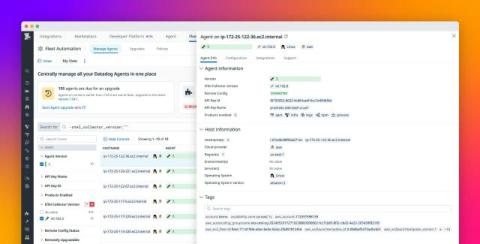
Unify your OpenTelemetry and Datadog experience with the embedded OTel Collector in the Agent

OpenTelemetry (OTel) is an open source, vendor-neutral observability solution that consists of a suite of components—including APIs, SDKs, and the OTel Collector—that allow teams to monitor their applications and services in a standardized format. OTel defines this data via the OpenTelemetry Protocol (OTLP), a standard for the encoding and transfer of telemetry data that organizations can use to collect, process, and export telemetry and route it to observability backends, such as Datadog.

Understanding Event Correlation: A Key Component in Modern Observability Tools

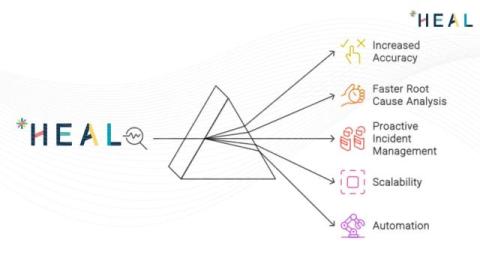
Event correlation is a critical aspect of modern IT management, involving the analysis and correlation of events to filter out noise and isolate significant events requiring attention. This process helps quickly identify the root cause of issues, reducing the time it takes to resolve incidents and ensuring smoother operations. Key reasons for event correlation include reducing noise data and identifying root causes efficiently.

Unified Observability: Benefits of Tool Consolidation with Apica

Tool Sprawl is real and unified observability is the key to unlocking this hindrance, along with the many others in your IT monitoring. Some say that the golden era of software development is already gone, and some say that it has just started with the advent of AI. Nevertheless, with the ease of microservices, containerization and open-source adoption, the recent years have certainly become the glory days for SaaS organizations. But innovation almost always brings with it challenges.

14 benefits of using Site24x7 in Kubernetes observability

Launched in June 2014 as an open-source container orchestration software, Kubernetes is now ten years old. Being increasingly adopted by organizations of all sizes, Kubernetes has today become an essential part of the IT landscape. Kubernetes now completes the modern IT picture, along with Linux, the cloud, and containers that form the backbone of how most IT applications are developed and delivered.

How can unifying observability and security strengthen your business?

Bolster your organization’s observability and security capabilities on one platform with AI, anomaly detection, and enhanced attack discovery Organizations in today’s digital landscape are increasingly concerned about service availability and safeguarding their software from malicious tampering and compromise. The traditional security and observability tools often operate in silos, leading to fragmented views and delayed responses to incidents.

OpenTelemetry Best Practices #3: Data Prep and Cleansing

Having telemetry is all well and good—amazing, in fact. It’s easy to do: add some OpenTelemetry auto-instrumentation libraries to your stack and they’ll fill your disks with data pretty quickly. However, having good telemetry data—data that’s curated into being useful—is something that is both cost-effective and represents good value.

Coralogix new observability solution now available for enterprises

Coralogix continues to invest in and develop solutions to address modern business challenges. One such example of modern business challenges is the field of observability with data complexity and volume increasing all the time. Observability solutions play a key role in digital transformation and operational excellence, helping companies aggregate a growing amount of data, effectively analyze it, and initiate the needed actions to maintain optimal performance and uptime.

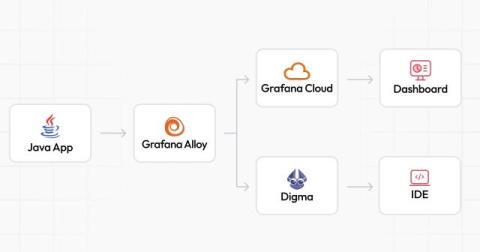
Shorten your feedback loop: Java observability with OpenTelemetry, Grafana Cloud, and Digma.ai

Ron Dover is CTO and co-founder of Digma.ai, an IDE plugin for code runtime AI analysis to help accelerate development in complex code bases. Ron is a big believer in evidence-based development and a proponent of continuous feedback in all aspects of software engineering. Traditionally, software developers have relied on simple logs to understand code execution and troubleshoot issues.