Operations | Monitoring | ITSM | DevOps | Cloud

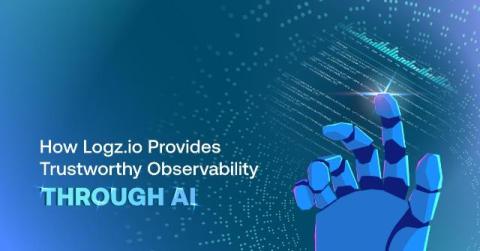
How Logz.io Provides Trustworthy Observability through AI

The business of observability is all about data: what you’re observing in the data, how you’re visualizing it, what it indicates about the state of your environment, and how to address issues that may occur. Creating your own perspective for observability, and understanding what you’re seeing, can be difficult.
Staffing Up Your CoPE

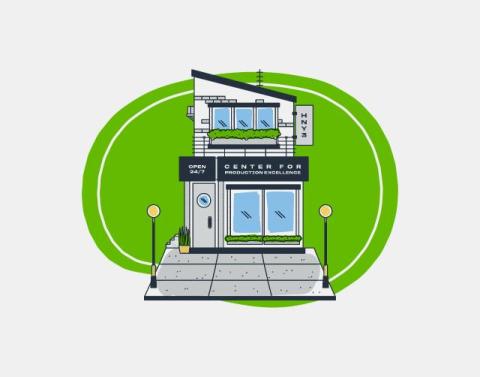
Getting the right people working in the CoPE is crucial to success because these change agents must limber up the organization and promote the flexibility necessary to perform resilience. We’ll look for teammates who share enough in common to work well together, but who don’t necessarily perfectly overlap so that they can play off each other’s strengths.

Why Every Engineering Team Should Embrace AWS Graviton4

Two years ago, we shared our experiences with adopting AWS Graviton3 and our enthusiasm for the future of AWS Graviton and Arm. Once again, we're privileged to share our experiences as a launch customer of the Amazon EC2 R8g instances powered by AWS Graviton4, the newest generation of AWS Graviton processors. This blog elaborates our Graviton4 preview results including detailed performance data. We've since scaled up our Graviton4 tests with no visible impact to our customers.

Intelligent Health Checks: one-click observability for reliability tests

Reliability testing and observability are similar in one important way: engineering teams know they should be doing it, but they’re not sure how to start, or they don’t have the right resources, or they need to focus on competing priorities like feature development and incident response. In an ideal world, reliability and observability would be automated processes that configure, monitor, and run themselves.

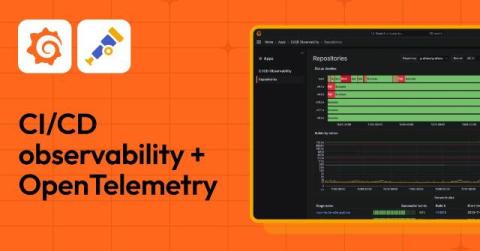
CI/CD observability: A rich, new opportunity for OpenTelemetry

Continuous integration and continuous deployment (CI/CD) are the backbone of modern software delivery, but there’s still limited visibility into their processes. Here’s how that’s changing with OpenTelemetry (OTel), and why those changes are so exciting.

Modern Observability in Action at the University of Oxford

The Bennett Institute for Applied Data Science at the University of Oxford is pioneering the better use of data, evidence, and digital tools in healthcare, policy, and beyond. The institute employs an open-source approach with its OpenSAFELY analytics platform, enabling high-impact research that yields actionable insights, drives innovation, and enhances lives globally.

End-to-end SAP Observability with Elastic, Google Cloud, and Kyndryl: A deep dive

Tens of thousands of companies in the world, across almost all industries, from midsize to large enterprises, rely on robust, efficient complex SAP systems to power their core operations. From sales to finance, from warehouse management to production planning and execution, business’s continuity, revenue, and customer success highly depend on processes running on enterprise resource planning (ERP) architectures.

5 Best Wi-Fi Heat Mapping Tools + Guide

Wi-Fi has become an essential component of our daily life, allowing for seamless connectivity between several devices. However, maintaining the best possible Wi-Fi performance and coverage may be difficult, particularly in complicated settings like huge stadiums, universities, and workplaces. Wi-Fi heat mapping is useful in this situation.

The Hater's Guide to Dealing with Generative AI

Generative AI is having a bit of a moment—well, maybe more than just a bit. It’s an exciting time to be alive for a lot of people. But what if you see stories detailing a six month old AI firm with no revenue seeking a $2 billion valuation and feel something other than excitement in the pit of your stomach? Phillip Carter has an answer for you in his recent talk at Monitorama 2024. As he puts it, “you can keep being a hater, but you can also be super useful, too!”

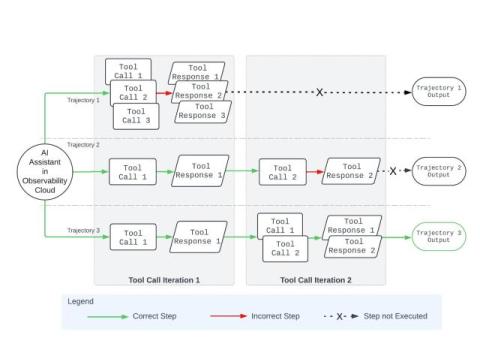
Building an AI Assistant in Splunk Observability Cloud

Splunk Observability Cloud is a full-stack observability solution, combining purpose-built systems for application, infrastructure and end-user monitoring, pulled together by a common data model, in a unified interface. This provides essential end-to-end visibility across complex tech stacks and various data types, such as metrics, events, logs, and traces (MELT), as well as end-user sessions, database queries, stack traces and more.