Operations | Monitoring | ITSM | DevOps | Cloud

Why Observability Requires a Distributed Column Store

Honeycomb is known for its incredibly fast performance: you can sift through billions of rows, comparing high-cardinality data across thousands of fields, and get fast answers to your queries. And none of that is possible without our purpose-built distributed column store. This post is an introduction to what a distributed column store is, how it functions, and why a distributed column store is a fundamental requirement for achieving observability.
CDN Observability - Why You Must Monitor Your Extended Infrastructure

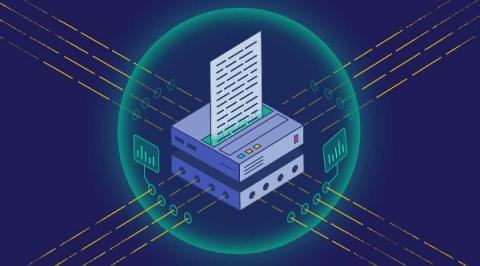
The content delivery network (CDN) has been an integral part of application infrastructure for more than two decades. A CDN is critical to the end-user experience, but it is no longer considered to be just a caching server. It has evolved to provide security from cyber threats, including DDOS attacks along with front end optimization. Although CDN services are now an indispensable part of any application infrastructure, visibility into CDN performance remains limited.

Adding Observability to your CI/CD pipeline in CircleCI

In modern software systems, it is common for several developers to work on the same project simultaneously. Siloed working with infrequent merging of code in a shared repository often leads to bugs and conflicts that are difficult and time-consuming to resolve. To solve this problem, we can adopt continuous integration.

The latest Github outage and how it impacts observability

Every now and then, issues occur that disrupt the very fabric of global software engineering. Chief amongst them is the recent mass outage of Github. Github is a fundamental building block in software productivity, hosting over 190 million code repositories. Github hosts our code and libraries, runs build pipelines, and much more. It is a central hub of activity and it is consumed by tens of thousands of organizations.

The Evolving World of GitOps and Observability

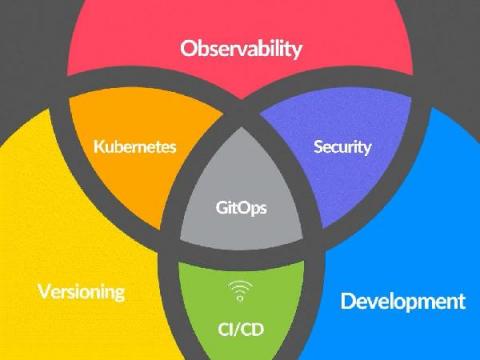
Is GitOps changing observability as we know it? GitOps has been the buzz word in the DevOps space for several years. GitOps, to those that are not familiar, is an operational methodology for DevOps that leverages a continuous deployment approach with Git as the single source of ‘truth’ for declarative control over both infrastructure and applications.

What is Observability?

Rudolf Emil Kalman, born in Hungary, 1930, is regarded as the creator of various fundamental systems concepts. His work on the structural aspects of engineering systems included control theory: the use of mathematics to adjust the output of a given data stream, which included the concept of observability. Observability is the measurement of the internal state of a system purely by examining the outputs.

Quarterly Product Update: Management API, Query Builder, SLOs, and Metrics

Your feedback is what makes Honeycomb better. We ship changes often (you can see updates in real time on our changelog), so it can be easy to miss some of the new improvements that can help you get the most out of Honeycomb. Whether it’s a big new product feature or an enhancement of existing features, you may not always be up on the latest goodness waiting for you in Honeycomb.

Contextual Intelligence and Observability: Without the Former, You Really Don't Have the Latter

Observability is a hot term in the industry, but don’t let it fool you: having visibility into your organization's apps and services only gives you partial clarity into a system’s overall performance. To get a full understanding of your monitoring data, you need to apply contextual intelligence.