Operations | Monitoring | ITSM | DevOps | Cloud

Adding free and open Elastic APM as part of your Elastic Observability deployment

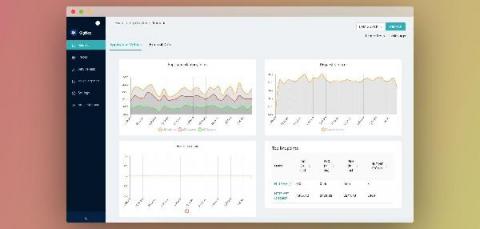
In a recent post we showed you how to get started with the free and open tier of Elastic Observability. Today we'll walk through what you need to do to expand your deployment so you can start gathering metrics from application performance monitoring (APM), or "tracing" data in your observability cluster, for free.

Logz.io and the AWS Distro for OpenTelemetry

Amazon Web Services has announced enhanced support for the open-source distribution of the OpenTelemetry project for its users. AWS Distro for OpenTelemetry (ADOT) now includes support for AWS Lambda layers for the most popular languages and additional partners integrated into the ADOT collector. And one of those partners is Logz.io! Logz.io is happy to announce that our exporter is now included in the AWS Distro for OpenTelemetry.

6 Steps to Getting Started With Observability

During my office hours, I frequently get asked for practical tips on getting started with observability. Often it’s from folks on teams who are already practicing continuous delivery (or trying to get there) and are interested in more advanced practices like progressive delivery. They know observability can help—but as individual contributors—they don’t sign the checks, so they feel powerless to help get their team started with observability.

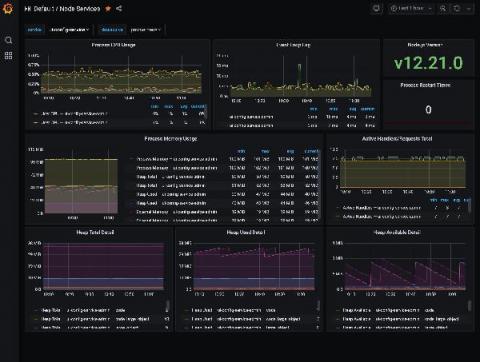
How PayIt, a secure cloud service provider for digital government, uses Grafana and Prometheus for observability at cloud native scale

A trip to the DMV — and a realization that there had to be a better, more modern way for the system to work — sparked the idea for PayIt, a secure cloud service provider for digital government that launched in 2013. The company’s mission is to help state, local, and government agencies reach their constituents better and more effectively, shifting the reliance from in-office payments to digital ones.

Monitoring AWS EC2 with Splunk Observability

Today, much of our online world is powered by cloud computing, and Amazon Web Services offers an amazing depth and breadth of available services. However, most of the time it starts with Amazon Elastic Compute Cloud, EC2. EC2 is powered by virtual servers called instances and allows users to provision scalable compute capacity as desired. This means no server hardware investment and the ability to scale up or down in response to demand (thus elastic).

Getting started with free and open Elastic Observability

Unify and contextualize your logs, metrics, application trace data, and availability data behind a single pane of glass. Elastic Observability provides a unified view into the health and performance of your entire digital ecosystem. With easy ingest of multiple kinds of data via pre-built collectors for hundreds of data sources, Elastic Observability delivers seamless integration between the facets of observability.

Logz.io Named a Leader in GigaOm Radar for Cloud Observability

Today we are excited to share a key milestone, not only for Logz.io, but also for our industry as a whole. For the first time ever, an industry analyst took on the ambitious challenge of analyzing and assessing several different markets including monitoring and telemetry, APM, AIOps, observability, and more. The radar also takes account of evaluating leaders’ various products, unveiling a comprehensive overview under the unified lens of Observability.

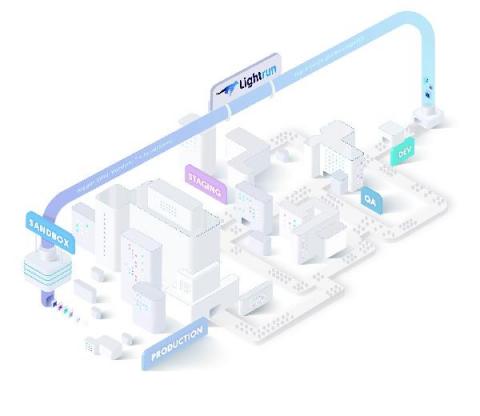
Announcing Lightrun Cloud: Shifting Left Observability, One Developer at a Time

We’re proud to announce the general availability of Lightrun Cloud – a completely free and self-service version of the Lightrun platform. We consider Lightrun Cloud to be a major milestone in our constant journey to empower developers with better observability tooling and welcome you to sign up for a free account.