Being a developer is awesome. Writing code, solving problems, and thinking of ingenious solutions for complicated algorithms is what we live for. But, the grass is not always so green on this side of the fence. Sooner or later, you need to get your hands dirty and deploy the app you worked so hard on. Deployments are not always easy. To be blunt, they can be challenging and time-consuming. That’s what we’ll solve in this tutorial.
DevSecOps combines the responsibilities of development, security and operations in order to make everyone accountable for security in line with the ongoing activities conducted by development and operations teams. DevSecOps tools serve to assist the user in minimising risk as part of the development process and also support security teams by allowing them to observe the security implications of code in production.
As a result of the COVID-19 pandemic, organizations have realized the importance of proactively managing risk and security to build resilience and to emerge from a crisis stronger. These best practices and tools can help you shift your risk management program into high gear.
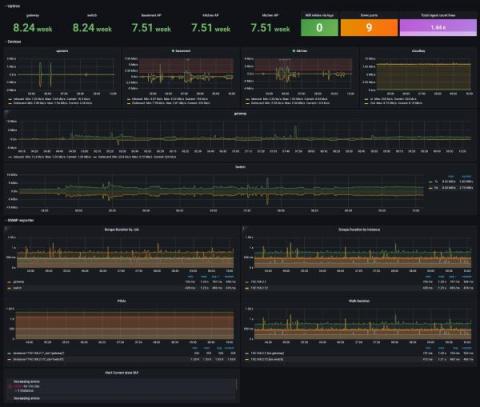
Home labs are popular among technology enthusiasts. Often they are unmonitored and even the smallest home lab can benefit from monitoring. This post will show how getting started with an InfluxDB Cloud account and Telegraf can make this super easy! InfluxDB is an open source time series database. As such, InfluxDB is well-suited for operations monitoring, application metrics, IoT sensor data, and real-time analytics.
Azure App Service is a platform-as-a-service (PaaS) offering for deploying applications to the cloud without worrying about infrastructure. App Service’s “serverless” approach removes the need to provision or manage the servers that run your applications, which provides flexibility, scalability, and ease of use. However, App Service also introduces infrastructure-like considerations that can impact performance and costs.
Amazon Web Service or AWS has an immense cloud ecosystem now counting at over 200 services and products. Started with first generation services like EC2, S3, and RDS, now you can have satellite control centers, build virtual reality, and compose music using Artificial Intelligence. As the variety of services expanded, the necessity to monitor all those services efficiently became critical. Running a service without a proper monitoring system is no different from running while blind-folded.
When working with CFEngine, it’s common to hear advice about separating data from policy. Separating data from policy allows for separation of concerns, delegation of responsibilities and integration with other tooling. Each organization is different, and a strategy that works well in one environment may not work as well in a similar environment of another organization, so CFEngine looks to provide various generic ways to leverage external data.
The Domain Name System (DNS) makes it possible for users to access websites using domain names, like wikipedia.org, in place of nine-digit IP addresses. Due to its ubiquitous nature, DNS can be used to block access to selected websites, which is commonly known as DNS filtering. Many companies see security and productivity benefits from implementing this strategy where appropriate. Read on as we explore some of the key details around how DNS filtering works and how it can be beneficial.
Observability has gained a lot of momentum and is now rightly a central component of the microservices landscape: It’s an important part of the cloud native world where you may have many microservices deployed on a production Kubernetes cluster, and a need to monitor these microservices keeps rising. In production, quickly finding failures and fixing them is crucial. As the name suggests, observability plays an important role in this failure discovery.