Operations | Monitoring | ITSM | DevOps | Cloud

The latest News and Information on Monitoring for Websites, Applications, APIs, Infrastructure, and other technologies.

How the Jsonnet-based project Tanka improves Kubernetes usage

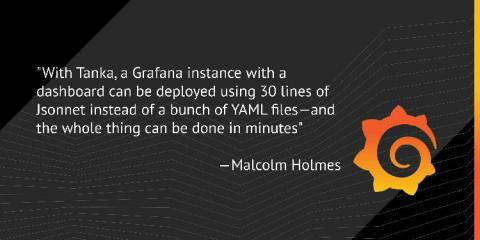
At FOSDEM 2020, Grafana Labs software engineers Tom Braack and Malcolm Holmes explained how and why the team developed Tanka, a scalable Jsonnet-based tool for deploying and managing Kubernetes infrastructure. They also shared how Grafana Labs leverages the project to manage and monitor its own infrastructure as well as showcased how Tanka makes deploying a Grafana instance faster and more efficient.

Use SRE principles to monitor pipelines with Cloud Monitoring dashboards

Data pipelines provide the ability to operate on streams of real-time data and process large data volumes. Monitoring data pipelines can present a challenge because many of the important metrics are unique. For example, with data pipelines, you need to understand the throughput of the pipeline, how long it takes data to flow through it and whether your data pipeline is resource-constrained.

Webinar: SLA Management Panel

In this on-demand webinar, performance experts from IBM, Autodesk, Enighten, and Catchpoint share strategies for successfully managing SLAs. These DevOps professionals will share solutions to common problems such as potential impact of poor third-party performance, vendor benchmarking and comparisons, and monitoring service level indicators (SLIs) and service level objectives (SLOs).

Webinar: Scaling a Culture of Performance at Priceline

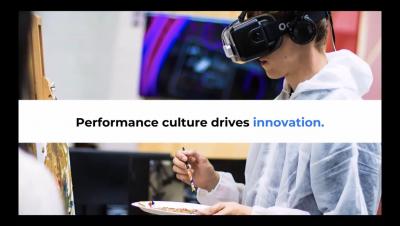
The most innovative companies in the world – Google, Amazon, Oracle, etc. – know that their entire business model depends on strong digital performance. They understand not only that amazing digital experiences are directly tied to business results, but that providing them requires top-down efforts across the entire company. Learn how Priceline has instituted this culture and how you can replicate their efforts.

Free web monitoring tools

In English, the word “present” has two different meanings: the first one is “now”, as in now that you are reading this article, and also the meaning of gift. There is no misunderstanding here, but there is also the adjective “free”, which can mean free, something that does not need to be paid, or having freedom. Today we will see several free applications that you may use as web monitoring tools.

Kris Cowles on Why Running a SaaS Environment Isn't Always Easy

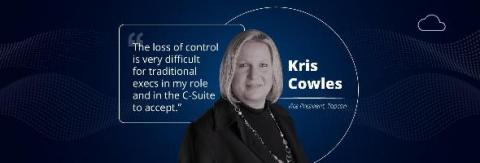
Today we share a recent conversation with Kris Cowles, Vice President, Global Applications IT at Topcon Positioning Systems, a 2,000-person division of Japanese company Topcon. Previously, Kris worked as the Director of Engineering Operations at Cisco. She discusses some of the growing pains of working with SaaS vendors and how she’s making it work.

Monitoring multi-cloud environments

In today’s fast-growth, faster-results market, your customers expect your applications to be always available and up-to-date. Meeting that demand often involves migrating to the cloud, which offers increased scalability and flexibility, allowing engineering teams to innovate more quickly and produce the delightful user experiences customers are looking for.

InfluxData Community Update Q1 2020

At InfluxData, we love the community! Our amazing open source members are an integral part of InfluxData and have been since its founding. They’ve helped us build amazing products for time series data. This is a quick update to give you some insight into how we track metrics about our community and ensure we are building products and features that our users want to see.

Best practices for tagging your monitors

Tags provide critical context for troubleshooting issues across any dimension of your environment. By applying best practices for tagging your systems, you can efficiently organize and analyze all your monitoring data, and set up automated multi alerts to streamline alerting workflows. Similar to any tags you would add to your services and infrastructure, monitor tags—tags that you apply to your monitors—are an essential feature for organizing and simplifying your workflows.

Monitoring in the Kubernetes era

Container technologies have taken the infrastructure world by storm. Ideal for microservice architectures and environments that scale rapidly or have frequent releases, containers have seen a rapid increase in usage in recent years. But adopting Docker, containerd, or other container runtimes introduces significant complexity in terms of orchestration. That’s where Kubernetes comes into play.