Fetch Feature Flags Faster | Snack of the Week
In this second episode of Sentry’s Snack of the Week, we’re going to see how we updated Flagr to to improve performance.


The latest News and Information on Monitoring for Websites, Applications, APIs, Infrastructure, and other technologies.
If you aren’t already fed up with doing the same boring stuff over and over again, you will In the long run. Tasks which are repeated again and again in the same manner, such as System administration tasks, such as uploading your codebase, adjusting settings, repeatedly running commands, etc. tend to sap the enthusiasm you experience when working on your project.
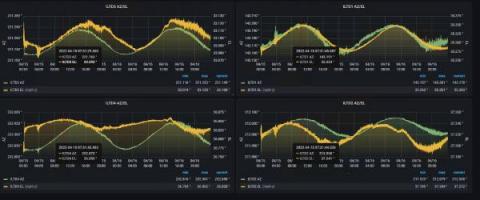
Dish Network is on a mission to connect people and things by changing the way the world communicates. With products ranging from Dish and Sling TV to retail wireless services and 5G networks, monitoring their satellite communications equipment is mission critical to maintaining extreme uptime for Dish’s 20 million customers across the United States.
Before we dive into the comparison details, let's define end-user monitoring; it is monitoring the customer’s behavior or actions while using an application. Monitoring customer behaviors helps you analyze your application and improve it. In that way, it directly improves your business, i.e., happy customers mean more business. End-User monitoring tools also analyze how your application deployment and delivery affect your user experience.
PHP is one of the most popular open source programming languages on the internet, used for web development platforms such as Magento, WordPress, or Drupal. In addition to all PHP bases, PHP-FPM is the most popular alternative implementation of PHP FastCGI. It has additional features which are really useful for high-traffic websites. In this article, you’ll learn how to monitor PHP-FPM with Prometheus.
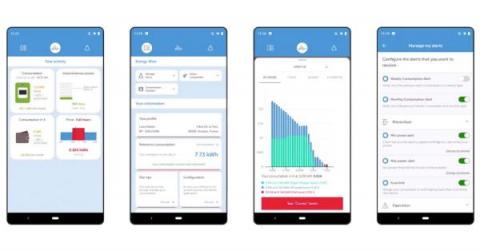
Smart energy IoT platforms are empowering consumers to track energy usage and even control spend based on their next bill’s forecast. Yet eSoftThings, a specialist in the Internet of Things (IoT) and artificial intelligence (AI), set out to push smart energy management even further, for both consumers and utility companies, through its IoT platform eSoftLink.
For today’s IT operations teams, the stakes keep getting higher and demands only intensify. The services these teams are responsible for managing play an increasingly critical role in the prospects of the business, which means optimizing service levels is an absolute imperative. Meanwhile, the environments in play only seem to keep getting larger, more complex, and more dynamic. Given these factors, monitoring is a task that keeps getting more vital and more difficult.