The latest News and Information on Monitoring for Websites, Applications, APIs, Infrastructure, and other technologies.
Employees are returning from vacation, the weather is (finally) cooling down and summer is coming to a close. It can feel a bit overwhelming returning to work and getting back into the swing of things. When it comes to website monitoring, there are simple steps you can take to make sure your transition is as smooth as possible. Take advantage of a few ounces of pre-vacation prevention to save on pounds of post-holiday cure.
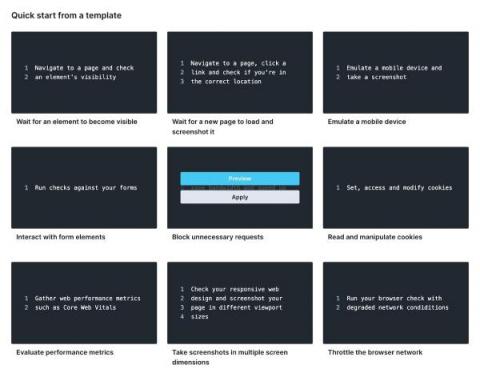
Let’s admit it: end-to-end testing is a technical challenge. How do you make features testable? What testing framework should you use? When should you run your test suite? There are so many things to learn and consider. At Checkly, we want to ease end-to-end monitoring so that you can focus on shipping excellent software instead of figuring out how you monitor and test it. But before getting into our latest feature addition, let me answer the above questions.
After some drawbacks we are very happy today to finally release Icinga for Windows v1.10.0! The past weeks we have spent a lot of time to polish this release, test many different aspects and optimize the user experience in general. Please make sure to read the upgrading docs carefully, before upgrading to v1.10.0. Otherwise, your installation might not work as expected, or Icinga for Windows might not load anymore.
You typically don't and shouldn't need to know where a web app is deployed. At least not from within the code of the web app itself. I keep seeing questions related to this, though. There are a range of reasons why this can still be relevant like if you want to generate and output an absolute URL in an MVC controller or Razor page. Here's a blog post about how to get the base URL in ASP.NET Core. Let's rewind a bit before we start looking into the code. All websites are deployed somewhere.
As organizations continue to expand their cloud footprint, managing costs without risking application performance is a priority. Because of this, Arm processors have become popular for their efficient, cost-effective processing power. Microsoft Azure’s new series of Azure Virtual Machines are powered by Ampere Altra Arm-based processors, which provide excellent price performance for scale-out and cloud-native workloads.
In computer science, systems are typically divided into two categories: software and hardware. However, there is an additional layer in between, referred to as middleware, which is a software pipeline—an operation, a process, or an application between the operating system and the end user. This article aims to define middleware and reflect on its necessity, as well as address controversies about when and where it applies.