Operations | Monitoring | ITSM | DevOps | Cloud

The latest News and Information on Monitoring for Websites, Applications, APIs, Infrastructure, and other technologies.

Maximizing Efficiency: How SOAP Can Transform Your Enterprise Automation Strategy

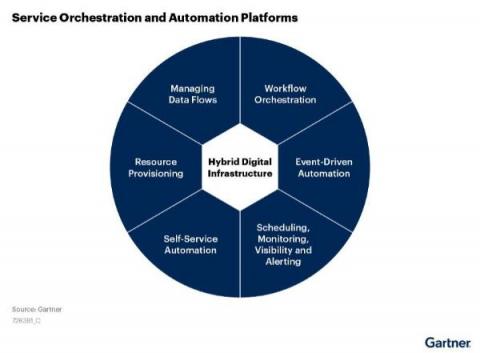
Rajeev Kumar, Automation Product Leader at Broadcom, explores the 2023 Gartner® Market Guide for Service Orchestration and Automation Platforms. He reveals how Automation from Broadcom embraces the concepts of SOAP, driving a modern workload automation strategy.
Microsoft Teams for Alerting has landed

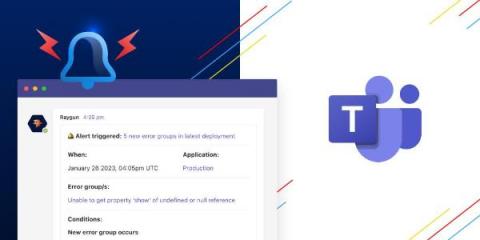
Get crucial error and performance diagnostics sent directly to your chosen Microsoft Teams channel with Raygun Alerting. As of 2022, Microsoft Teams has surpassed Slack’s 18 million active users with a user base of over 270 million, solidifying its position as the leading business communication platform. In August 2021, we released our Slack for Alerting integration, and now it’s time to extend that capability to Microsoft Teams.

6 hacks for your enterprise's network bandwidth usage checking

Enterprises that want to improve the performance of their network often look into limiting access to bandwidth-hogs such as social media and video streaming applications. But for those that really need to gain efficient network, this won’t be enough. You need to keep track of bandwidth usage regularly. While there are many tools to help you check bandwidth usage on network, sometimes finding KPIs specific to your organization can be painstaking.

CloudSpend mobile application: Manage your cloud costs anywhere and everywhere

ManageEngine CloudSpend is a cloud cost management tool that helps you reduce overhead cloud costs using actionable insights. The CloudSpend mobile application enables users to perform actions on the go for their cloud services from their mobile devices. CloudSpend supports AWS and Microsoft Azure cloud services and is planning to launch GCP in the future.

The Importance of Azure Distributed Tracing in Integration Services

Distributed Tracing, combined with end-to-end monitoring, lets organizations keep track of their business transactions and receive alerts when anomalies happen. End-to-end monitoring benefits business users and functional administrators more than developers and technical administrators. Nowadays, for developing integration solutions, microservice architectures are becoming the norm. A solution based on such an architecture relies on different services that shape a specific solution together.

Easily Monitor Google Cloud with Sysdig's Managed Prometheus

Google Cloud provides its own set of metrics for monitoring applications, services, and instances. There are a huge number of metrics – more than 1,500 different ones just for GCP monitoring! While this is great, dealing with such a number can also be overwhelming. Filtering, pulling, exploring, and storing the metrics that you really need can be an enormously time-consuming task, and a big challenge.

Data Gravity in Cloud Networks: Distributed Gravity and Network Observability

So far in this series, I’ve outlined how a scaling enterprise’s accumulation of data (data gravity) struggles against three consistent forces: cost, performance, and reliability. This struggle changes an enterprise; this is “digital transformation,” affecting everything from how business domains are represented in IT to software architectures, development and deployment models, and even personnel structures.

Nexthink Infinity: Solving IT's Nightmare Scenario

We are thrilled to announce the launch of Nexthink Infinity, the latest release of our new cloud platform. Infinity is the culmination of years of research, detailed customer feedback, and massive investments into cutting-edge technologies. This release is a major milestone that delivers exponential value and accelerates platform improvements through 2023 and beyond.

Data Modeling: Part 1 - Goals and Methodology

In different techniques, entities and relationships remain central. However, their nature and roles are reinterpreted according to the business goals. Data modeling is the process of defining and representing the data elements in a system in order to communicate connections between data points and structures. In his impactful book “Designing Data-Intensive Applications,” Martin Kleppmann describes data modeling as the most critical step in developing any information system.