G2 Users Rank PagerDuty as a Leader in AIOps
At PagerDuty, our 13,500+ customers are the reason we come to work every day.


The latest News and Information on Incident Management, On-Call, Incident Response and related technologies.
At PagerDuty, our 13,500+ customers are the reason we come to work every day.
We recently surveyed 700 DevOps and IT practitioners around the world and found that more than 80% of organizations have experienced a significant increase in pressure on digital services since the start of the pandemic. Compared to 6 months ago, respondents reported a 47% increase in the number of daily incidents, and 62% of DevOps and IT responders work at least an extra 10 hours per week resolving incidents.
There’s an AI-led developer and operations (DevOps) evolution afoot which is stoking SREs’ increasingly critical efforts to assure and improve the customer experience by automating the toil out of observability. This movement feeds on a supercharged process of turning telemetry into actionable insight by automatically drawing anomalies, changes and events out of the full-stack event and telemetry data, and analyzing it for correlation and causality.
In 2020, enterprises have meaningfully accelerated their digital transformation. The global financial advisory firm KPMG, notes that “For a majority of U.S. CEOs, the pandemic has meant an acceleration in digital transformation by months or even years. The move to digitization has accelerated, and the benefits will be permanent. There is no going back.” Software vendors are seeing this very clearly too.
As we are seeing subscription-based software license models ‘rule the world’, one might wonder why they are that successful. And we need to ask the question if they are truly in the interest of customers. A major driver of course has been the rise of ‘software as a service’ which natively involves permanent cost of hosting and operation by the software company on behalf of the customer.
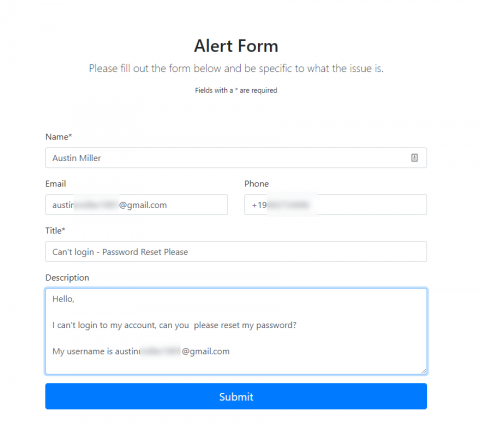
Today, we are excited to announce a new integration - PagerTree Forms! PagerTree Forms are simple (PagerTree hosted) forms that can be made public so your customers can quickly create an alert outside the PagerTree ecosystem. PagerTree Forms also support custom CNAMES so you can host them on your own domain (ex: https://support.example.com). The CNAME option is secured via HTTPS using self signed Let’s Encrypt certificates.
2020 has been a year like no other. Our dependency on digital services has reached new heights, leaving many companies trying to accelerate transformation initiatives while simultaneously keeping said digital services running perfectly. The ITOps and DevOps teams on the front line of this struggle are facing more pressure than ever. With the holiday season now in full swing, that strain will only grow as virtual festivities and online shopping pick up the pace.
Opsgenie is a powerful alert management service that allows you to flexibly set up teams for different alerting groups. Our development team have been working hard to deliver new features and integrations, and now you are able to integrate Opsgenie with RapidSpike to help with your website monitoring.