Operations | Monitoring | ITSM | DevOps | Cloud

Using AI to understand what sets incident.io apart from the competition

Whenever a new customer joins incident.io, we make notes on what made them chose to buy our product and, if we were in a competitive process, why they chose us over other providers they were evaluating. It’s a lot of messy data and raw notes, but contained within is a veritable treasure trove of customer feedback. Summarising large amounts of data? Sounds like the perfect job for an LLM.

Practical Guide to Adopting Open-Source Software in Operations

Businesses are constantly on the lookout for ways to optimize operations, reduce costs, and stay ahead of the competition. One of the most effective strategies for achieving these goals is adopting open-source software (OSS). Open-source tools offer a myriad of benefits, from cost savings to enhanced flexibility and innovation. However, transitioning to an open-source environment can be daunting without a clear roadmap.
Understand AIOps use cases to ensure maximum value

The complexity of modern IT environments and the volume of data they produce have increased by orders of magnitude. According to predictions from UBS, the data universe will grow by more than a factor of 10 — reaching 660 zettabytes — from 2020 to 2030. This explosive growth exceeds the abilities of legacy event-management tools and human operators. AIOps augments human activities within IT operations using AI, data, and machine learning.

Live Call Routing/ Dedicated Lines (Powered by OnPage)

Are you tired of missing critical alerts and important calls during your on-call shifts? Are you looking for a way to facilitate communication between your customers and your on-call team by utilizing an IVR system that can elevate critical calls, and escalate it based on on-call schedules and routing rules? Discover how OnPage's innovative Live Call Routing technology can transform your on-call experience!

Customer impacting incidents increased by 43% during the past year- each incident costs nearly $800,000

PagerDuty, Inc. releases study of 500 IT leaders and decision-makers of companies with more than 1,000 employees responsible for IT operations from the United States, the United Kingdom and Australia, that highlights the growing impacts of customer-facing incidents and the ways automation can help mitigate.
Sponsored Post

All-in-One Incident Management: Why Squadcast Trumps Separate On-Call and Alerting Tools

The pressure is on. Incidents happen, and resolving them quickly and efficiently is crucial for meeting your SLAs. But relying on a patchwork of tools for alerting, collaboration, and post-incident analysis can create confusion, delays, and frustration. They can work or may have been working perfect in your company but here are a few factors to consider: The list of questions can go on differing from organization to organization. These are just a few factors that can help you evaluate whether your current tools are truly effective for Incident Response, or if it's time to switch to a unified solution like Squadcast.

Harness AI for financial services IT

IT operations teams in the financial services industry face serious challenges. Customers expect a seamless experience across a complex landscape including online platforms, mobile devices, and ATMs. Competition is fierce. Technology evolution continually disrupts the marketplace. These factors create obstacles for the teams tasked with ensuring near-perfect service availability while continuing to innovate.

The power of context in root-cause analysis

The ability to quickly and accurately identify the root cause of IT incidents is paramount. According to EMA Research, more than 80% of IT professionals said a solution that could generate an accurate summary of alerts and incidents, including the likely root cause, would be transformational or high value. Respondents noted that such a solution would reduce mean time to resolution (MTTR) by 10 to 30 minutes.

Why Your Team Needs an Automation Center of Excellence

Read the full ebook, The Value of Implementing an Automation Center of Excellence, here. Automation has been a proven change-maker for business operations for decades. In this era of technology and innovation, its use is geared towards streamlining repetitive tasks, boosting developer productivity, and reducing operational costs.

How to Improve Your Service Reliability with ilert Status Pages

According to the Uptime Institute, during the last year, the number of IT incidents slowly declined while the average cost of every incident grew. As dependency on digital services increases, the cost for ⅔ of all outages exceeds $100,000. Stakes are rising, and more and more companies are investing in proactive incident management.

Better multi-timezone support for On-call overrides

Today, we are bringing enhancements to on-call overrides. For many remote teams using Spike, we are addressing the need to manage overrides across multiple time zones. This new design makes it easy to see override times in the local time of the person taking over. It adds clarity and helps you be mindful about on-call times. We also focus on clearly showing who is taking over on-call duties, enhancing overall management and coordination.

AIOps use cases: Technical, operational, and business

ITOps stands at a crossroads: Teams need help managing high volumes of alerts and coordinating between different tools and teams. They must balance the agility offered by cloud technologies and the stability provided by on-premises solutions. Success relies heavily on adaptability and clarity, requiring flexibility, with synchronized technology stacks for seamless IT operations. AIOps, a term coined by Gartner, provides a straightforward way to improve IT operations.

How the PagerDuty Operations Cloud Can Play a Part in Your Digital Operational Resilience Act (DORA) Strategy

Since I wrote DORA vs DORA!, a number of people have asked if I could give more practical advice on how the PagerDuty Operations Cloud can play a part in helping firms in the Financial Services Industry (FSI) to meet their obligations under DORA. Let me try to do that now.

Building the Best Incident Response Team

When it comes to critical incident management, IT teams require a structured approach that will ensure that any cybersecurity event is swiftly remediated. And no incident management plan is complete without a clearly defined incident response team. Whether your team is looking to establish an incident response team from scratch or just improve existing response practices, this blog will help your organization understand what it takes to build the best incident response team.

Redefining incident management: the incident way

Gone are the days when incidents were manual to resolve, invisible to customers, and overall viewed with a negative lens. This is part two of the virtual event series as we dive into our fresh take on what incidents should look like, The Incident Way, and hear from customer stories putting these principles into practice.

Managing your resources in Terraform can be literally easy and actually fun

We approached building a Terraform integration with a sense of trepidation. One of the things that motivates us is building features we think people are going to love using, and Terraform integrations are often not that. Terraform integrations have a number of common pitfalls. Building resources by hand is tedious, and requires deep understanding of their specification. Importing and managing existing resources is also often painful.

Problems with ServiceNow and Twilio

We live in a time where immediate communication of critical incidents is vital for maintaining continuous service availability. As companies strive to enhance their IT service management practices, many integrate technologies like Interactive Voice Response (IVR) into their service delivery frameworks. However, this approach may not always be the most effective.

Alert Intelligence - 11 Tips for Smarter Alert Management

Alert fatigue is the enemy of effective Incident Response. Traditional alert management systems generate a constant stream of notifications, making it difficult for IT operations teams to distinguish critical issues from noise. This leads to: These challenges demand a new approach. Alert intelligence. Alert Intelligence offers a sophisticated solution that leverages machine learning and advanced algorithms to transform alert management.

PagerDuty Community Demo Roundups: Streamlining Planned Work with PagerDuty Workflow Automation

Developer Advocate Mandi Walls welcomes Alan Hickmon, Sr. Solutions Consultant at PagerDuty, who demonstrates how to standardize and automate routine tasks, such as database upgrades, to enhance efficiency and free up valuable time for engineering teams.

Change the layout of your ilert status page

Welcome to our tutorial on changing the layout of your ilert status pages. In this video, we'll walk you through the layout options available and how to customize your status page to fit your needs best. Customizing your status page helps you communicate incidents and updates more effectively to your users. A well-organized status page enhances transparency and trust by clearly displaying service statuses and ongoing issues.

How Netflix uses incident.io to power their incident management

Scaling incident management processes can present massive challenges for an organization as large and complex as Netflix. And for Netflix, whose brand has become synonymous with dependability, there’s a lot at stake. Since its introduction to a specific set of Netflix teams, incident.io has been organically adopted far and wide across Netflix Engineering, highlighting just how indispensable and impactful the tool has become.

Patient to On-Call Staff Communication - Live Call Routing/ Dedicated Lines (Powered by OnPage)

Effective communication between patients and doctors after discharge is key to reducing rehospitalization rates and ensuring the best health outcomes. In this video, we explore how OnPage's Dedicated Line technology, powered by advanced automation, revolutionizes this process.

A Build vs. Buy Guide for Incident Management Software

Would you rather have an Incident Management system custom-built to your exact specifications, potentially costing more time and resources, or an off-the-shelf solution that's ready to deploy but might not fit all your unique needs? Decision makers in companies often face this critical decision. And, that’s the debate of the day! Let’s explore and decode the decision of building vs. buying an Incident Management software.

Introducing OnPage's Integration with Microsoft Teams

As OnPage continues to expand its suite of out-of-the-box integrations with popular tools, we are excited to announce the addition of another highly requested application to our arsenal **drumrolls please** Microsoft Teams. This new integration follows our successful launch of OnPage-Slack integration and meets the needs of many eager customers. In this blog post, we will explore the enhanced capabilities and benefits of this integration.

Convert Slack Messages to Tickets / Incidents via Emojis

Want to have different emojis for creating different priority tickets? Want to create tickets with different emojis to different teams? With Pagerly, You can quickly create incidents or tickets within Slack using emojis. Use your favourite emoji or the rightly suited one and setup teams to map the emoji to the team or ticket board. You can define different issue types , priority levels, services, etc or any custom field of your choice to setup these.

Migrating From Your Tool to Squadcast

In our recent blog we talked about how having separate tools for On-Call and for alerting sucks! And how Squadcast offers a lifeline with its all-in-one Incident Management and Reliability Automation platform by amalgamating multiple tool functionality under a single hood. This blog is all about how you can easily transition from your current Incident Management & alerting tool into a better and more reliable enterprise grade platform with Squadcast.

Build custom monitoring and remediation tools with Datadog App Builder

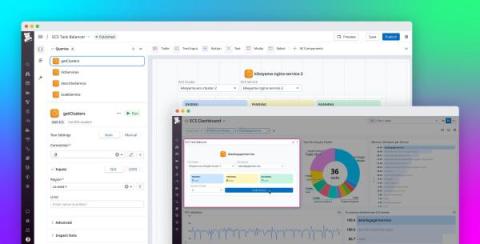
When you’re responding to an issue with your application in the heat of on-call, you need reliable, well-maintained tooling that’s painless to use. Otherwise, the time you’ll spend combing through monitoring data for context, connecting to hosts and other infrastructure resources, and pivoting between consoles for various managed services can add up quickly and slow your response.

6 Steps to Create Actionable Postmortems

In DevOps and IT operations, conducting a thorough postmortem after an incident is crucial for continuous improvement. This article explores best practices for creating effective postmortems, ensuring that your incident analysis won't be forgotten as soon as the danger has passed but will be comprehensive and actionable.

Managing IT Network Disruptions In Your Company Like A Pro

Let's face it, tech meltdowns are the worst. In today's world, a healthy computer network is like the plumbing in your office-you barely notice it when it works, but when it goes kaput, everything grinds to a halt. Emails stop flowing, files disappear, and suddenly, your most productive employees are reduced to staring at useless screens. The good news? There are ways to be a hero and keep your business running smoothly even when the tech gremlins strike. This guide will show you how to be a network-disruption ninja, ready to tackle any tech trouble like a pro.

Complete Incident Management Playbook for Enterprises

Effective Incident Management is indispensable for maintaining the stability and reliability of enterprise operations. Modern businesses heavily depend on their IT infrastructure, making the swift and efficient management of incidents that disrupt normal operations a top priority. A robust Incident Management process can significantly reduce downtime, boost productivity, and uphold customer satisfaction.

ilert Call Routing 2.0: Setting Up Your First Call Flow

We're excited to announce a major update to the Call Routing add-on! Our new call flow builder makes it easy to create custom call flows. The intuitive drag-and-drop interface simplifies the configuration process, allowing you to create command sequences and multiple scenarios for different users by adding new branches to your flow. Watch this video to learn how to set up your first sequence of commands.

How Agile Leadership Transforms IT Operations

Traditional IT operations, with their waterfall processes and lengthy release cycles, can feel sluggish in today's business environment. This constant state of "catch-up" can lead to frustration for developers, ops staff, and business leaders alike. Developers struggle to see their innovative ideas come to life quickly. Operations teams scramble to deploy code that feels outdated before it even hits production. Business leaders see their growth potential hampered by slow IT delivery.

AI-Assisted Incident Management Communication

‍ AI has revolutionized various aspects of incident response, from preparation to resolution. Across the incident response lifecycle, AI is being leveraged to streamline processes, reduce noise, and improve overall efficiency. One critical area where AI is making a significant impact is in incident communication. Effective and efficient communication is crucial during incidents, as it ensures that stakeholders are informed and aligned with the incident status and resolution efforts.

Crisis Management for Oil and Gas Companies

Oil and gas companies operate in a high-stakes environment where the potential for catastrophic incidents, such as oil spills, explosions, and natural disasters always exists. These risks necessitate the establishment of robust crisis management for oil and gas companies to ensure the safety of their personnel and minimize potential damage to their operations and organizational reputation.

xMatters Workflow Overview - 2024

Everbridge xMatters automates workflows to eliminate business-impacting digital events, leveraging analytics, automation, and AI to improve response time and resolution. I will be walking through key features in xMatters that will keep your digital businesses running, reducing the frequency, duration, and associated cost of critical service disruptions.

A guide to Grafana OnCall SMS and call routing

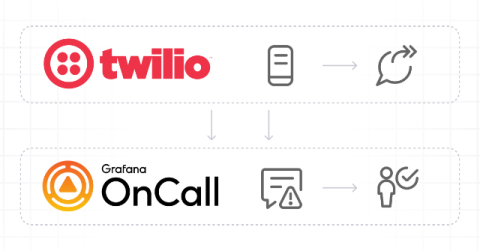
Many organizations use incident response setups that enable them to page on-call personnel via calling or sending a message to a phone number. In this guide, you will learn how to configure such a system by using Grafana OnCall. For practical purposes, we’ll pair it with Twilio, though the same basic workflow should be applicable to other platforms. We will start with a basic setup that uses a phone number in Twilio to both call and send SMS messages to a webhook integration in Grafana OnCall.

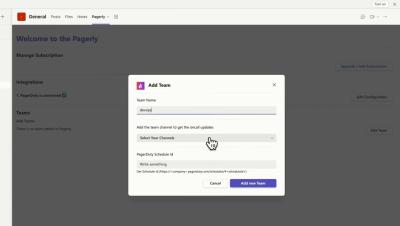
Pagerly now available on Microsoft Teams - Manage Oncalls, Tickets and Incidents on MS Teams

Manage Oncalls, Incidents on Microsoft Teams (Integrate Pagerduty, Opsgenie) Get Oncall Change Notifications within Microsoft Teams. Mention Current Oncall Automically in any conversation without switching applications.

What is Mean Time to Repair (MTTR)?

Mean time to repair (MTTR) is a metric used to measure the average time required to diagnose and fix a malfunctioning system or component, ensuring it returns to full operational status. In software development, downtime halts user access and disrupts operations, leading to customer dissatisfaction and financial losses. In manufacturing, it slows production, affecting supply chains and profitability. In healthcare, downtime can compromise patient care and safety.

Our simple incident post-mortem template

Clean, clear, and ready to be customized to suit your needs. Google Docs Having a dedicated incident post-mortem is just as important as having a robust incident response plan. The post-mortem is key to understanding exactly what went wrong, why it happened in the first place, and what you can do to avoid it in the future.

Automation in MSPs: Streamlining Service Delivery and Boosting Profitability

In today’s complex IT environment, clients demand quick, reliable services. To accomplish this, businesses have begun leveraging automation solutions to reduce response times and increase reliability, enabling staff to focus on strategic initiatives that drive business growth. However, many MSPs struggle to build an effective automation strategy and need help, making it challenging to remain competitive in the modern marketplace.

Scaling into the unknown: growing your company when there's no clear roadmap ahead

During a recent episode of ⁠The Debrief⁠, we spoke with Jeff Forde, Architect on the Platform Engineering team at Collectors, about building an incident management program at various stages of growth. In that episode, we called it growth from zero to one, one to two, and two to three. But what happens once you’ve scaled beyond three and answers to question you may have become that much harder to find.

Automation in MSPs: Streamlining Service Delivery and Boosting Profitability

In today’s complex IT environment, clients demand quick, reliable services. To accomplish this, businesses have begun leveraging automation solutions to reduce response times and increase reliability, enabling staff to focus on strategic initiatives that drive business growth. However, many MSPs struggle to build an effective automation strategy and need help, making it challenging to remain competitive in the modern marketplace.

Augmenting MSP Helpdesk Support: 5 Workflows

Managed Service Providers (MSPs) are the backbone for many businesses, ensuring that IT systems run smoothly and efficiently. They offer a cost-effective alternative to building an in-house tech team, often allowing companies to leverage cutting edge expertise without the significant expense and responsibility associated with expanding headcount.

Mastering the Sev0

Remind yourself of the worst incident your organization has faced. If you’re lucky it might have been your entire service being offline for a period of time. Less lucky, and perhaps you encountered something affecting the sensitive data your organization is the custodian of. Whilst uncommon, incidents of this severity happen to every organization at some point. This criticality of situation is what many refer to as a Sev0, the most severe of incidents.

Six key capabilities of an AIOps platform

Unplanned downtime can cost large enterprises almost $1.5 million per hour, according to a recent survey by Enterprise Management Associates. AIOps offers a solution. With an effective AIOps platform in place, you can decrease the frequency and cost of outages by 30% and reduce their duration to under an hour. AIOps platforms apply AI and machine learning to complex IT data to enhance and automate IT operations.

Assessing DevOps Performance - DORA Metrics

Feeling the pressure to constantly deliver new features? The struggle is real. But what if there was a way to measure your DevOps performance and transform your team into a release machine? This blog is all about DORA metrics, a data-driven framework to unlock DevOps agility. We'll explore what these metrics tell you, how to implement them, and ultimately, how to use them to turn your team into a release champion.

On-call scheduling to streamline incident response systems in high-velocity teams

Murphy's Law says that "Anything that can go wrong will go wrong," drawing attention to the inevitabilities of life laced with irony. In IT monitoring, we can tweak it and say, "The most important monitoring alert will always trigger when you're on vacation with spotty internet." Given life's uncertainties, how can IT engineers stay prepared at all times? Especially when we know that all it takes is just one person staying alert and available when things go wrong in IT to tide over outages.

Incident Response for Critical APIs

Incident response is a structured approach to addressing and managing the aftermath of a security breach or cyberattack, also referred to as an IT incident, computer incident, or security incident. The goal is to handle the situation in a way that limits damage and reduces recovery time and costs. Additionally, it aims to improve strategies and solutions to prevent future security incidents.

The Benefits of a Single Incident Management System

How many monitoring tools do you have? Chances are at least 2-3. One tool usually does not cover all cases, and it’s usually a combination of self-managed and managed tools. Self-managed gives you more control over custom configurations and cost. Managed ones take away the headache of running it yourself. Prometheus is the de-facto standard for monitoring these days if you have a modern application stack and you want to manage your own monitoring.

How Team Permissions work in OneUptime?

Welcome to our tutorial on Team Permissions in OneUptime! In this video, we’ll guide you through the process of managing permissions for your OneUptime team. OneUptime offers a comprehensive solution for monitoring and managing your online services. A crucial part of this management is understanding and effectively using Team Permissions. If you do not have permissions to make a request, a 4xx status will be sent as a response.