Operations | Monitoring | ITSM | DevOps | Cloud

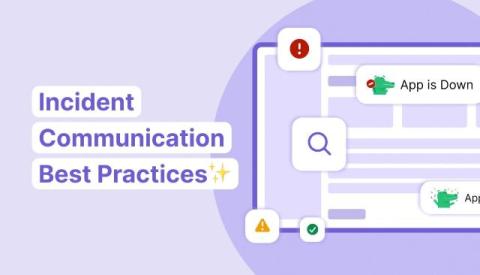
Incident Communication Best Practices - 6 Tips To Improve Incident Communication

If there’s one thing for certain – you can expect IT incidents in 2024. These could be cybersecurity incidents, system outages, or even just degraded performance. Despite the severity, even mild degraded performance can affect your users negatively. Maintenance without proper communication can decrease your reliability. Moreover, outages are costly.


Beyond the Blue Screen: Insights from the Microsoft-CrowdStrike Incident

In the wake of the Microsoft-CrowdStrike incident on July 19, 2024, Squadcast community has been actively reflecting on the lessons learned from this disruptive event. This global outage, affecting 8.5 million Windows machines, has served as a critical case study for incident management and operational resilience.

Data aggregation: Benefits and how it works

Data aggregation includes systematically collecting, transforming, and summarizing raw data from multiple sources. A unified, consistent view helps IT teams analyze vast amounts of information, uncover patterns, and derive actionable insights for informed decision-making. In our case, it’s all about enhancing incident management.

Customize incident feeds for faster resolution

Improving operational efficiency and reducing the time it takes to resolve incidents are big goals. New options to customize your incident feed view in BigPanda allow you to highlight the most relevant context upfront, making a big difference. Reducing data visibility issues and redundant data can give operators greater control. The BigPanda Incident 360 Console is where ITOps teams and NOC operators receive the first notification and ongoing updates for all incidents.

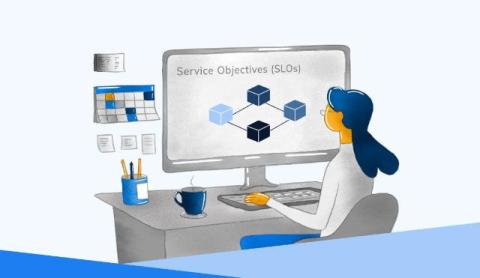
Implementing SLOs in Microservices: A Comprehensive Guide to Reliability and Performance

Microservices are revolutionizing modern enterprise architectures. They allow businesses to scale quickly and innovate without the constraints of monolithic systems. However, this transformation isn't without its challenges. Maintaining reliability across a web of interconnected services can be complex. Each microservice is a vital component, and a single failure can disrupt the entire system.

How to Import Existing ilert Resources into Terraform

Welcome to our detailed guide, which will help you incorporate your current ilert configurations for incident management into Terraform. Here, you will find a step-by-step tutorial to import your existing ilert resources to the Infrastructure as Code project and recommendations from our engineering team on best practices to maintain consistency across your infrastructure and incident management processes.

What is Major Incident Management? Definition, Process, and Tools

We already know that nowadays businesses depend heavily on technology to maintain seamless operations. However, when critical systems fail, the consequences can be dire, impacting productivity, revenue, and customer trust. This is where Major Incident Management can make a difference. Understanding how to manage major incidents is crucial for any organization aiming to minimize downtime and ensure business continuity.

10 Incident Management Metrics to Monitor and Improve Your Service

In the world of IT Service Management, the ability to effectively manage incidents is crucial to maintaining business continuity and customer satisfaction. That's why it's always a good idea to track Incident Management metrics from the start. We all know that incidents, ranging from minor service disruptions to major outages, can have significant impacts on an organization's operations and reputation.

Evolving solutions for IT operations teams

ITOps teams face several common issues, from high noise and incident volumes to siloed teams and manual workflows. These challenges contribute to reduced operational efficiency, extended downtimes, and lost revenue. All things you want to avoid. You rely heavily on incident response teams to keep your part of the digital world running smoothly. The BigPanda platform helps ITOps and incident response teams accelerate and automate incident detection, investigation, and resolution.
Sponsored Post

9 Critical Challenges in Enterprise Incident Management (And How to Overcome Them)

In an era where businesses are deeply intertwined with complex digital ecosystems, robust enterprise incident management has attained utmost importance. With businesses relying heavily on complex, interconnected systems, the stakes are high when things go wrong. According to PagerDuty's State of Digital Operations 2024 report, 65% of organizations experienced an increase in total incidents over the past year, with an average cost of $3,936 per minute of downtime for enterprise companies.

Understanding the CrowdStrike Incident: Enhancing Security Measures with Microsoft Azure

In today's video, we're diving into the CrowdStrike event and its connection with Microsoft Azure, highlighting the critical lessons learned about risk mitigation in content release. We'll explore how the incident led to Microsoft being blamed and the importance of implementing stronger validation and deployment strategies to prevent similar issues in the future.

What is Critical Incident Management? Definition and Classification

Imagine this: Your company’s entire network goes down, halting operations across the globe. Panic sets in as every minute of downtime means lost revenue and frustrated customers. What do you do? This scenario is a classic example of why Critical Incident Management (CIM) is vital. It's about having the right processes, people, and tools in place to manage high-impact events effectively and minimize damage.

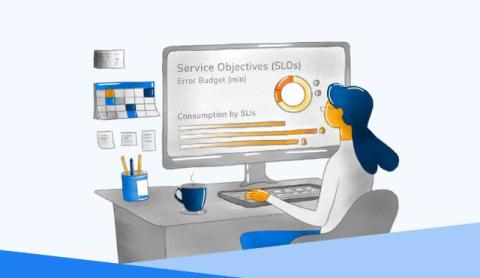
Creating Effective SLO Dashboards: A Comprehensive Guide

In modern software engineering, the concept of Service Level Objectives (SLOs) has become a cornerstone of reliable service delivery. SLOs define the acceptable level of service that a system must deliver, serving as a benchmark for both internal teams and external users. However, setting SLOs is only half the battle; effectively tracking and managing these objectives is crucial to ensure that services remain within the desired thresholds. This is where SLO dashboards come into play.

What Does an Incident Manager Do? Role and Responsibilities

Have you ever wondered who ensures that your IT services run smoothly, even when everything seems to be going wrong? That’s the job of an incident manager. When critical systems fail or disruptions occur, the incident manager steps in to coordinate a swift and effective response, minimizing the impact on your business. But what exactly does this role do, and why is their role so essential?

Health Unit Coordinator - Roles and Responsibilities

In bustling healthcare settings, where patients, doctors, and nurses are always on the move, maintaining order can feel like an uphill battle. The constant activity makes it challenging to stay organized and keep everyone in sync. Which is why it is essential for healthcare facilities to maintain a sense of coordination that enables them to seamlessly deliver quality patient care. That’s where the Health Unit Coordinator come in…

The Incident Management Process: Step-by-Step Guide

There is no way around it: Incidents are bound to happen. Whether it’s a minor hiccup or a major outage, how your team handles these situations can make or break your business’s reputation. This is where a well-defined Incident Management process comes into play. It’s not just about fixing issues; it's about doing so efficiently, minimizing impact, and ensuring that similar problems don’t occur in the future.

6 Best Free OnCall Software in 2024, Open-Source and SaaS

In the world of IT and DevOps/SRE, managing incidents efficiently is paramount. When an unexpected issue arises, having the right OnCall software can make all the difference in minimizing downtime and maintaining service reliability. OnCall software ensures that there’s always someone available to respond to incidents, no matter the time of day. This tool is vital for businesses that operate around the clock and cannot afford to let issues go unresolved for long periods.

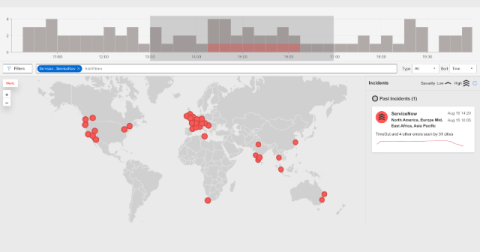
Learnings from ServiceNow's Proactive Response to a Network Breakdown

ServiceNow is undoubtedly one of the leading players in the fields of IT service management (ITSM), IT operations management (ITOM), and IT business management (ITBM). When they experience an outage or service interruption, it impacts thousands. The indirect and induced impacts have a multiplier effect on the larger IT ecosystem. Think about it. If a workflow is disrupted because of an outage, then there are large and wide ripple effects. For example: The list goes on.

How to Create an Incident Communication Plan in 2024

No matter how robust your IT systems are, every business faces incidents at some point. Incidents can include degraded performance, poor response time, service disruptions, outages, and security incidents such as data breaches. This is why it’s key for businesses to have an incident communication plan that ensures all the affected parties are aware of the status of services. This includes DevOps teams, affected accounts, investors, customers, media outlets, etc.

Enterprise-Grade ITSM: Scaling Incident Response with ServiceNow & Squadcast

Integrating ServiceNow with Squadcast creates a powerful solution for IT Service Management (ITSM) teams, especially in environments where downtime isn’t an option and efficiency is critical. To state the obvious, IT incidents aren't just a nuisance - they're a threat. Downtime translates to lost revenue, frustrated customers, and a hit to your company's reputation. That's why a solid ITSM setup is essential.

Copied Press Release: FireHydrant Acquires Blameless to Further Solidify Enterprise Market Leadership

The addition of Blameless' enterprise capabilities combined with FireHydrant's platform creates the most comprehensive enterprise incident management solution in the market.

Building On-call: Our observability strategy

At incident.io, we run an on-call product. Our customers need to be sure that when their systems go wrong, we’ll tell them about it—high availability is a core requirement for us. To achieve the level of reliability that’s essential to our customers, excellent observability (o11y) is one of the most important tools in our belt. When done right, observability improves your product experience from two angles.

;( Your PC has a problem...LM Envision pinpointed the issue for IT teams immediately

The recent CrowdStrike outage highlights the urgent need for robust observability solutions and reliable IT infrastructure. On that Friday, employees started their days with unwelcome surprises. They struggled to boot up their systems, and travelers, including some of our own, faced disruptions in their journeys. These personal frustrations and inconveniences were just the beginning.

AI-powered incident management copilots: A guide

All eyes are on generative AI. Enterprise IT teams are looking to Gen AI to translate the high volume of data from their services architecture into actionable insights. The goal: Improve operational efficiency and quality of work. But it’s challenging to sort through the hype (and confusion) to identify which vendors have GenAI capabilities that can provide true impact and value to their IT and service operations. One capability in particular is AI-powered copilots.

Protect Your Alerts: Why Incident Alert Management Shouldn't Share a Cloud

When managing IT infrastructure, one crucial aspect is ensuring that your incident alert management system remains operational during critical failures or outages. Relying on a single cloud provider for both your primary services and incident management can create a significant vulnerability. If that cloud provider experiences an outage, your alert management system could become inaccessible precisely when it’s needed most, leading to delayed responses and extended downtime.

Choosing the Best SRE Tools for Your Business: A Buyer's Guide

If you're a member of a Site Reliability Engineer(SRE), DevOps, or IT operations team, you're likely familiar with the challenges of maintaining system uptime and reliability. That's where SRE tools come in. They are the unsung heroes that help maintain reliability and performance. In today's tech-driven world, these tools are more important than ever. This guide is here to help you choose the best SRE tools for your enterprise team.

Improving documentation with content reuse

Anyone who’s worked in a customer-facing role knows the pressure to find the correct answers quickly. Emotions are high when something is broken, or there’s an outage. The customer is angry. You’re stressed. And your boss is watching and wondering why the problem hasn’t been fixed. You need to troubleshoot quickly and provide the right information ASAP. As a support professional, you want to give customers and stakeholders the best possible experience.

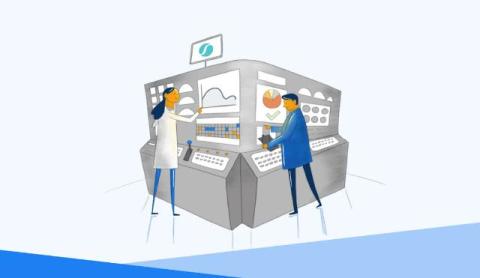
Modernize your Operations Center and Build Operational Resilience with the Latest Features from PagerDuty

Global IT disruptions and outages are becoming the new normal, testing the operational resilience of businesses everywhere. How well prepared your team is to handle major incidents determines how fast the business can return to normal. Operations Centers are relied on to manage these disruptions and ensure quick recovery. They’re the point of entry for incoming data that holds important signals of impending failure that impact customers, the business, and the bottom line.

The Impact of MTTR on Customer Satisfaction and Business Success

Today, businesses are increasingly reliant on their ability to provide uninterrupted service and respond swiftly to any disruptions. Whether it's a website outage, a malfunctioning application, or hardware failure, downtime can significantly affect a company's operations. Customers expect quick resolutions, and delays can result in dissatisfaction, loss of trust, and ultimately, business failure.

What Is Five 9s in Availability Metrics?

What comes to mind when you hear that an IT component has “five 9s availability”? Five 9s availability of >= 99.999% is the peak metric for IT availability. Five 9s predicts that a measured component — whether it is a server, communication line, app, service, or any other item — will be available at least 99.999% of the time during a specific period.

BigPanda and ServiceNow improve IT service management

By breaking down the silos between observability, IT operations, and service management, teams can improve service delivery and enhance IT incident management. However, this is more easily said than done. The average BigPanda customer uses more than 20 observability and monitoring data sources. Combining mountains of alert data with legacy event management systems can make it almost impossible to sift through the noise to find the most important alerts.

Don't get caught in the dark: Lessons from a Lumen & AWS micro-outage

While major outages like the recent CrowdStrike incident dominate headlines, those of us in the trenches ensuring Internet Resilience know that most of our issues are not necessarily global but localized by geography, autonomous systems, or something else. Micro-outages – those elusive, localized incidents – can pose the most persistent threat to observability.

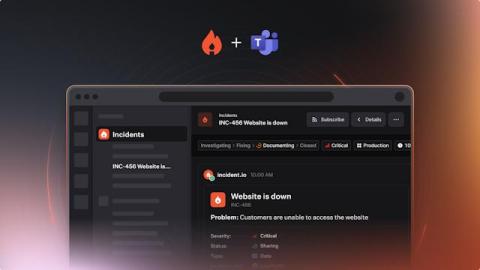
Introducing: incident.io for Microsoft Teams

There’s a major outage. Support tickets are mounting. Everybody from engineering to legal is scrambling for information. You have more Teams notifications clamouring for attention than you do minutes to address them, and it’s hard to know where to begin. What comes next is a balancing act—mitigating the impact, updating colleagues, managing action items, or updating a status page that will be seen by millions.

Harness GenAI to enhance IT incident management

Advances in generative AI are rapidly transforming the IT operations landscape. According to Enterprise Strategy Group, 85% of organizations use or plan to deploy AI across many functional areas, including ITOps. AIOps platforms can apply advanced GenAI to quickly identify an incident’s root cause, impact, and recommend steps to resolution. When fed the correct information, AIOps gives IT teams immediate access to context-rich insights.

Building On-call: Continually testing with smoke tests

With the release of On-call, our system’s reliability had to be solid from the outset. Our customers have high expectations of a paging product—and internally, we would not be comfortable with releasing something that we weren’t sure would perform under pressure. While our earlier product, Response, was the core of a customer’s incident response process after an incident was detected, we’re now the first notification an engineer gets when something’s wrong.

Intelligent Alerting, Fewer Headaches: Insider View at ilert AIOps

You might have noticed that we released a series of AI-supported features last year. Intelligent alert grouping, developed to reduce alert fatigue, is the icing on the cake. ‍ With it, we combined all ilert AI features in a new powerful add-on that aims to reduce stress and give more clarity during IT incidents.

ROI of Reducing MTTR: Real-World Benefits and Savings

Mean Time to Repair (MTTR) stands as a critical metric when it comes to IT Operations and Incident Management. Reducing MTTR is not just a technical goal but a strategic business imperative, driving significant Return on Investment (ROI) through various tangible and intangible benefits. This blog delves into the real-world benefits and savings achieved by reducing MTTR, emphasizing its importance in contemporary business environments.

Managing Vendor Incidents: Customer Impact That Isn't Your Fault

One of the first key tenets of cloud computing was that “you own your own availability”, the idea being that the public cloud providers were making infrastructure available to you, and your organization had to decide what to use and how to use it in order to meet your organization’s goals. The cloud providers have no knowledge of your applications or their KPIs.

PagerDuty Executive Spotlight Series: Vodafone

Vodafone is a Global 500 telecommunications company in Europe and Africa servicing over 320 million mobile customers across 21 markets. In this PagerDuty Executive Spotlight, we sat down with Ahmed Elsayed, UK CIO & Digital Engineering Director at Vodafone, to discuss his experience unifying a global engineering team to streamline the development and deployment of digital products and services to ensure an exceptional customer experience.

Incident Management vs Problem Management: Definition & Differences

Imagine this: your company’s website suddenly goes down during a peak sales hour, leaving customers frustrated and potential revenue lost. This situation calls for immediate action, which is where Incident Management comes into play. But what happens next? If this issue recurs, it signals the need for a deeper investigation—enter Problem Management.

Alerting with Twilio: Connect Your Monitoring with the Top-1 Communications Platform

You might be surprised. Why does ilert, the platform dedicated to alerting and incident management, publish anything about the direct (in the sense of bypassing an incident management tool) connection between monitoring solutions and Twilio? Do they take the bread out their own month? —You might think. Working on DevOps incident management since 2009, we believe every solution fits specific needs.

Balancing Centralization and Autonomy: The Key to Automation at Scale

The recent global outage reminds us that identifying issues and their impact radius is just the first part of a lengthy process to remediation. Incidents are inevitable; how we prepare for and learn from them is what sets teams up to respond more effectively next time. As we saw from the remediation steps taken by enterprises around the world, implementing a known fix across a large number of environments that are potentially managed by a number of distributed teams can be a gargantuan challenge.

How Stress Affects Our Learning Abilities in Incidents (And What To Do About It)

While retrospectives provide a valuable pathway for learning outside of the flow of work, we also want learning to happen during an incident or unexpected event as it unfolds. This can be challenging due to the negative impact of stress on our ability to learn and navigate difficult situations. In this article, we’ll dig into how stress inhibits our ability to learn and what we can do about it.

Introducing Squadcast's Audit Logs: Enhanced Visibility and Control

Maintaining comprehensive records of user and entity-related changes within your Incident Management platform is crucial. Organizations have long relied on external analytics tools for these insights. However, the demand for an integrated solution within Squadcast has been growing. We are excited to introduce Squadcast's Audit Logs feature, designed to address this need directly within our platform.

Incident Metrics: Exploring MTTF

Metrics play a pivotal role in assessing performance, identifying areas for improvement, and ensuring optimal service delivery in IT. One such critical metric is MTTF (Mean Time To Failure). Basically, it calculates the average amount of time a system or component is expected to operate before experiencing a failure. But what exactly is MTTF, and why is it essential to managing IT infrastructure?

Prevent the Next Outage - Motadata's Holistic Approach to IT Resilience

In today’s world, everything is online; cyber resilience is very important. Companies depend heavily on their IT setup to keep things running smoothly. But sometimes, cyberattacks, system breakdowns, or even natural disasters can mess things up big time. This can cause businesses to lose data and money and hurt their reputations. However, with the increasing importance of IT resilience in the digital age, CEOs and boards must prioritize and invest in this aspect of their business.

Understanding MTTR in Information Technologies

In IT, one metric stands out for its importance in assessing operational efficiency: Mean Time to Repair (MTTR). Why? Because every second counts, and when systems fail, the ability to quickly identify and resolve issues is critical to maintaining business continuity and customer satisfaction.But what exactly is MTTR? How do you calculate it? This article will explore the significance of MTTR, its various definitions, and the challenges and strategies involved in optimizing it.

Top tips: 5 lessons learned from the recent Microsoft Azure disruption to survive the next cloud outage

The recent Microsoft Azure outage had a profound impact, disrupted services for countless businesses and individuals around the globe, and exposed the risks of relying exclusively on cloud solutions. This incident, triggered by a mix of technical failures and unexpected complications, resulted in substantial downtime, access issues, and operational interruptions across multiple industries.

HetrixTools and ilert: Augment your Uptime and Blacklist Monitoring with Powerful Incident Management

ilert users can now seamlessly connect ilert with HetrixTools' monitoring capabilities. This streamlined integration ensures smooth IT operations with minimal downtime and faster issue resolution.

Steps to AIOps maturity: Improve MTTR with AI

Many organizations face increased costs from excess noise, manual workflows, and long outage times. These inefficiencies negatively impact budget, service uptime, and, ultimately, customer satisfaction. With effective use of AI, you can give operators the most relevant, full-context incident data, providing a greater understanding of an incident within seconds.

Are you Prepared for Your Next Major Outage?

Software is not perfect. And ultimately, it’s not a matter of if you will have an outage, but of when. With the increasing complexity and frequency of IT incidents, is your organization prepared to respond and recover when each second counts? Here at PagerDuty, we’ve compiled a list of best practices to keep your systems up and running.