Operations | Monitoring | ITSM | DevOps | Cloud

How to normalize data for incident management

Handling IT alert data can feel like you’re drowning in information. The average BigPanda customer uses more than 20 observability and monitoring tools. Between system logs and user reports, an overwhelming amount of information is coming from all directions. That’s why normalizing data is such a critical part of IT operations. Data normalization in IT incident management involves putting data from various tools into a standard format.


The Difference Between SLA, SLO, and SLI Service Quality Metrics

SLA vs SLO vs SLI, what’s the difference anyway? Workplace success relies on clear expectations to help leaders and employees thrive together. As such, the partnership between customer and provider requires the same clarity to maintain service satisfaction. This is why Service Level Agreements (SLAs), Service Level Objectives (SLOs), and Service Level Indicators (SLIs) exist in the first place.

Incident response plans: Benefits and best practices

The primary objective of an IT incident response plan is to clarify roles and responsibilities, communication protocols, escalation scenarios, and technical steps to minimize further damage and safeguard business operations. The plan formally defines guidelines, procedures, and activities for identifying, evaluating, containing, resolving, and preventing IT incidents. Whether they cause intermittent errors or global service crashes, IT incidents can severely disrupt service quality and cause outages.

Reduce alert noise and resolve incidents faster with ignio Event and Incident Management

Eliminate noise, gain actionable insights, and remediate issues before they impact your business Are you struggling with huge volumes of events and alert noise in your IT Operations? Most enterprises today face challenges in maintaining operational IT resilience and ensuring continuous service availability due to the sheer volume of IT events coming for different monitoring and observability tools.

Continuous Improvement with Squadcast: Optimizing Incident Response for Long-Term Growth

Incident management plays a critical role in ensuring service reliability, customer satisfaction, and overall business success. Effective incident response is not a static process but one that benefits from constant refinement and optimization. As organizations grow and evolve, so must their approach to handling incidents.

Incident Communication: Essential Steps to Build Trust And Resolve Issues

There is no doubt about it: How you handle incident communication can make all the difference. Picture this: your organization experiences a major incident that disrupts services and affects users. Customers are anxious, internal teams are scrambling to resolve the issue, and the clock is ticking. This scenario underscores the importance of a solid incident communication plan.

October Wrap-Up: Product Updates Across the PagerDuty Operations Cloud

At PagerDuty, we’re committed to delivering powerful updates that help you respond faster, work smarter, and deliver seamless customer experiences. As a fast follow to our recent launch, this quarter’s wrap-up blog highlights our latest product innovations and upcoming features—all designed to enhance your operational resilience and drive meaningful business outcomes by reducing risk and strengthening your ability to adapt and respond effectively.

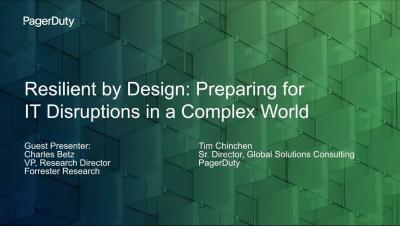
Resilient by Design: Preparing for IT Disruptions in a Complex World

In a world where technology disruptions are no longer a question of “if” but “when,” digital resilience has become essential to business continuity and customer trust. Join us for an insightful webinar featuring Charlie Betz, VP, Research Director at Forrester Research and PagerDuty’s own Tim Chinchen, Sr. Director, Global Solutions Consulting, as they explore strategies to fortify your operational readiness.

Sponsored Post

The Role of AI in SRE: Revolutionizing System Reliability and Efficiency

Maintaining high service reliability is crucial for enterprises that depend on software services to drive their businesses. This is where Site Reliability Engineering (SRE) comes into play-a practice that integrates software engineering approaches with operations to build scalable and highly reliable software systems. As the world's reliance on digital infrastructure grows, so do the challenges of keeping these systems running smoothly. To meet these challenges, Artificial Intelligence (AI) is being increasingly integrated into SRE practices, enhancing their capabilities in unprecedented ways.

LLMs vs Generative AI: Differences in Capabilities and Business Applications

When we talk about AI, it's easy to get overwhelmed by the different models, terms, and tech advancements constantly being thrown around. Yet, understanding these distinctions is crucial as businesses increasingly look to AI to drive efficiency, innovation, and customer engagement. So let’s make this simple. In this blog, I’m going to break down the key differences between Large Language Models (LLMs) and Generative AI, and how businesses are leveraging these technologies in the real world.

Understanding & Automating DevOps Processes and Let Go (A Little)

As the demand for instant innovation and real-time delivery of mission-critical processes continues to grow, your organization risks falling behind if it can’t adapt to an automation-centric strategy. To succeed, managers must loosen the reins and enable teams to automate DevOps processes. Automating DevOps processes is not an all-or-nothing decision, and implementing automation processes can let teams adapt to the changing environment and let go, little by little.

Streamlining Enterprise Migration with Squadcast

Migrating your enterprise incident management system can be a daunting process, but with the right tools and support, it doesn’t have to be. Squadcast’s comprehensive migration solutions ensure a seamless transition with minimal disruption to your operations. This webinar is designed to walk you through the essential steps for a successful migration, showcasing how our personalized approach and expert support can help you take control of your incident management.

Create dashboards in ilert

In this video, we'll guide you through creating a new ilert dashboard, adding widgets, customizing the layout, and sharing it effortlessly with your team. If you're new to ilert, it's an all-in-one incident management platform designed for DevOps and IT teams. ilert offers powerful tools like alerting, status pages, automated on-call scheduling, and more, so you can achieve 100% uptime and operational excellence.

Incident Management in the Cloud Era: Challenges and Opportunities

The rapid adoption of cloud technology has revolutionized how organizations operate, collaborate, and innovate. With cloud solutions enabling on-demand scalability, data accessibility, and cost savings, they have become the backbone of modern business infrastructures. However, with this progress comes new challenges, especially in the realm of incident management.

How the ilert Team Achieved a Seamless Migration from Community MySQL to AWS RDS Aurora with Minimal Customer Impact

As our customer base and data demands grew exponentially over the years, scaling our database infrastructure became imperative. Our vision was to set up an active-active database architecture that would ensure regional independence and exceptional service quality globally. Here’s an in-depth look at how our team managed to migrate our production data to AWS RDS Aurora, incorporating cutting-edge strategies to minimize impact during the transitional phase.

DevOps Best Practices to Transform Your Development Process

Businesses are under constant pressure to deliver software faster and more reliably. Yet, the real challenge lies in maintaining quality standards without sacrificing speed. Traditional software development methods often lead to silos between teams, slower release cycles, and more frequent errors. These inefficiencies impact the speed of software delivery, risk system downtime, and customer satisfaction. The solution? Implementing DevOps best practices.

Five core incident response phases for ITOps

Effective IT event management is about more than restoring services. Managing and mitigating threats involves a comprehensive approach with five incident response phases: It’s crucial to take a structured approach to addressing disruptive events. Incident response involves multiple phases to minimize the impact and prevent service outages. An “incident” is any event that disrupts normal operations or threatens your information systems.

The Fundamentals of Enterprise Incident Management

These days, where businesses are more reliant on technology than ever before, ensuring operational continuity is critical. At the heart of this effort is enterprise incident management, a discipline that ensures organizations can effectively handle unplanned disruptions and restore services as quickly as possible.

The Ultimate List of Incident Management Tools in 2024

Incident management tools are important for organizations to effectively handle service outages. With so many incident management tools around with different feature sets, it's often difficult to find the one that is right for your needs. In this article, we attempt to make a list of incident management software available in 2024 with their features to help you arrive at the right one.

What is a runbook for IT operations?

A runbook is a structured document detailing standardized procedures for completing routine IT operations processes. Runbooks are comprehensive guides that outline the steps and dependencies required to manage infrastructure, applications, and services within your IT operations. Runbooks bring order and organization to ITOps. These guides offer simple instructions for your team to handle challenges confidently and efficiently.

Better Database Incident Management | The Tony and Tonie Show

In this episode of The Tony and Tonie Show, we discuss how Redgate Monitor helps teams manage database incidents efficiently, by providing the right data to the right people, at each stage of a tiered incident response system. With fewer distractions from routine issues, specialist staff can focus on core tasks while teams resolve problems faster and prevent future disruptions.

xMatters Xenon Release

Blast off into a new era of incident resolution! Your teams may not have to choose between ground tanks or flying planes like they do in the arcade game, but with our Xenon release, resolvers will be able to quickly switch between strategies to ensure they’re always working as effectively as possible. So, let’s see what’s packed in this mission’s inventory.

How to unlock $160.000 in annual cost savings - by using automated alert notifications

In today’s fast-paced world, time is money. The faster we can resolve one client’s issue, the quicker we can move on to the next, boosting client satisfaction and maximizing operational efficiency. However, the journey from identifying a problem to resolving it is often prone to delays and human errors. That’s why having an efficient, reliable and fast alert notification process is crucial for driving customer satisfaction and ensuring cost savings.

How to Save $160,000 Per Year - With Automated Alerting

In today’s fast-paced world, time is money. The faster we can resolve one client’s issue, the quicker we can move on to the next, boosting client satisfaction and maximizing operational efficiency. However, the journey from identifying a problem to resolving it is often prone to delays and human errors. That’s why having an efficient, reliable and fast alert notification process is crucial for driving customer satisfaction and ensuring cost savings.

The Rising Role of Slack in Incident Management

Why is Slack becoming so popular in incident management? Slack is one of the most popular communication tools used in companies. If you're part of a remote team, your team is probably on Slack or something similar like MS Teams. Although IM tools lack the communication nuances that are taken for granted in face to face interactions, they provide many other advantages.

AIOps monitoring: Definition, uses, and features

AIOps monitoring is a proactive process that uses AI to anticipate and identify IT infrastructure issues. Going beyond traditional troubleshooting, it enables your systems to detect anomalies in advance to prevent potential disruptions. AIOps uses advanced technology like AI and machine learning to simplify IT operations. AIOps monitoring collects and analyzes large data sets from diverse sources, such as logs, metrics, and events.

The Incident Dilemma: Choosing Between Reactive and Proactive Incident Response

As the IT landscape evolves, businesses face increasingly complex challenges related to system availability, data integrity, and customer satisfaction. One of the most pressing dilemmas is how to manage incidents effectively—deciding between reactive and proactive incident response approaches. Both methodologies have their own merits and pitfalls, but the decision can significantly influence how efficiently an organization handles IT disruptions and maintains operational continuity.

The 2024 Guide to Open Source Status Page Providers

Maintaining transparent communication about service availability is crucial for businesses of all sizes. Status pages are an important part of your communication strategy during times of outages and maintenance events. You can choose to go with a fully managed status page provider, or host an open-source one yourself. Open source status page providers offer a cost-effective and customizable solution. However, then can come with their own drawbacks.

Demo Roundups! Scaled Service Ownership

Are your teams grappling with tool sprawl, fragmented incident management processes, and rising operational complexity? Join us for an in-depth demo of PagerDuty Operations Cloud, where we'll show you how to overcome these challenges through Scaled Service Ownership. Level up your digital operations expertise with PagerDuty Demo Roundups — a series of live, interactive webinars where you can deepen your knowledge in the Operations Cloud and see how PagerDuty can work for you.

What are SLOs/SLIs/SLAs?

You’ve likely noticed how some pizza places promise delivery in 30 minutes, or they’ll give you your money back. But what are they really promising? They’re setting a clear performance goal and backing it up with confidence. How do they measure their performance? They track how long each delivery takes. And why do they make this promise? Because fast service is key to keeping their business thriving.

4 elements of AI copilots for incident management

Generative AI has immense potential to transform how IT operations, service management, and infrastructure teams function. However, integrating GenAI technologies, like copilots, often brings significant challenges, such as ensuring accuracy, addressing job displacement concerns, and demonstrating tangible value. Navigating the landscape of various vendors and implementation hurdles can be time-consuming and resource-intensive.

Cloud Engineer - Roles and Responsibilities

Cloud engineers have become a vital part of many organizations – orchestrating cloud services to create seamless digital experiences for clients. With responsibilities spanning across cloud security to troubleshooting incidents, cloud engineers are key to keeping modern businesses running efficiently. And as the need for cloud expertise continues to rise, so do opportunities in the field.

Transform ITOps and incident management with AI copilots

There are many ways to apply generative AI to modernize IT operations. Advances in GenAI have paved the way for the development of AI-powered ITOps copilots, which have the potential to transform IT operations. AI copilots offer many benefits for IT, including improved decision-making, accelerated incident management timelines, and optimized workflows.

What is DORA and how will it affect me?

The Digital Finance Strategy is a European directive that aims to support and develop digital finance in Europe while maintaining financial stability and consumer protection. There are three main components to the package: In this blog post, we’ll attempt to summarize the 113-page DORA proposal, highlighting how it will apply to incident management at financial entities. Side note: we also wrote a blog post about the other DORA, also known as the DevOps Research and Assessments.

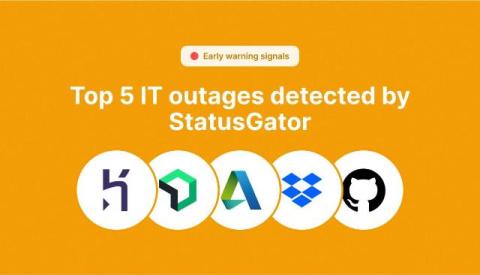
Top 5 IT outages detected by StatusGator

StatusGator is the world’s best status page aggregator: We aggregate the status of thousands of cloud services and hosted applications from their official status pages. But everyone knows official status pages are often behind and in those critical moments before the status page is updated, you might be thinking “Is it just me? Or is it really down?” StatusGator’s Early Warning Signals solves that by alerting you before providers even acknowledge the incident.

G2: Squadcast Leads in Incident Management and Secures Key Wins Across IT Alerting

We’re thrilled to share that Squadcast has been recognized as a Leader for the second time in the Incident Management Category. This win celebrates our pioneering role in Unified Incident Management, where we bring together On-Call Management, Incident Response, Workflow Automation, AI/ML-powered Noise Reduction, and SLO tracking—all in one platform.

Best Practices for Choosing a Status Page Provider

Downtime is inevitable but what sets successful businesses apart is how they handle it. A key part of incident management is incident communication with both internal and external stakeholders. A status page is a crucial tool for maintaining clear communication with users during outages or service interruptions. There are numerous status page providers available with different features. This article will guide you through best practices for selecting a provider that suits your needs.

Mastering regulatory compliance with incident.io

The origin of incident.io goes back to our days building Monzo, a UK-based bank, where Stephen, Pete, and I first crossed paths. As a bank, compliance with numerous regulations was, unsurprisingly, a top priority. When it came to incident management—something we were very involved in—this meant that every aspect of reporting, policy adherence, and root cause analysis (or "contributing factors," as we called it) had to be managed consistently and meticulously.

Demo Roundups! Operations Center Modernization

Solutions Consultants Nick Gallegos and Gurinder Singh show how the PagerDuty Operations Cloud addresses key challenges through Operations Center Modernization. Discover how it unifies your IT operations stack across Security, Network, and DevOps centers, automates remediation, and eliminates the need for a dedicated NOC by serving as a virtual operations center for distributed teams.

Update October 2024 - AI-based summary of alarm details and comprehensive audit logs

Our October update brings you AI-based summaries of alarm details. This makes complex or technical content much easier to understand in a matter of seconds. In addition, there is now also a comprehensive audit log, which always logs changes made to the system in a comprehensible manner. As always, you can find all the details in this blog article.

10 Signs Your Organization Needs an Incident Management Tool

In the world where digital infrastructure forms the backbone of operations, incidents—disruptions to service, system downtime, security breaches, or technical failures—are inevitable. For any organization that depends on technology, the ability to respond swiftly and effectively to these incidents can mean the difference between a minor hiccup and a business catastrophe.

New Features: Dashboard, Audience-specific Status Pages, Alert Grouping Metrics, and much more

In this quarterly product update, you’ll discover how to customize ilert dashboards to fit your team’s needs, find advanced filters for building complex alert actions, and reduce costs as an MSP using ilert status pages.

What is a SEV1 incident? Understanding critical impact and how to respond

In the world of incident management, a SEV1 incident is something of lore: you’ve either heard the tales of the critical outages that result in widespread disruption and chaos, or you’ve lived through one (and lived to tell the tale). SEV1 incidents are a game-changer. When one hits—think major outages or critical failures—it can seriously impact a business, leading to lost revenue, unhappy customers, and a whole lot of chaos.

Build Resilient Operations to Future-Proof Your Business

Build resilient operations to future-proof your business with PagerDuty. Watch this demo to see how the latest innovations for the PagerDuty Operations Cloud come together to help a team tackle a major incident that took down a revenue generating service. You’ll see how the PagerDuty Operations Console provides visibility and control to respond and recover faster and how PagerDuty Advance, integrated GenAI capabilities, provide support at every step of the incident lifecycle. PagerDuty empowers customers to use AI and automation to improve efficiency, mitigate risk, and protect customer experience.

PagerDuty Introduces Enterprise-Grade, AI-Powered Innovations to Future-Proof Operations and Improve Business Results

Strategic enhancements built on PagerDuty's strong AI heritage expand the PagerDuty Operations Cloud, empowering organizations by protecting them from revenue loss and improving customer trust.

Introducing Enhancements to the PagerDuty Operations Cloud: Building Operational Resilience for the Modern Enterprise

Global outages and disruptions have become an inevitable reality for the modern enterprise. As digital dependencies deepen, organizations must effectively manage disruptions or risk damage to their customer experience, brand reputation, and bottom line. Today, we’re thrilled to unveil the latest innovations for the PagerDuty Operations Cloud.

The Vital Signs: Why Managed IT Services for Healthcare?

Organizations across the globe are seeing rapid growth in the technologies they use every day. And while the healthcare industry has always been slow to adopt, they are quickly starting to benefit from the role new technologies play in enhancing patient care and operational efficiency. However, one major setback for healthcare SMBs when investing in advanced technology is working out how they are going to keep up with cybersecurity, performance, and management of these IT solutions.

Guide to incident response metrics and KPIs

IT incident management focuses on quickly identifying and resolving IT issues to restore normal service operations. Tracking key performance indicators (KPIs) of incident response is vital in minimizing service disruptions affecting customers and users. With so much data and many things to track, it’s difficult to identify which metrics and KPIs are right to track. What are the right incident response metrics to use to drive meaningful improvements?

Being Operationally Mature Can Save You Millions

On July 19th, a widespread technical failure crippled operations across industries, resulting in lost revenue, wasted operating costs, and damaged customer trust. For businesses that had built trust by providing reliable and resilient services, this had both an immediate and a lasting impact.

Try these IoT Integrations in ilert

The Industrial Internet of Things (IIoT) industry is experiencing rapid growth and transformation, driven by advancements in connectivity, data analytics, and automation technologies. The number of connected devices and sensors is constantly growing and is expected to be around 18.8 billion by the end of 2024. More and more manufacturers rely on automation every day. ‍

Why I like discussing actions items in incident reviews

Are incident reviews about learning or tracking actions? This question has sparked recent debate in incident management circles, including in my recent panel at SEV0 and in Lorin Hochstein’s post. Should the goal of an incident review be learning, or should it focus on tracking actionable improvements? When is the right time to discuss actions, and are they picked up just to make us feel better? From my experience, learning from incidents and identifying actions are inseparable.

Incident Alerting: Enhancing Transparency with SIGNL4

Effective incident alerting is crucial for businesses to maintain smooth operations and customer satisfaction. Incidents often generate multiple alerts, each requiring timely and transparent handling to ensure a swift resolution. Ensuring transparency throughout the incident alert process can be challenging. This is where SIGNL4 steps in, offering a comprehensive solution that enhances transparency at every step of incident alert handling.

Integrate Incident Alerts Into Your Slack Workspace

Staying on top of your third-party Cloud and SaaS service outages is crucial to maintain the reliability of your own applications. Like many modern teams, Slack might be your communication tool of choice. You can keep up with such incidents by pushing these events to a Slack channel. There are different ways of pushing incident events to Slack. In this article we will explore how to integrate IncidentHub incident lifecycle events using an incoming webhook.

The need to accelerate innovation in IT operations

First, let me give you proof that AI didn’t write this. The discerning human is learning that a significant portion of the media they consume is AI-generated or at least AI-enhanced. AI readers will likely crawl this post and distribute it to those the algorithm deems to be likely prospects for our product.

How PagerDuty Operations Cloud Delivered a 249% Return on Investment by Enhancing Operational Efficiency, Automation, and Resiliency

A Forrester Consulting Total Economic Impact study, commissioned by PagerDuty, reveals that the PagerDuty Operations Cloud delivered a 249% return on investment (ROI) and a net present value of $4.01 million over three years.* The study shows that after adopting the PagerDuty Operations Cloud, organizations reported improved operational efficiency, better incident management, and significant cost savings.

Retail ITOps: Boost Operational Resilience with Business Service Observability

david.arrowsmith • Oct 03, 2024 In today’s competitive and fast-paced retail environment, service availability is paramount to delivering exceptional customer experiences. As an ITOps Manager or Site Reliability Engineer in a large retail enterprise, you're tasked with managing complex, interdependent systems that support vital business functions such as supply chain operations, point-of-sale (POS) systems, and inventory management.

Extend ilert Capabilities with "Make" Integrations

ilert offers over 100 out-of-the-box integrations commonly used in IT operations. From monitoring and observability platforms to ITSM solutions, chat and collaboration apps, fleet management, and IoT tools—these and many others are used daily by engineers worldwide to achieve operational excellence. However, there are also tools outside the developer's usual scope that can prove helpful during incidents.

Gain the benefits of adopting an AIOps strategy

Managing IT operations is becoming more complex with the rapid evolution of IT environments. As a result, leaders are looking for more efficient, intelligent ways to monitor and maintain their IT systems. AIOps has evolved as one of the most promising solutions in recent years. AIOps uses machine learning (ML), big data, and automation to streamline IT operations.

When SSL Issues aren't just about SSL: A deep dive into the TIBCO Mashery outage

On October 1, 2024, TIBCO Mashery, an enterprise API management platform leveraged by some of the world’s most recognizable brands, experienced a significant outage. At around 7:10 AM ET, users began encountering SSL connection errors that appeared straightforward at first glance.

Best Incident Management Software Tools For B2B, SaaS, and Startups In 2024

In the fast-paced and highly competitive world of B2B, SaaS, and startups, staying ahead of potential issues and managing incidents swiftly is critical to maintaining customer trust and operational efficiency. Incidents can disrupt services, impact users, and damage a company's reputation, so it’s essential to have a reliable incident management process in place.

Enhance Incident Response with Squadcast's New AI-Powered Incident Summaries

Imagine having a concise, AI-generated report of any incident at your fingertips. That’s what Squadcast’s new Incident Summaries feature delivers—instant clarity on ongoing issues, saving precious time during critical moments. At any point in time, any stakeholder or a responder can simply generate and view the incident summary with all important details highlighted, essentially offering a single pane of glass.

PagerDuty Bolsters Leadership Team with Appointments of Chief Information Security Officer and Senior Vice President of Engineering

PagerDuty, Inc. announces the appointments of Pritesh Parekh as Chief Information Security Officer (CISO) and Rukmini Reddy as Senior Vice President of Engineering. With these appointments, the company expands its senior leadership as it continues its commitment to innovating as the most trusted and resilient digital operations management platform for the enterprise.

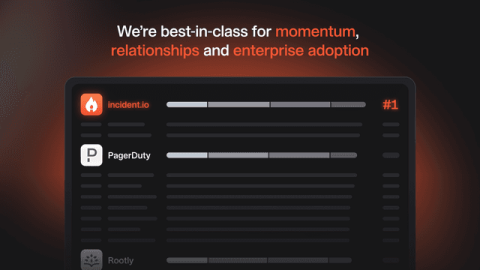
incident.io is best in class for momentum, relationships and enterprise adoption

Trust doesn’t just happen overnight. For us at incident.io, it’s been a journey—one that’s focused on people just as much as the product. From the start, we knew that building great incident management software wasn’t just about creating features and functionality. It was about building relationships, understanding our users, and truly being there for them when it matters most. Our focus has always been to help teams manage incidents better.