The latest News and Information on Cloud monitoring, security and related technologies.
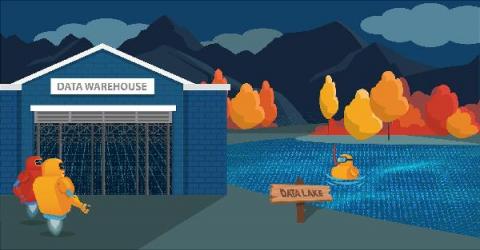
SQL is great, but sometimes you may need something else. By and large, the prevalent type of data that data engineers deal with on a regular basis is relational. Tables in a data warehouse, transactional data in Online Transactional Processing (OLTP) databases — they can all be queried and accessed using SQL. But does it mean that NoSQL is irrelevant for data engineering?
I believe that the evolution to hybrid cloud is inevitable. Not because it’s grabbing headlines, but because it mirrors the industry’s history of new technology adoption. Take the evolution of virtualization, for example. Going back 20 years give or take, virtual machines popularized by VMware, KVM, and Hyper-V started to gain traction.
To many businesses, the pace of innovation and speed to market has been hindered by the legacy infrastructure. This is mainly due to the closed structures and inflexible old-school architectural formats that they follow. The decades-old infrastructure hesitates to scale up with the growing business demands and realize advanced cloud-based technologies.
Last year, we released native tracing for AWS Lambda through Datadog APM to provide deep visibility into serverless functions and surface performance issues such as cold starts and errors, without any added latency. But Lambda functions are only one piece of the puzzle in a rapidly growing serverless ecosystem, which includes message queues, data streams, notification services, and more.
When you are running cloud-based services as part of your overall business operations, it becomes necessary to monitor your cloud operations for evaluating the usage and efficiency of the cloud services, applications, and infrastructure. Cloud monitoring also lets you watch for threats and be mindful of cyber-attacks. Here is a brief rundown on how best to monitor cloud services and some tips to make it more efficient and useful.
Dive into the article to learn how to monitor cloud server performance with Graphite and get started on your monitoring needs! Application Performance Monitoring (APM) is a crucial part of the technological era. It refers to a methodological approach towards maintaining and sustaining a system’s health. It is extremely important to monitor an application’s health and performance upon launch, and then regularly afterwards.
While cloud is seen as the go-to environment for modernizing IT strategies, many security-conscious businesses are still hesitant to adopt a full cloud strategy. A logical middle ground has now emerged: the hybrid cloud. Hybrid cloud promotes the coupling of on-premises infrastructures with one or more public cloud services to meet both cost optimization and security compliancy. Despite its benefits, hybrid cloud computing can present technical and management challenges.