Operations | Monitoring | ITSM | DevOps | Cloud

The latest News and Information on Cloud monitoring, security and related technologies.

LLM token cost: pricing per token explained

LLM token cost is the price a provider charges per token a model reads or writes, quoted in dollars per million tokens. Input and output bill at separate rates, with output priced at roughly 5x input. As of September 2026, published rates range from under $0.10 to more than $180 per million tokens on top-end reasoning tiers. In late 2025, Hardik Sonetta of Thomson Reuters Labs published a warning about the most common prompt caching mistake in production.
Why compliance keeps slowing your releases (and what to change first)

A team ships at a steady pace for most of the year. Then an audit approaches, and delivery slows. Engineers get pulled off feature work to support the audit, producing the configuration exports, logs, and environment checks that the evidence depends on. The slowdown lasts as long as the audit does. It is tempting to read this as a team that needs to move faster or be bigger. It is usually neither.

Cloud Cost Management for Observability: A Practical Guide

Observability spend is outgrowing infrastructure budgets. What drives the cost up, how pricing models work, and a practical framework to manage it. Sejal Pandey works on content and growth at Last9, writing about observability, reliability, and SRE practices.

SaaS Sprawl Is Becoming an IT Problem: Here's How to Bring It Under Control

For most organizations, SaaS sprawl does not begin with a bad technology decision. It starts with a useful tool. Marketing needs a new analytics platform. Sales adopts prospecting software. HR adds an applicant tracking system. Engineering signs up for another monitoring service. Someone discovers an AI tool that saves several hours a week and puts it on a company card. Each purchase makes sense on its own.

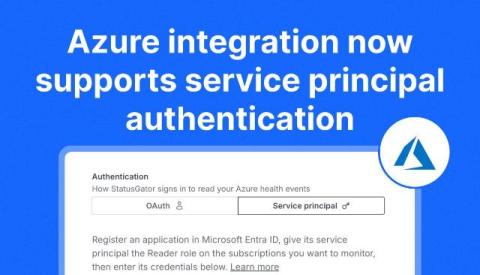
Azure integration now supports service principal authentication

We’ve released some improvements to our Azure status integration. StatusGator can now read your Azure Resource Health events via a service principal. Previously the only supported authentication mechanism was OAuth. Both pull the same data and produce the same alerts – the difference is who the connection belongs to, and what happens to it over time.

AI usage tracking: Monitor spend by team, feature & model

AI usage tracking means measuring who and what consumes AI across your company, by team, feature, and model, then converting the usage into spend and cost per unit of work. Provider consoles stop at totals per API key. Tracking puts names on those totals: which team, which product, which model, and whether any of it was worth the money. In May 2026, CNBC reported that “almost every Fortune 500 is tracking overall AI usage,” quoting ModelOp CTO Jim Olsen. The same reporting carried his warning.

Repo rightsizing: audit every model call in a repo you already shipped

Repo rightsizing is a single-pass audit of every real model call in a codebase you already shipped: SDK invocations, sub-agent dispatch sites, and agent frontmatter pins. Each call site is scored on the job it actually does, and the result commits as one blueprint file you can diff next quarter. It replaces one-skill-at-a-time reviews, which miss files where a single model key covers two different jobs.

The gap between individual AI productivity and team performance

As a product manager at Upsun with a computer engineering background, Kateryna Dvornichenko had spent months researching competing tools in the agentic development space, running tests, comparing features, and building a picture of where the market was heading. She realized the tools were impressive, but something kept standing out. "Collaboration was not the strong point of any of them," she says. "Everyone stays on their own machine with their own setup.".

AI is changing how organizations operate

AI is changing how organizations operate, but one thing has not changed: critical services cannot fail. Whether it is financial markets, healthcare, or other mission critical environments, organizations need observability that delivers value quickly, not weeks or months later. In this clip with theCube, Virtana CEO Paul Appleby explains how Virtana combines high fidelity telemetry with AI-driven intelligence to discover dependencies, correlate relationships, and deliver actionable insights within hours.