The latest News and Information on Monitoring for Websites, Applications, APIs, Infrastructure, and other technologies.
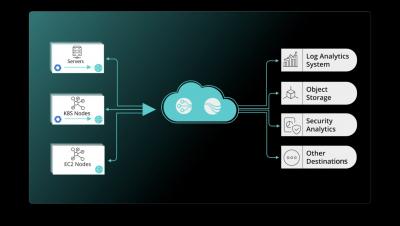
I’m very excited to tell you all about the latest Grafana Loki installment, 2.5! A huge amount of work, nearly 500 PRs, has gone into Loki between v2.4 and now. The major themes for this release are improved performance, continuing ease of operations, and more ways to ingest your logs. I usually find myself the most excited about performance improvements, so let’s start there.
Scraping websites built for modern browsers is far more challenging than it was a decade ago. jsoup is a convenient API that makes scraping websites trivial via DOM traversal, CSS Selectors, JQuery-Like methods and more. But it isn’t without its caveat. Every scraping API is a ticking time bomb.
Developers strive to produce efficient code. Many times, developers will add code to their repositories and test it to make sure it works, but they are forgetting one very important step: benchmarking! Benchmarking allows developers to see the performance impact on their code output. If properly integrated into a CI/CD pipeline, it could prevent catastrophic drops in performance before any code is shipped/deployed at all.
To ascertain risk, national security and intelligence professionals have long used concepts such as known knowns, known unknowns, and unknown unknowns. The idea of unknown unknowns was created in 1955 by American psychologists Joseph Luft (1916–2014) and Harrington Ingham (1916–1995). This concept continues to be used today in risk assessments and is applicable to technology. The unknown unknowns are the threats and potential problems that remain invisible until their impact manifests.
Since the beginning of the year, our team has been busy working with the open source community of VictoriaMetrics users and our customers as we continuously enhance and improve Vicky! Thanks to everyone who has contributed with their feedback, questions, feature requests, bug reports, etc.
Digital businesses are making a radical change in the way they build and deliver software. Gone are the days of apps that rely solely on in-house tools. Rather, today’s apps are increasingly dependent on external APIs and third-party app providers (which, in turn, are reliant on other APIs and apps). While this type of modularity allows for product flexibility and rapid development, it can be difficult to address any issues that arise.
Digital Employee Experience (DEX) is no longer a novel concept. Today’s workplaces are increasingly digital – and a majority of business leaders recognize DEX as a top priority. But many leaders are coming to a new realization: managing DEX is too complex of an undertaking to remain one priority on an IT team’s long checklist. The modern IT department must evolve – and improving experience requires a dedicated set of DEX focused IT roles.