The latest News and Information on Incident Management, On-Call, Incident Response and related technologies.
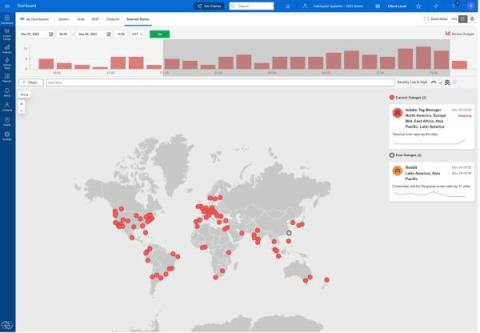
When outages cost you tens of thousands of dollars each minute, pinpointing the source of disruptions as quickly as possible becomes mission-critical. This is not a time for finger-pointing and hastily assembled war rooms searching for that needle in the haystack. You need simple, intelligent, trustworthy Internet health information to expedite your incident detection.
Maybe you’re still using monolithic applications, built and refined over many years. You understand that shifting to microservices or containerized architectures is a huge and daunting task. You’re probably grappling with the limitations of legacy systems—maybe they’re slow, tough to update, or can’t scale as you’d like. And you’re likely using more traditional IT monitoring tools or even some cloud observability tools.
As more organizations embrace containerized applications, Kubernetes has emerged as the leading platform for orchestrating these containers. However, its complexity, combined with the inevitable reality of IT incidents, demands a well-defined strategy for managing disruptions. This article introduces Kubernetes incident management, describes common Kubernetes errors, and provides practical guidance to efficiently handle incidents.