The latest News and Information on Incident Management, On-Call, Incident Response and related technologies.
An incident response process is a business process and should be treated accordingly. Because if your enterprise puts its incident response process on the backburner, the consequences could be severe.
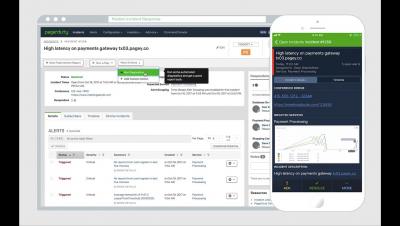
It’s 2:37 a.m. on a Tuesday night, you’re asleep—but it’s also your turn to be on call. You receive a phone call from PagerDuty. Your partner hits you with a pillow in an attempt to wake you up. It worked. You groggily answer the call and hear your favorite robo-guy on the other end of the line.
Customers are the lifeblood of a successful enterprise. Yet too often, enterprises fail to keep their customers up to date during an outage. In these scenarios, enterprises risk alienating customers and losing them to rivals. To better understand why this may be the case, let’s consider an example.
The fourth industrial revolution, Industry 4.0, is happening today. Recent progress in manufacturing automation requires fewer individuals on a shop floor to do manual work with and at machines. However, those people are now required to respond faster and more effectively to keep manufacturing up and running. Fortunately, the industrial Internet of Things (IoT) allows for applying real-time monitoring, workflow automation, predictive analytics, and other means to new verticals and businesses.
Oftentimes, enterprises struggle to notify customers, employees, partners and other key stakeholders about incidents. Yet failure to maintain constant communication with key stakeholders may slow down incident response. Worst of all, a lack of communication may put customer relationships in danger and lead to revenue losses, brand reputation damage and other long-lasting business issues.
Few things damage productivity as much as waiting. The act of waiting forces us to context switch, disrupts our creative momentum, and eliminates our ability to experiment. Whether we are deploying a new service or troubleshooting a problem, waiting puts a heavy tax on team productivity in IT Operations.