Operations | Monitoring | ITSM | DevOps | Cloud

The latest News and Information on DevOps, CI/CD, Automation and related technologies.

Getting Started with Harness Database DevOps using Flyway

Database changes shouldn’t be manual, risky, or disconnected from your release process. This walkthrough shows how to get started with Database DevOps using Flyway and Harness, bringing versioning, automation, and CI/CD discipline to your database migrations. Flyway enables SQL-first, versioned migrations, while Harness provides governance, pipeline orchestration, and environment visibility so teams can deploy database changes with the same confidence as application code.

VirtualMetric DataStream + Google SecOps Integration: Pre-Ingest UDM Normalization at Scale

Google SecOps (formerly Chronicle) is widely used for large-scale security analytics, long-term telemetry retention, and detection across diverse environments. Its Unified Data Model (UDM) enables correlation across sources and supports analytics that operate over long time horizons. To take full advantage of these capabilities, security data must arrive in a consistent and well-structured UDM format. In practice, this is rarely the case.

Kubex and Tangoe Partner to Deliver Unified Cloud, Kubernetes, and FinOps Optimization

Enterprises operating at cloud scale today face a growing reality: managing infrastructure performance and cost in silos no longer works. Kubernetes, multi cloud environments, and GPU accelerated workloads deliver immense agility and capability, but they also introduce complexity that outpaces traditional monitoring and cost governance approaches.

Weekly vs. split-week on-call rotations: A guide to finding the right rhythm

When you move past daily rotations but find anything longer than a week feels too stretched out, you often end up choosing between weekly and split-week rotations. Weekly rotations give you a full seven days before handing off. Split-week rotations break that time into smaller chunks like 2-day, 3-day, or 4-day shifts. Each approach creates a different rhythm for your team. This guide compares both patterns across three key criteria.

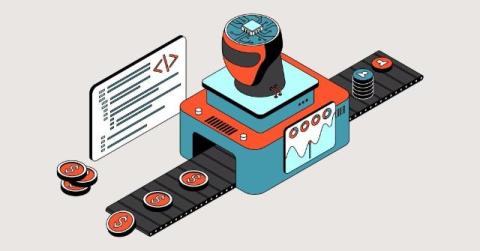
Intelligent FinOps: AI-Informed, AI-Enabled

AI is the new frontier for FinOps maturity. It introduces fresh spend patterns and new opportunities for value. As GPUs, inference, and retraining reshape costs, FinOps maturity grows through visibility, forecasting, and shared mindset about how these workloads drive business impact. In this 2025 post, I gave my guidelines for implementing AI tagging to give business context and clarity to vague AI invoices. Now, I’m sharing the next level up: how to drive FinOps in AI with AI.

From Chaos To Clarity: How Forcepoint Scaled FinOps Across The Organization

When Anthony Leung talks about FinOps, he’s speaking from operating at real scale — not theory. As VP of Engineering Platforms and Security Research at Forcepoint, he led a transformation that cut cloud spend in half while improving availability, and built a culture where engineers own their economics.