Operations | Monitoring | ITSM | DevOps | Cloud

The latest News and Information on DevOps, CI/CD, Automation and related technologies.

Infrastructure as Code: A Peek into Power of Terraform

Today, large enterprises are using multiple cloud providers and technologies. Enterprises dealing with distributed loads on their on-prem infrastructure, private clouds, and public clouds need teams that are versed in writing different CLI commands and scripts in multiple languages and require specialists in these fields. Unfortunately, all of this bears a hidden cost since the company has to train its employees in multiple technology stacks to manage different infrastructures.
What is SD-WAN technology, and how does it work?

In recent years, Software-Defined WAN Technology (SD-WAN) has changed the way networking professionals secure, manage, and optimize connectivity. As organizations continue to implement cloud applications, conventional backhaul traffic processes are now inefficient and can cause security concerns. SD-WAN is a virtual architecture that enables organizations to use different combinations of transport services that can connect users to applications.

Is a multicloud strategy right for your organization?

For the last few years, many development teams have replaced traditional data centers with cloud-hosted infrastructure. Cloud adoption continues to grow, and teams are updating applications to leverage cloud-based services. But for many organizations, adopting a single cloud provider to host all their applications and data can put their business at risk. To reduce these risks, some organizations are distributing resources across multiple cloud providers in a specifically designed way.

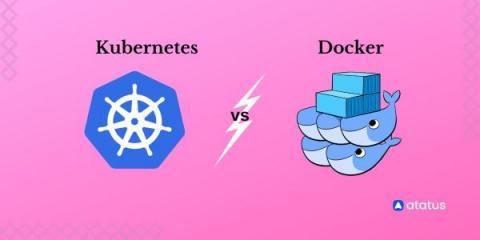
Docker vs Kubernetes

Docker is a PaaS product, developed by Docker.Inc to containerize applications. It does so by combining app source code with OS libraries and dependencies required to run that code in any environment. Kubernetes is a similar tool developed by Google, which scales up this containerized application after deployment. While one works in building the containers the other essentially helps in scaling it up, then why so much buzz around these two?

Apache Kafka service design for low latency and no data loss

Designing a production service environment around Apache Kafka that delivers low latency and zero-data loss at scale is non-trivial. Indeed, it’s the holy grail of messaging systems. In this blog post, I’ll outline some of the fundamental service design considerations that you’ll need to take into account in order to get your service architecture to measure up. Let’s start with the basics.