Operations | Monitoring | ITSM | DevOps | Cloud

The latest News and Information on Cloud monitoring, security and related technologies.

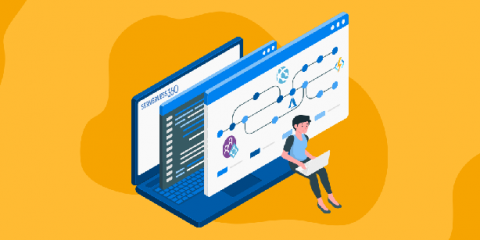
The Ultimate Guide to Monitoring Serverless Applications

Serverless applications, more often than not, have logic distributed over multiple functions and services, which with growth and agents and wrappers attached, can get more complex and costly. This is where Serverless monitoring comes in to help. But what is Serverless monitoring? Serverless monitoring allows developers to gain important insight on what happens during each execution and event, errors become more easily visible and measuring resource consumption for each invocation is possible.

Mitigating the Risks of Instance Metadata in AWS EKS

Compromising a pod in a Kubernetes cluster can have disastrous consequences on resources in an AWS Elastic Kubernetes Service (EKS) account if access to the Instance Metadata service is not explicitly blocked. The Instance Metadata service is an AWS API listening on a link-local IP address. Only accessible from EC2 instances, it enables the retrieval of metadata that is used to configure or manage an instance.

How to Avoid SLA-Killing, Budget-Busting Cloud Performance Problems

There are lots of excellent reasons to move applications into the public cloud. But those benefits cannot come at the expense (pun intended) of performance. Your SLAs, whether explicitly stated and written into contracts or implicitly promised through your commitment to quality, are part of your brand. Falling short is costly. Even if you don’t have to pay penalty fees, your reputation and customer loyalty can take a hit.

Putting You in Control of Your InfluxDB Cloud Spend

We recently changed the pricing of InfluxDB Cloud to let you control your cloud database spend so you spend only as much as you need to run your software and systems — with no wasted budget. If you just want a summary, check the InfluxDB Cloud pricing page. But if you’d like to nerd out on the changes we made, why we made them, and how to estimate your monthly spend on InfluxDB, then buckle up for a deep dive.

LM Container: Introducing Support for AWS Bottlerocket

Hybrid IT environments enable Enterprises to optimize factors such as performance, cost, agility, and security, but they also introduce complexity. Containers are a great way to reduce some of this complexity by standardizing how applications are developed and deployed.

Secure and monitor your containers on Bottlerocket from AWS

Sysdig is pleased to support AWS today in their GA launch of Bottlerocket, a special-purpose operating system designed for hosting Linux containers. Orchestrated container environments run potentially hundreds of compute nodes. Operating general-purpose Linux on container hosts introduces complexity for IT teams who must patch and update packages across their clusters. Worse, features and packages that are not necessary for running containers, introduce unnecessary security exposure.

Do containers and Kubernetes actually reduce AWS costs?

In surveys about why organizations adopt Kubernetes, a desire to reduce overall IT costs is an oft-cited reason for adopting containers and Kubernetes. Yet after the fact, when organizations talk about surprises during Kubernetes adoption, many cite increased costs. So does Kubernetes reduce costs or not? Like so many things in life, it depends. Here are some of the reasons Kubernetes projects come in over-budget and how to avoid them.

Extended retention for custom and Prometheus metrics in Cloud Monitoring

Metrics help you understand how your business and applications are performing. Longer metric retention enables quarter-over-quarter or year-over-year analysis and reporting, forecasting seasonal trends, retention for compliance, and much more. We recently announced the general availability (GA) of extended metric retention for custom and Prometheus metrics in Cloud Monitoring, increasing retention from 6 weeks to 24 months. Extended retention for custom and Prometheus metrics is enabled by default.

Azure MP part 2: Configuring monitoring

This is part two of our journey towards monitoring Azure resources with SCOM, using the Azure Management pack. In Part 1: Installation, we finished installing the Management Pack and managed to connect one of our subscriptions where the resources we want to monitor are. Now, let’s move on to configuring the monitoring for actual resources or services.