Monitoring cloud services has never been easier!
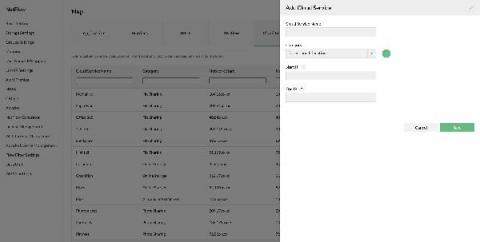
With the newly added Cloud Services feature, you can define and monitor critical cloud services running in your network.


The latest News and Information on Cloud monitoring, security and related technologies.
With the newly added Cloud Services feature, you can define and monitor critical cloud services running in your network.
When using services created by other people, it’s often neither obvious what they mean, let alone how to fix them. One of these error messages you might see when using Amazon API Gateway is “encoding not enabled”. The first question here is, what kind of encoding does this error message refer to? The first thought might go into the video or audio encoding direction and lead to a dead-end since you probably didn’t send any audio or video files.
When I first started building SaaS apps for side projects, it would take me a solid weekend solely to build the Stripe integration. These days, It's possible to build the whole SaaS app in one week.
With the exponential growth of FlashDrive, numbers of images built in the last weeks increased at the same time and we needed to find a better solution than regular docker building to reduce building and deployment time. Uber successfully migrated to Docker in 2017 and build hundreds of images a day for about 3000 micro-services services millions of customers worldwide.
Microsoft Azure provides a suite of cloud computing services that allow organizations across every industry to deploy, manage, and monitor full-scale web applications. As you expand your Azure-based applications, securing the full scope of your cloud resources becomes an increasingly complex task. Azure platform logs record the who, what, when, and where of all user-performed and service account activity within your Azure environment.
More and more, companies from small businesses to global enterprises are migrating or deploying workloads in public cloud environments. Typically, their goal is cost optimization, as public clouds can dramatically reduce on-premises infrastructure costs and corresponding maintenance labor costs. Instead of installing more servers, storage, and networking components in your own datacenter, public cloud environments allow you to deploy dynamic cloud resources, usually with a short to medium lifespan.
Many companies have adopted a multi-cloud environment for their services and many more plan to expand cloud usage in the future. As more VMs and workloads transition to public and private clouds, it is becoming clear that multi-cloud is becoming a standard or benchmark rather than something optional that businesses want to ‘try out’.