Mailchimp
Not subscribed to OpsMatters Newsletter


There’s no shortage of providers willing to host your containers. Many of the world’s biggest cloud platforms offer Kubernetes as a service, including features such as automatic scalability and high availability. However, Google Cloud Platform (GCP) stands out as perhaps the best tool for building and hosting a Kubernetes cluster for a number of reasons. In this article, we’ll present these reasons and why GCP offers a better Kubernetes experience than other providers.
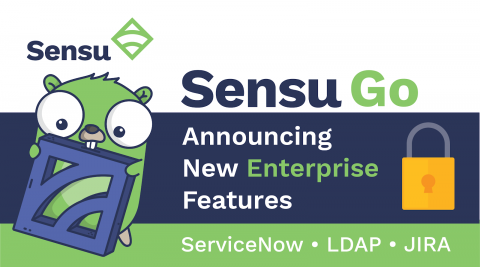
We’re thrilled to announce that the latest release of Sensu Go — version 5.2 — is available today! Sensu Go empowers you to automate your monitoring workflows, offering a comprehensive monitoring solution for your infrastructure, applications, and connected devices. Sensu Go is a massive improvement over the original Sensu (version 1.x), with an emphasis on ease of use and quick time to value.
Kubernetes Pod Security Policy is a mechanism to enforce best security practices in Kubernetes. In this tutorial, we will explain how to enable Kubernetes Pod Security Policy across your cluster using kube-psp-advisor to address the practical challenges of building an adaptive and fine-grained security policy on Kubernetes in production.
If you are familiar with instrumenting applications, you may have heard of OpenMetrics, OpenTracing, and OpenCensus. These projects aim to create standards for application performance monitoring and collecting metric data. Although the projects do overlap in terms of their goals, they each take a different approach to observability and instrumentation.
Because Ruby is an object-oriented language, we tend to model the world as a set of objects. We say that two integers (x and y) are a Point, and a Line has two of them. While this approach is often useful, it has one big problem. It privileges one interpretation of the data over all others. It assumes that x, and y will always be a Point and that you'll never need them to act as a Cell or Vector. What happens when you do need a Cell? Well, Point owns the data. So you add a your cell methods to Point.
Data breaches come in all shapes, sizes, and levels of exposure. They can range from a couple of log files unintentionally left available to the public to the leak of hundreds of thousands of users’ personally identifiable information (PII). Don’t think that just because you have a secure network, a leak can’t happen to you.