Mailchimp
Not subscribed to OpsMatters Newsletter


When you read the phrase “employee experience” (or even just good-old “user experience”), what comes to mind? One of the first things most of us think about, at least in an IT setting, is probably a system’s user interface. How hard or easy is the software to use? How intuitive is it? How appealing is its design? These are important considerations, but a good experience requires more than a good interface.
The rolling Comcast outage on Monday, November 8th and Tuesday, November 9th affected customers across the U.S., knocking users offline around the country. The first wave took place Monday evening in the San Francisco Bay area. The second, which had a wider geographic impact, occurred Tuesday morning, primarily affecting broad swathes of the Midwest, Southeast, and East Coast.
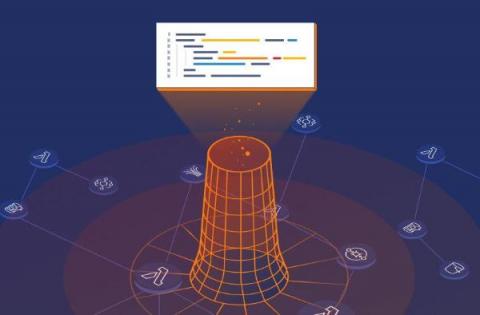
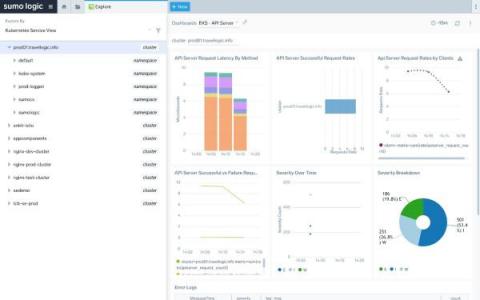
Observability is a measure of how well the internal state of a system can be inferred from its external outputs. It helps us understand what is happening in our application and troubleshoot problems when they arise. It’s an essential part of running production workloads and providing a reliable service that attracts and retains satisfied customers.
The concept of project management isn’t new, but project management is in the spotlight today. Why? Organizations everywhere face enormous pressure to consistently identify, develop, and launch the right solutions, products, or services to address market realities and enable digital transformation. A key factor to success is using the right delivery methodology and, increasingly, the answer is Agile.
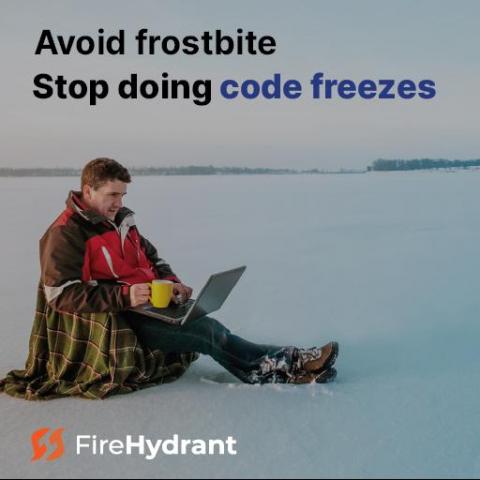
As the holiday season aggressively approaches I want to perform a public service announcement for everyone toying with the idea of a code freeze for the holidays: please don't. It’s getting cold outside and the season of peppermint mochas is upon us, which might get you thinking about putting a code freeze in place for the holidays. A Word of warning: instituting a code freeze may have unintended consequences.
Websites are a must-have for any business that wants to survive in a highly competitive environment. Many people mistakenly think that only e-commerce projects need a website, but this is not the case. Absolutely every company needs website performance monitoring and virtually every initiative should be armed with its own webpage. But this article is not about why you need a website, but about how to track and manage its performance.
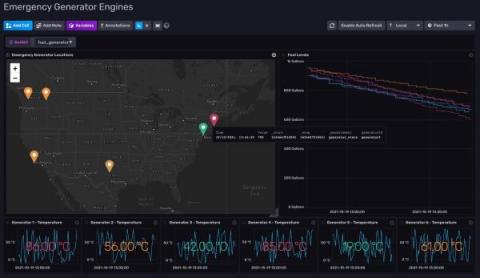
With the widespread use of LTE (Long Term Evolution), we are seeing more IoT devices come online in remote regions of our planet. Picture this scenario: A country is currently experiencing a national emergency due to an electrical grid failure. To mitigate the power shortage the government has deployed generators in the remote regions of their country to power the most remote villages. The problem? The villages are still reporting outages due to the emergency generators running out of fuel.
AWS S3 is a cloud storage service that saves data as an object associated with a key. Objects are like files and keys are like filenames. Objects are stored in a bucket. We will be auto-generating our object keys while uploading. In a free tier account, you get 5GB of free cloud storage with AWS S3. Note: This tutorial is made for AWS S3 but works as well with S3 compatible providers like Wasabi.com