There are numerous instances where a single buildpack falls short in app building, for instance when working on a NodeJS app with a PHP backend. We are thrilled to announce the global and immediate availability of Multi-Buildpacks for all app sizes, including our Free tier. The Multi-Buildpack feature allows you to: Alongside the introduction of multi-buildpacks, we're expanding support for Add-on buildpacks (such as APT, Static, or the newly introduced FFmpeg buildpacks).
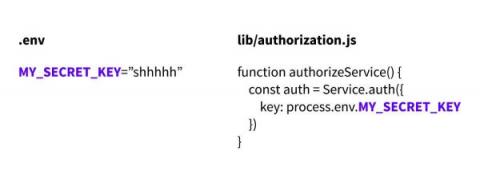
Environment variables are the best way to store variables like API keys, secrets and databases URLs. Until today you had to create and update Env. Variable manually for each app even if they are inside the same project and share the same credentials. Today, we are launching Project-level Variables: Project-level Variables are environment variables created at the project-level. You can create and consume an unlimited number of environment variable directly from your project main page.
Mastodon recently became a popular decentralized alternative to Twitter and, more importantly, a way to own your part of a global social network. Mastodon servers can interact with all other fediverse servers (including other Mastodon server). You don't have to own your Mastodon server to get started, you can even join the Mastodon of Qoddi.
At Qoddi, we are strong advocates and sponsors of open-source projects, and with the recent decision from Heroku to stop offering free plans (used by a lot of open-source developers), we felt the importance of having an alternative ready to keep those projects running. Qoddi's infrastructure is compatible with most of Heroku's buildpacks and we wrote a guide to migrate a project from Heroku.
You have many options when it comes to choosing a platform to deploy your app. In this article, we will compare AWS, Heroku, and Qoddi. Heroku is hosted on AWS, making Heroku, like Qovery for instance, nothing more than a management platform for AWS services. You can do everything you do on Heroku (or Qovery) directly with AWS for a lesser price but Heroku removes all the infrastructure management layer (or DevOps) you still need to have with AWS or any other cloud providers.
Avoid Writing a Lot of Try Catch by Catching The ‘catch()’ Just Once. How annoying it is to write a lot of try-catch for each async function in an express app? What if you never need to write a try catch block for all async functions and still be able to handle the errors?
Worried that your app will not have enough resources as you grow? All apps on Qoddi can scale at any time and as part of Qoddi's new interface launch early this week, we made auto-scaling available for everyone after more than 6 months in Beta. Auto-Scaling, like Auto-Heal (another feature included with all Qoddi apps), is the guardian angel of your apps and will make sure your app continues to run whatever happens.
Meilisearch is an open-source search engine database alternative to Elastic Search or Algolia. It gives fast autocomplete with under 50ms database query performance.
In this tutorial, we will look into the newest NextJS 12 features and use them in a simple project. NextJS 12 comes with a few exciting features. The most intriguing one would be the Rust SWC compiler. Faster compile, faster refresh.