Operations | Monitoring | ITSM | DevOps | Cloud

Latest posts

Where are Chrome Extensions Stored in Windows, Mac, and Linux?

Chrome extensions are incredibly helpful for adding additional functionality to your browser without downloading and navigating a brand-new application. They are easy to install and easy to access. Knowing exactly where Chrome extensions are stored can be useful for backups, troubleshooting, and security purposes. Let’s look at where you can find them, no matter what operating system you use.

Guide to Command-Line Arguments and Best Practices

Many users tread lightly around the command prompt, sticking to the familiarity of graphical interfaces. Yet, what if you could use the command line to unlock hidden software features and gain more control over your files? It’s all possible with the power of command-line arguments. Command-line arguments transform static, boring scripts into flexible, dynamic tools. By the end of this guide, you’ll be able to accomplish important tasks using command-line arguments without altering code.

How to Export a Windows Registry Key

Navigating the Windows system registry can seem like traversing a minefield, especially if you are new to it—a single misstep could create complex issues in your system. Specifically, incorrect manipulations of the registry key might lead to errors or even complete system crashes. Fortunately, understanding how to export a registry key can make things significantly easier and safer. Below, we’ll talk through some of the basics of Windows Registry operations.

Kubernetes Reliability Risks: How to monitor for critical issues at scale

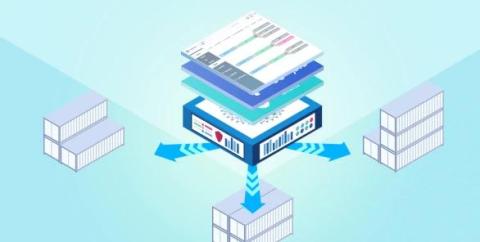
Learn how to automatically find and fix the most critical Kubernetes reliability risks in enterprise organizations. Recent research shows that nearly every organization has reliability risks in their Kubernetes clusters. Many of them are caused by simple misconfiguration, but they can have devastating consequences—including taking critical services offline. And while you could manually review every Kubernetes deployment, the speed and scale at which most organizations deploy to Kubernetes makes that impractical.

All I want for Christmas... from Slack

When declaring and responding to an incident with incident.io, most of your interactions with our product will go via Slack. You might configure your forms in our web dashboard, but the responder using them to declare an incident is most likely doing so from a Slack modal, and the incident announcement will be posted as a Slack message. This means a lot of our product design falls within the constraints of what we can build using Slack’s block kit.

Using VPC Flow Logs to Monitor AWS Virtual Public Cloud

While no man is an island, your Virtual Private Cloud (VPC) is, except it’s a digital island floating in the ocean of a public cloud offered by a cloud service provider (CSP). The VPC means that everything on your digital island is yours, and none of the CSPs other customers can (or should be able to!) access it. You’ve likely been introduced to the shared security model, a sometimes-confusing way that organizations and their cloud-services providers (CSPs) split security responsibilities.

How AI Can Catalyze Digital Resilience: An Introduction to Splunk's Philosophy

ChatGPT and other LLMs have become so accessible that even our grandmas know about AI. But what’s really happening beyond the hype? Recently, I sat down with IT and security leaders Cory Minton and Kirsty Paine to share the inside scoop on how we’re thinking about AI here at Splunk. Watch the replay of our conversation here.

Monitor MongoDB With Telegraf

Monitoring your instance of MongoDB is important for maintaining optimal database performance, ensuring security, detecting and addressing issues promptly, and planning for future growth and scalability. Database and infrastructure monitoring allows for the early detection of potential problems such as server overload, disk space shortages, or network issues.