Operations | Monitoring | ITSM | DevOps | Cloud

How top DevOps teams use feedback loops to crush reliability goals

Delivering reliable software is like trying to hit a moving target. As a DevOps professional, you're constantly balancing speed and stability, all while user expectations grow and technology landscapes shift. Without proper feedback mechanisms, you're essentially flying blind. The good news? DevOps feedback loops provide the visibility and insights needed to navigate this complex environment. They are the fundamental building blocks that enable continuous improvement in software delivery and operations.
Increase Resource Utilization up to 80%-Automatically

Companies running Kubernetes workloads often discover significant and unexpected waste or underutilized resources in their compute environment. Smart organizations implement a host of FinOps activities to mitigate this waste and the cost it incurs: … and the list goes on. But these are infrastructure-level optimizations that don’t address waste within an application.

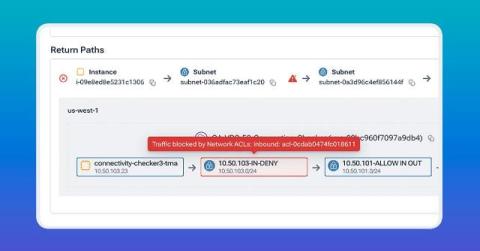
Cloud Pathfinder: A Key to Cloud Network Intelligence

Cloud Pathfinder simplifies cloud troubleshooting by visually mapping connectivity paths between cloud endpoints and integrating the power of AI, identifying where and why traffic is being blocked. By analyzing cloud configuration metadata, it provides instant, actionable insights into routing and security issues — saving engineers hours of manual work.

CircleCI MCP server: Natural language CI for AI-driven workflows

The pace of software development has changed. With AI coding assistants now embedded into engineering workflows, developers are building faster, shipping sooner, and writing more code than ever before. But as velocity increases, so does the complexity of keeping that code running. When builds fail, developers need answers fast. They need clarity, context, and actionable feedback right where they’re working.

Top 3 tools for M365 reporting: SquaredUp, M365 admin center & Power BI

The M365 suite is vast, and the mountains of data that accumulate within each application are huge and ongoing. While data reporting is a necessity, management can feel unwieldy. Luckily, there is an array of reporting software on the market to support this challenge. This blog explores three powerful tools for M365 reporting: SquaredUp, Microsoft 365's native reporting tool, and Power BI.

SONiC: The open source network operating system for modern data centers

Software for Open Networking in the Cloud (SONiC) is an open-source network operating system that has revolutionized data center networking. Originating as a Microsoft-led initiative in the Open Compute Project (OCP) in 2016, SONiC has rapidly gained traction among hyperscalers and switch hardware vendors, including Broadcom, Cisco, and NVIDIA. By building its services using containerized microservices, SONiC brings flexibility, scalability, and modularity to network infrastructure.

How to Justify Switching Network Management Solutions to Your Leadership Team

Switching network management solutions can be a scary proposition, even when the system you have isn’t working well. After all, network management is the cornerstone of visibility, security, and IT operations, and if something is working “well enough” today, then leadership can be change-averse. However, sticking with a network management platform that isn’t a good fit for your environment can lead to waste, administrative overhead, visibility gaps, and reduced network reliability.