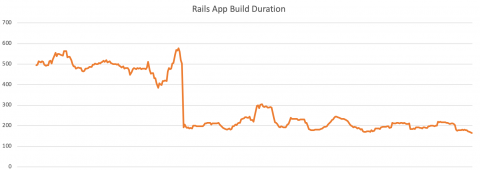
We recently removed webpacker from our Rails 5 application. While it was a great way to bootstrap a new Rails app with a significant amount of Javascript we encountered some serious performance problems that we felt really impacted our productivity. We build our application images after every git push and we’d like to be able to deploy them quickly.
When it comes to hosting applications, business and IT administrators often need to make tough decisions as to whether cloud hosting or retention of the software at their own data center is the preferred option. Public cloud hosting may have the edge in terms of scale and distribution, but there are certain instances where an onsite approach to application hosting is a better idea.
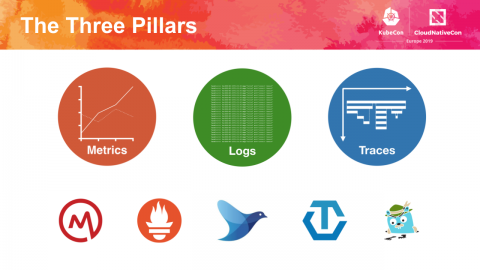
The three pillars of observability – monitoring, logging and tracing – are so 2018. At KubeCon + CloudNativeCon EU last week, Grafana Labs VP Product Tom Wilkie and Red Hat Software Engineer Frederic Branczyk, gave a keynote presentation about the future of observability and how this trifecta will evolve in 2019 and the years to come.
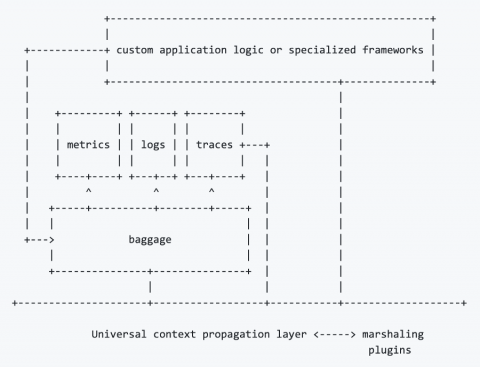
Recently, OpenTelemetry has been announced as a new CNCF sandbox project resulting from a merger of OpenTracing and OpenCensus [1], [2], [3], [4]. Several people have already asked me what OpenTelemetry means for the Jaeger project (incubating at CNCF), and whether it is going to replace Jaeger. I will attempt to answer these questions in this post.
Cloud computing is well past the emerging stage. It’s no longer a radical idea for businesses to depend on cloud platforms and services to serve as their technology backbone--and the numbers show it. In 2018, Forrester reported that nearly 60% of North American enterprises rely on public cloud platforms. This year, Gartner projects that the public cloud services market will grow from last year’s $182.4 billion to $214.3 billion this year, a 17.5% jump.
In today’s time of high-speed Internet, one would think it would be very easy to transfer files, both small and large via emails. The reality, however, is quite different as transferring large files with the help of e-mails remains a big problem. This is where the role of tools, which help with the transfer of large files, becomes important.
IT downtime can effect businesses of all sizes. From online retailers and event promoters to cloud-based service providers and 24/7 security teams, all modern businesses are at risk of facing both monetary and organizational costs that can stack up in a matter of minutes. Users (internal and external) may not be able to access websites and files, digital transactions may be delayed, data may be lost, and sensitive information may be compromised, which can make for a very bad day at the office.
Keep track of your infrastructure and apps from everywhere, and share valuable insights with colleagues. XpoLog 7 log monitoring tool, features new integrations with Slack, PagerDuty, and MS Teams. These integrations come in two levels: Learn more about XpoLog’s proactive log monitoring tool How to share your searches and get alerts via MS Teams, Slack and Pager Duty? More and more users choose to use IM apps around the world, for personal and professional purposes. Global Information Inc.